There I was, standing at a random junction in Tokyo, shivering while waiting for my Japanese cooking class teacher to arrive. It wasn’t even 8 am yet, and the weather was biting. It was one of those winter mornings when I started questioning my life choices. On that day specifically: whether a Japanese cooking class was really worth it. Would I actually cook any of this at home? Would the effort be worth the reward?
Eventually, the Japanese cooking class teacher showed up, and shortly after, another student arrived—a Swede, if I remember correctly. Together, we made our way to a Japanese supermarket, which always fascinates me.
As the Japanese cooking class teacher explained the ingredients along the way, I quickly realised my classmate was really into Japan. I wanted to tell him, “me too,” but he was too busy loading up on very specific chilli flakes, explaining how the cap colour indicates the heat level—and that it’s not something you can easily find outside Japan. I could tell he knew his stuff and probably wouldn’t welcome a casual “same” from someone who still buys Shichimi Togarashi at 7-Eleven.
He also seemed like a seasoned cook, based on how he spoke with the teacher, while I was very much closer to a seasoning-less cook.
With our groceries in hand, we headed to the Japanese cooking class, held in a Japanese apartment building. This is exactly why I love cooking classes: I get to be nosy and experience local life up close. After asking my Japanese cooking class teacher a million questions about Japanese home life, we finally started our Japanese cooking class.
Washoku Japanese Cooking Class
The menu for the day was Washoku, a traditional Japanese style of home cooking, presented as a simple set meal often eaten for breakfast. I can’t say it’s my absolute favourite kind of Japanese food because I love almost all Japanese food.
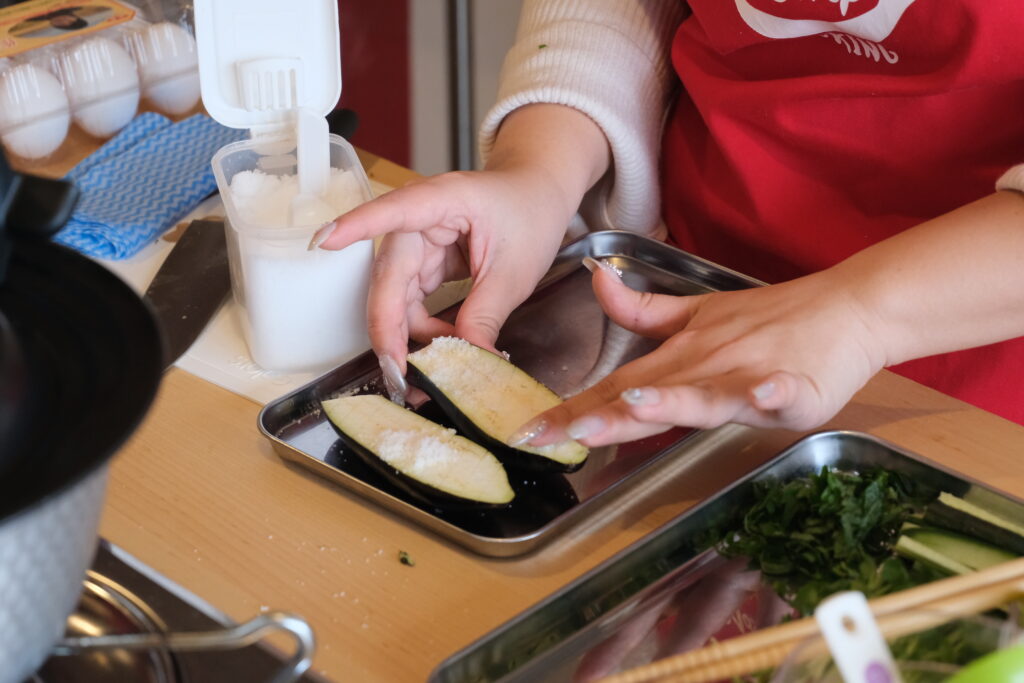
But washoku is definitely up there.
Having paid around $30 for a similar meal in Melbourne at places like Cibi or Ima Asa Yoru (both worth it), I figured it was time to learn how to make a simple version myself. Something I could whip up when the craving hits, but my bank account says no. Also, I thought it might be a nice way to entice Fafa.
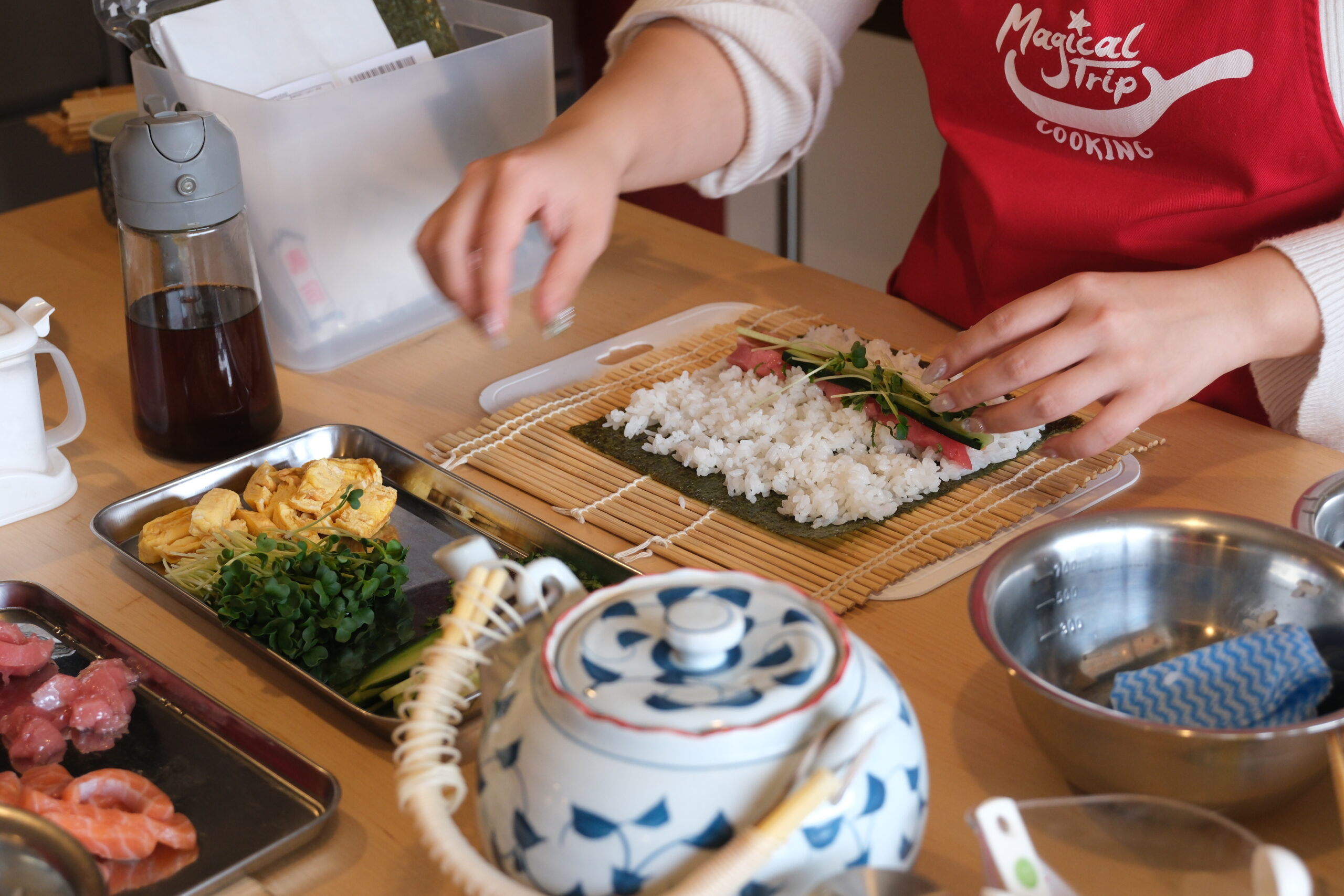
Once the Japanese cooking class lesson began, I realised just how much detail goes into something that looks so simple.
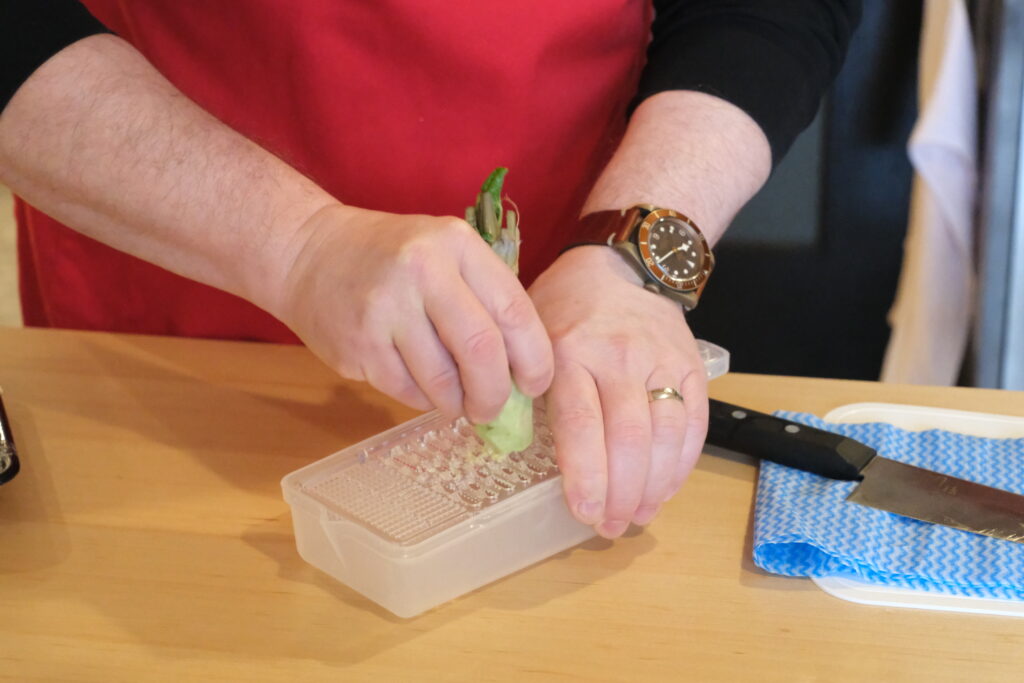
I learned that real wasabi is nothing like the horseradish-heavy versions I’m used to, and that miso soup isn’t just about dissolving miso paste into water; it needs to be built on a proper dashi base, with different types of miso chosen depending on the depth of flavour I want.
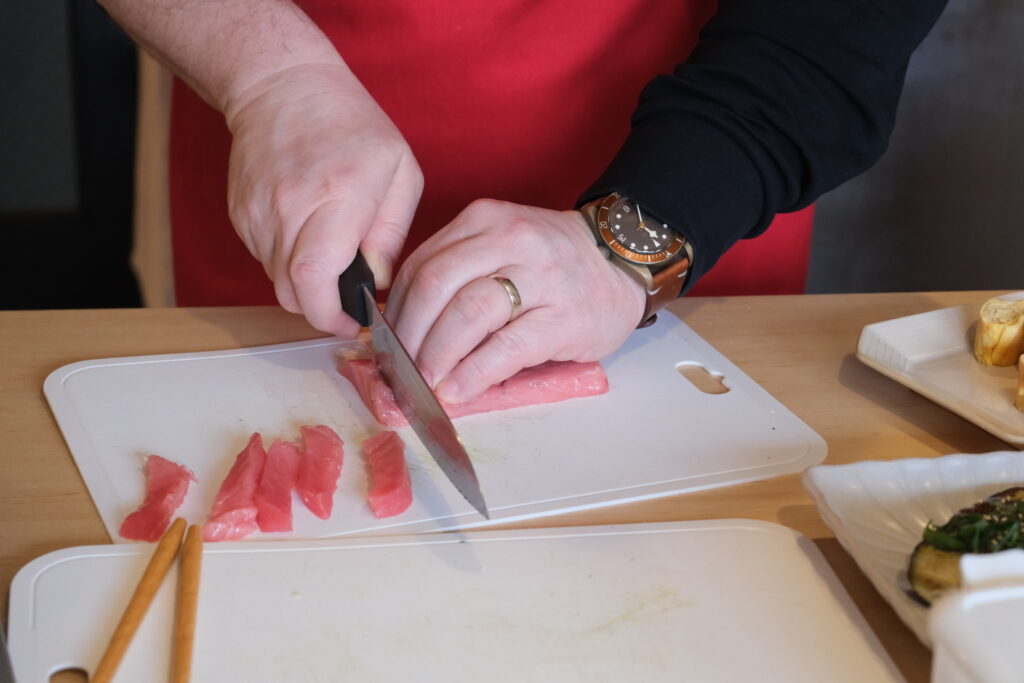
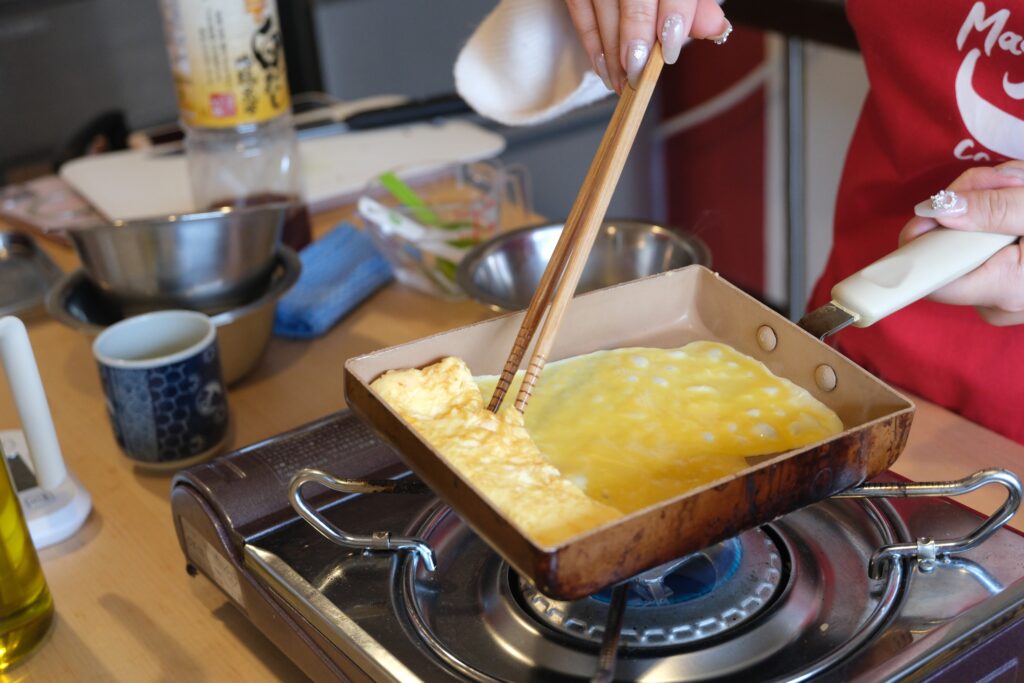
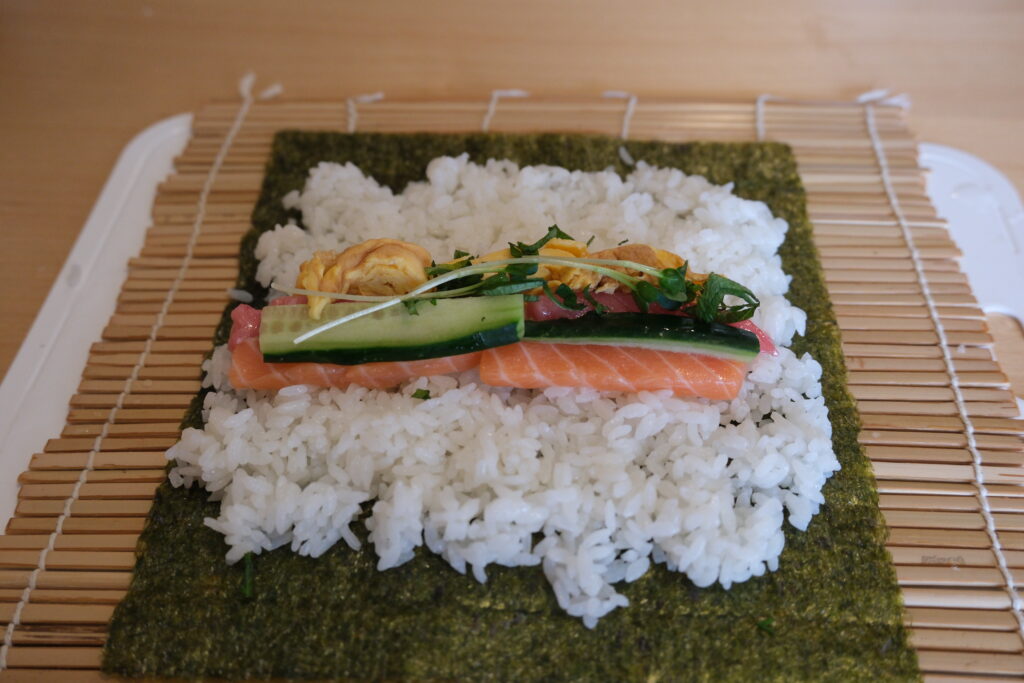
The teacher showed us how to cut salmon properly so it stays tender, and how to make tamago—along with the art of flipping it neatly.
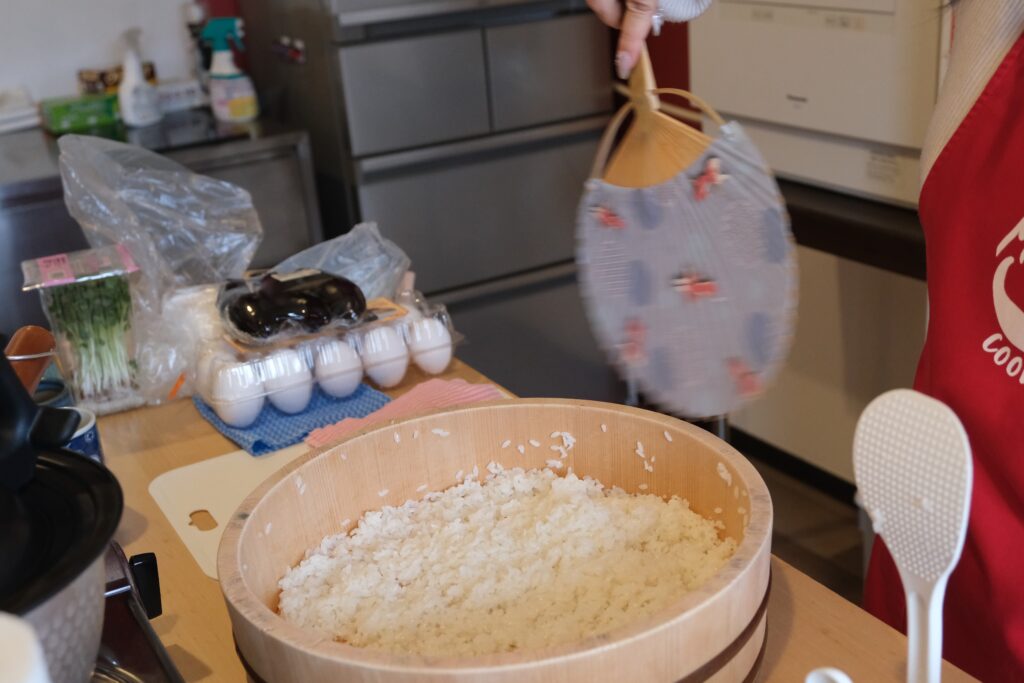
I also picked up small but oddly satisfying skills, like using long cooking chopsticks, polishing and fanning sushi rice before letting it sit for a while, and that there are the right sides of the sushi mat and nori sheet.
After the Japanese cooking class, we sat down together, chatted about life, and shared five different types of sake, all before noon.
Full disclosure: I still haven’t made a Japanese breakfast at home yet. I need to convince Fafa first because it feels like a lot of effort to cook Washoku just for myself. But maybe I should.
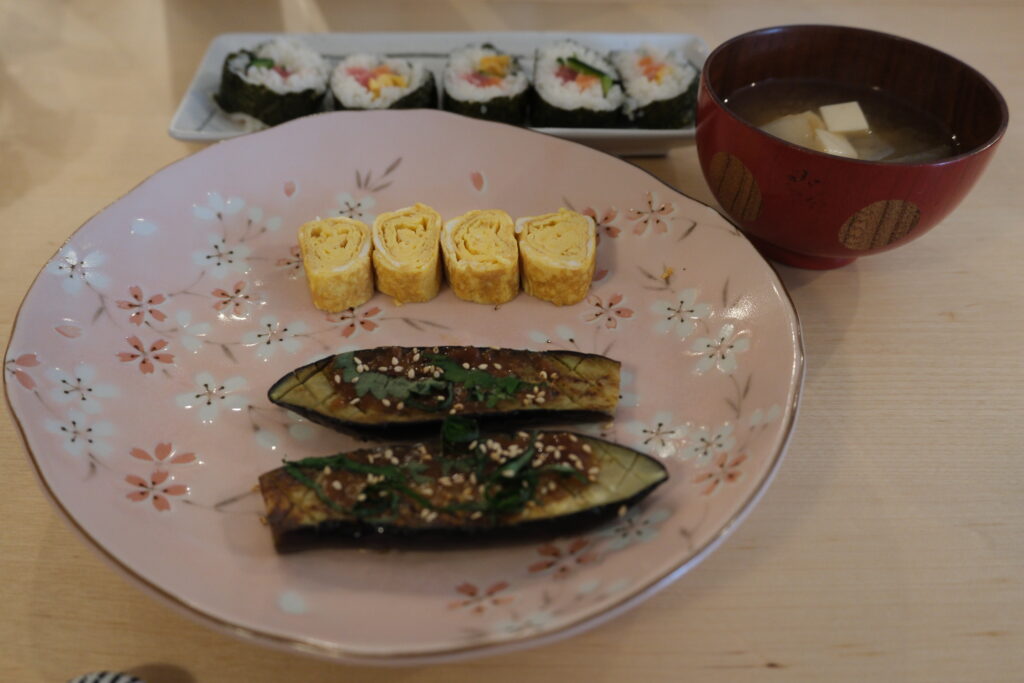
Because if anything, the Japanese cooking class reminded me how special it is to eat a well-prepared home-cooked meal. And when I finally do make it, I’ll share the photos here.
Follow me on Instagram @KultureKween for more recent updates.

[…] I took the bus from the stop across the road from our hotel and made my way to Mangwon. Since I reached early and couldn’t see any tourist-looking person standing in front of our meeting point at Mangwon train station exit 2, I waited inside the Dunkin’ Donuts right beside it. Right on the dot, I joined and introduced myself to the tourist-looking crowd, confirming they were indeed my soon-to-be classmates in the Korean cooking class. […]
I’m so ready for this 😍