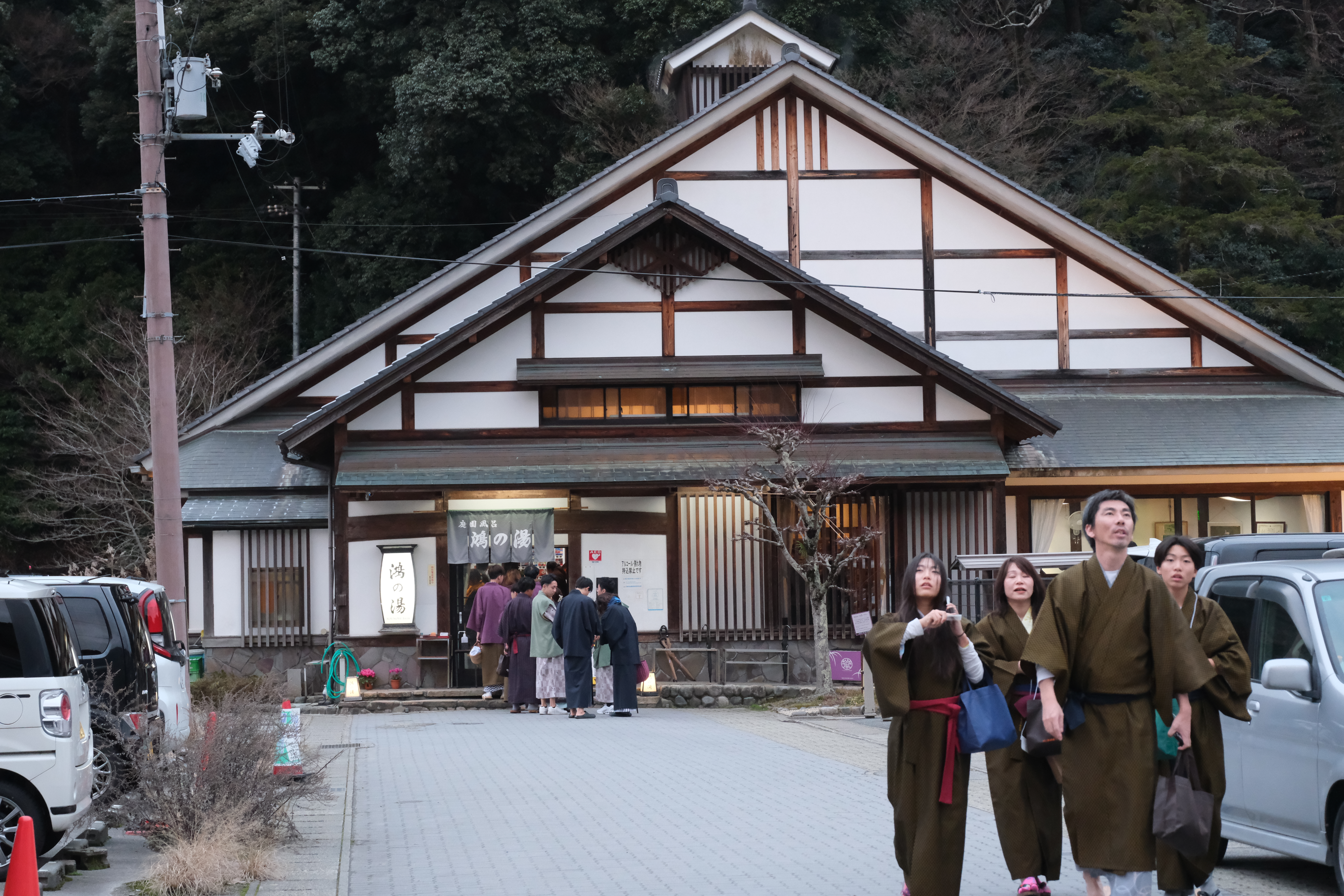
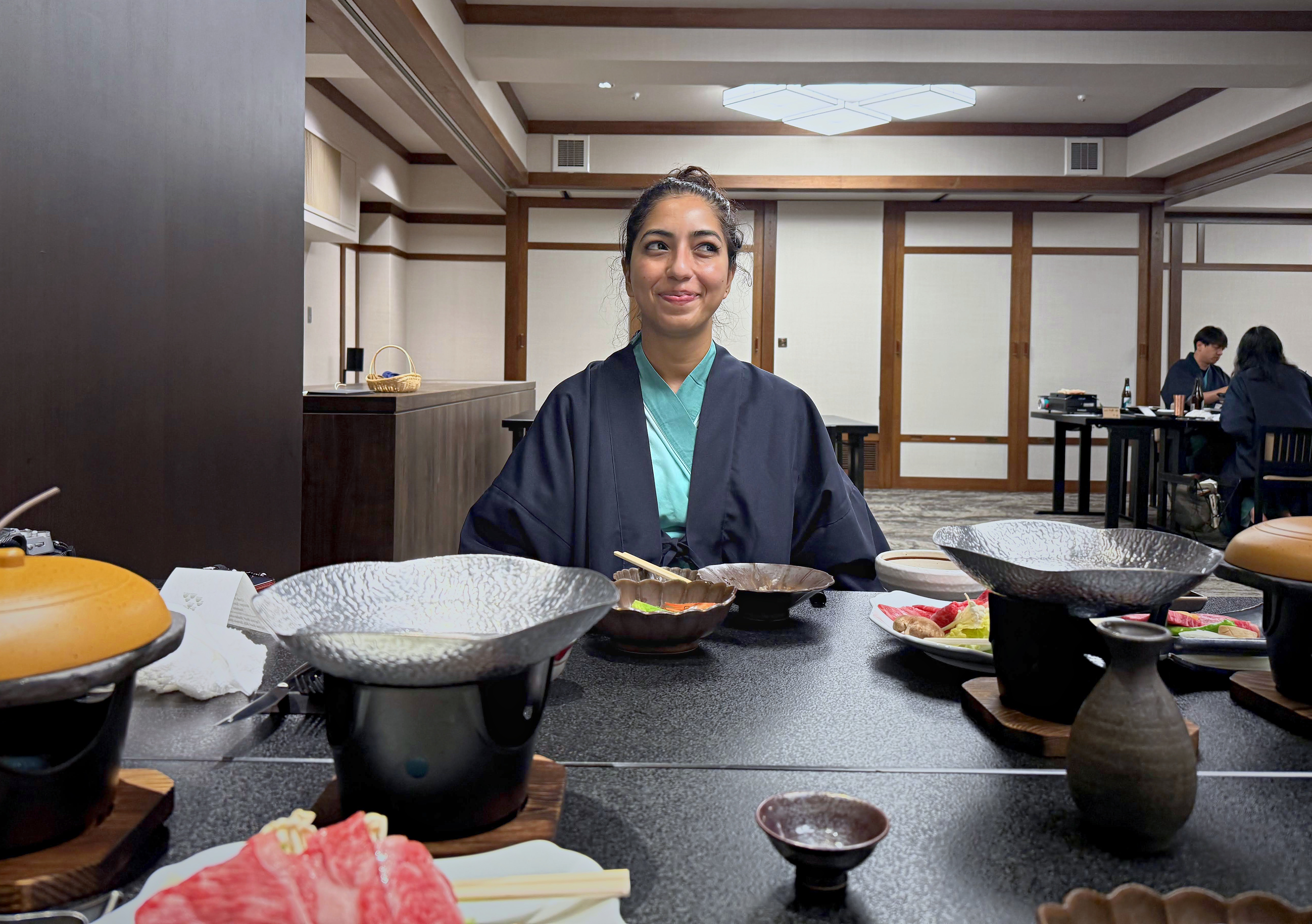
There are seven bathhouses in Kinosaki Onsen, and I am determined to visit every single one during my two nights here. And two nights is not the forty-eight hours of free rein it sounds like. There is still eating and resting to do, a ryokan to enjoy, a town to explore, and quality time to spend taking ten thousand pictures of myself, because, according to my parents, I look good in a yukata. Who am I to disagree with them? Ten thousand pictures of me in a yukata, in exchange for 9,999 heart emojis.
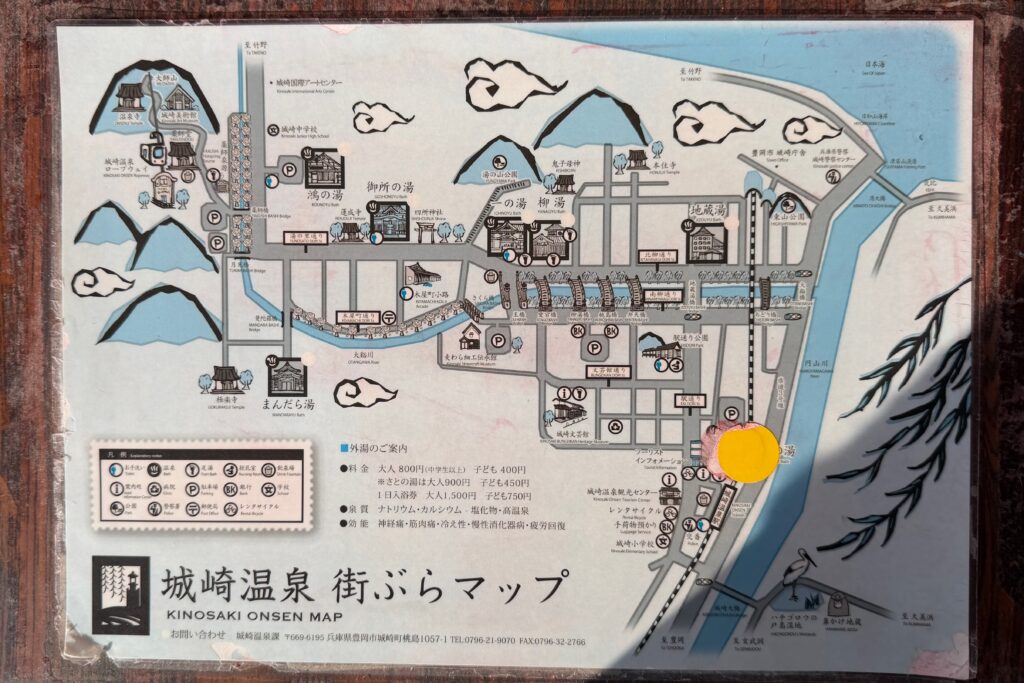
First, the logistics. We collected our two-day onsen pass from the ryokan, free with our stay, and the reason most people in Kinosaki Onsen skip their own hotel’s bath entirely in favour of sotoyu meguri, the bath crawl. (If you are not staying overnight, you can still buy a day pass for ¥1,500, or a single entry for ¥800.) Then I studied the opening days and hours, because each bathhouse closes on a different day of the week, so without a plan you might end up clacking across town to a shuttered noren. I pored over the onsen map I had nicked from the tourist centre minutes earlier, then convinced Fafa to come and do the rounds with me. He agreed. We changed into our yukata and geta, and off we went.
There is a saying in Kinosaki Onsen that the whole town is one big ryokan: the station is the entrance, the streets are the hallways, the inns are the guest rooms, and the seven public baths are the grand shared bath at the end of the hall. The first thing I learned, though, was that Satono-Yu, the biggest of the seven, is temporarily closed for renovation. That leaves six for us.
“Which one do you want to go to first?” Fafa asked, looking handsome in his yukata.
Cave Bathing in Ichi-no-Yu
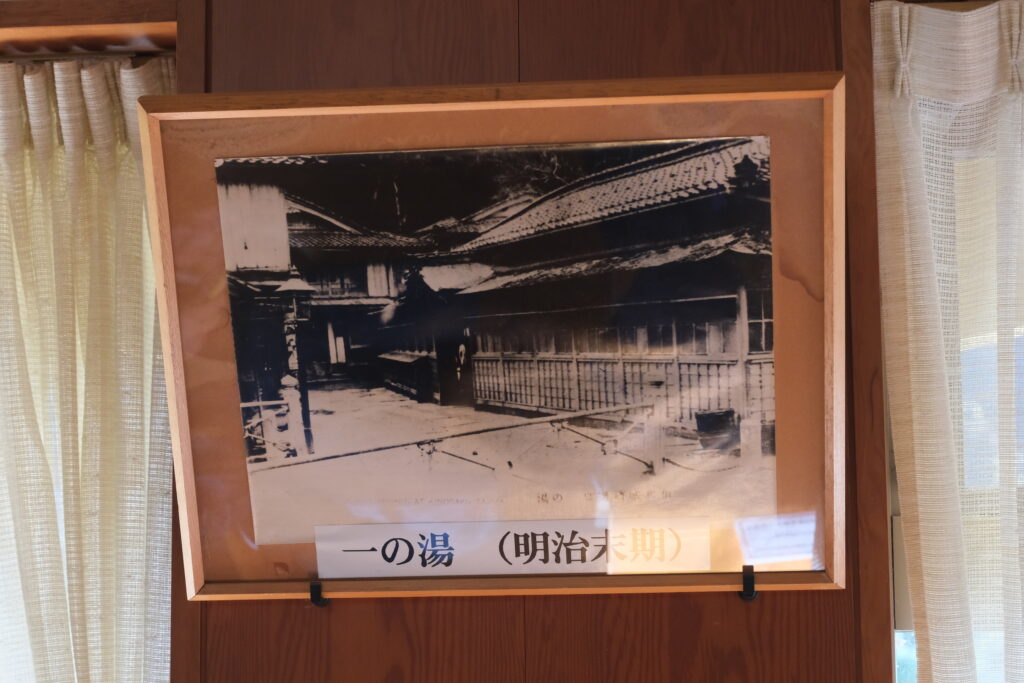
I chose this one solely because it was the first to catch my eye on the way over. It looked like something straight out of Spirited Away, with a frontage modelled on a kabuki theatre. Its name actually means “Number One Bath,” a title bestowed by an Edo-era doctor who praised the healing powers of its waters, and it sits at the symbolic centre of Kinosaki Onsen. So we made our way there, the walk taking twice as long in our yukata. Graceful, maybe, but I was thoroughly done by the time we reached the entrance.
At the door, as at most of these places, they keep a stamp, very Japanese, which I liberally pressed into the Japan journal I had brought along. And then off we went, to the men’s and women’s sides respectively.
I tried to remember whether I had ever been to a public bath by myself, without my girlfriends. Being the only brown person in a sea of Japanese ladies is daunting. I had, once, at Yunomine Onsen, so this would be my second time alone. The minor anxiety arrived right on schedule, but I’ll be damned if I can’t force myself to strip naked and leap in anyway.
My first impression was that the bath looked basic, fittingly, in a town this traditional. The tradition is upheld by the locals, in this case a group of elderly women who undressed beside me and moved around as though they knew the place inside out. Maybe they did. Maybe they have been coming to the same bath for decades, and still, they share their sanctuary with curious tourists like me.
Sorry, and thank you, ladies.
After soaking inside for a bit, it was nearly empty. I went out to the cave-style outdoor bath, where a bamboo wall divided my side from the other, behind which a naked Fafa was presumably having the same quiet existential moment. The outside was far prettier. Across from me sat three young Japanese teenagers, repeating English phrases, maybe hoping to strike up a conversation. I waited, not wanting to make the first move, sitting there naked, non-Japanese-speaking, and not entirely sure I had read the situation right. Nothing happened, and after a few minutes, I had to leave; I had promised Fafa I would meet him out front in thirty.
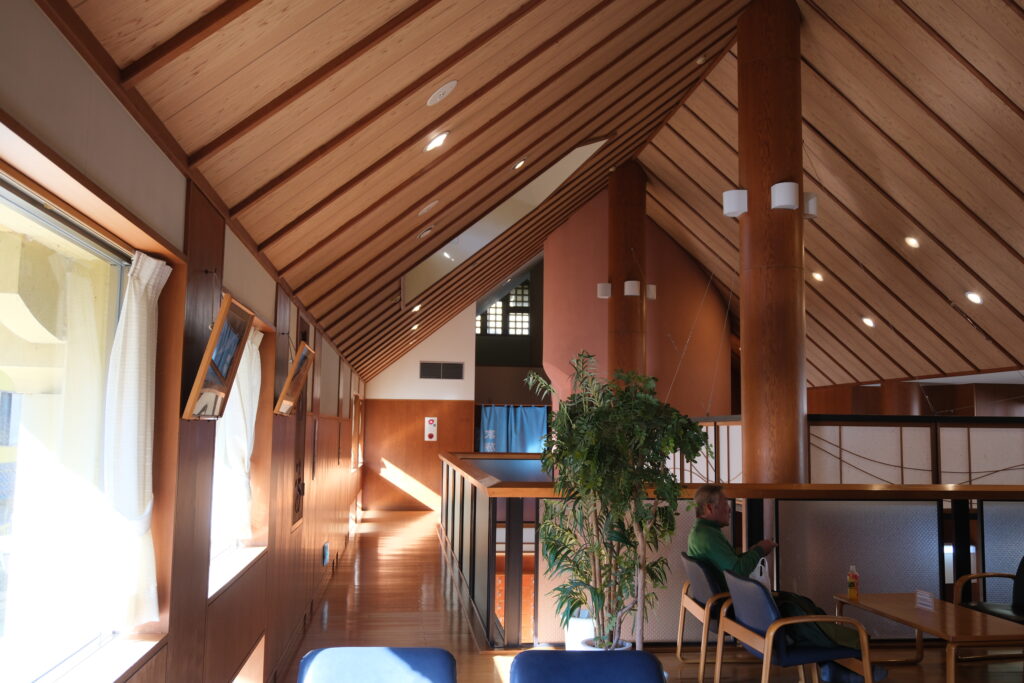
When I came out, I couldn’t see him, so I ventured up to the relaxation room. There was an old-fashioned milk vending machine up there, glass bottles in every flavour, plain, coffee, and strawberry. I went for the unflavoured one, my fave. Then I spotted Fafa from the top of the stairs and waved him up. We chatted, rested, and made for the next bath.
Goshono-Yu, the One on Every Postcard
A wooden bridge leads to it, with a small pond out front. This is the bath that appears on most of the postcards in the souvenir shops, and by the end of the night, it was also Fafa’s favourite.
The entrance is decorated with golden murals. The whole building was modelled on Kyoto’s Imperial Palace, and it is nicknamed the “Water of Beauty,” said to bring luck in love and protection against fire. I made a small detour to rent an onsen towel for ¥300, because yes, I had remembered to pack my journal but forgotten an actual towel to dry myself with.
Kakeyu-ing in Kinosaki Onsen
This was the most impressive bath of the lot. The open-air section steps down in tiers, with a jacuzzi corner tucked into one side and a waterfall crashing behind it all. In one corner, there is a spot to wash thoroughly before getting in, and in the opposite corner, a big bucket of warm water marked kakeyu, the traditional pre-bath ritual of gently pouring warm water over yourself before entering. It does two things: rinses off the day’s sweat, and lets your body acclimatise to the heat so you don’t lurch into cardiovascular shock or dizziness. I scrubbed down first, then ladled a few pours over myself before joining the ladies outside.
(I genuinely couldn’t tell you in the moment whether the place had an indoor bath. It does, as it turns out: a soaring hall called the Tenku Furo, lit by floor-to-ceiling windows under a glass ceiling held up by local cypress beams. The open-air bath simply steals all your attention.)
The higher the tier, the closer to the waterfall, and the hotter the water. It is beautiful, and I loved it. My only nitpick, and it is a nitpick, is that it is a touch too open-air for my taste. But that is me being precious.
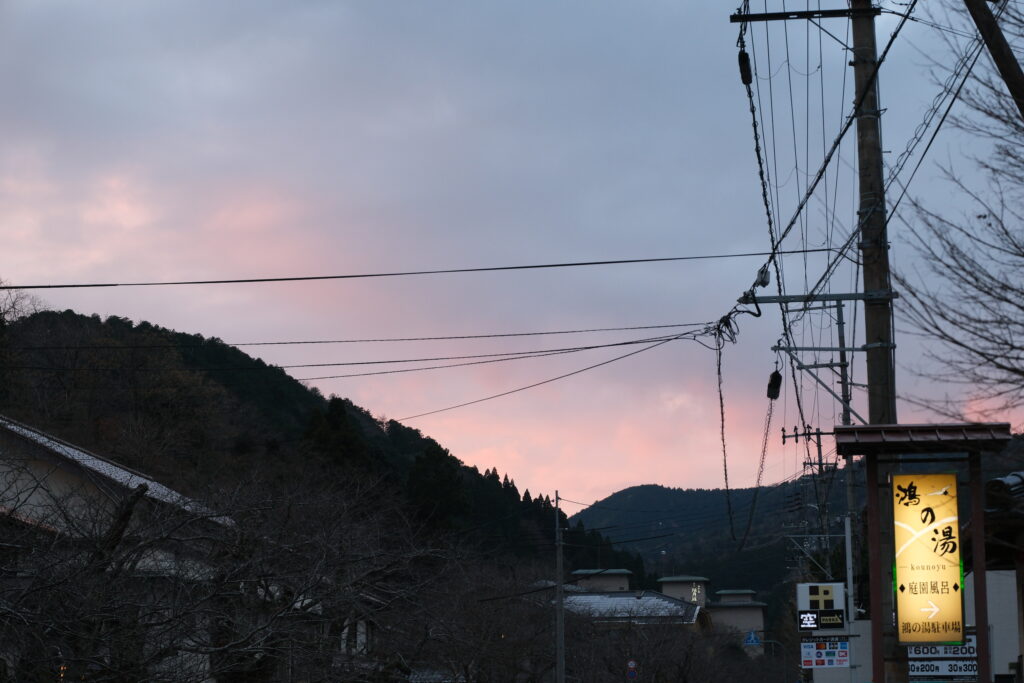
If you visit one onsen in Kinosaki Onsen, make it Goshono-Yu.
It also has a milk vending machine near the entrance, and once again, I couldn’t help myself: round two. I tried the strawberry this time, while Fafa went for the original. The one letdown is the resting area. At Ichi-no-Yu, it was tucked away upstairs, separate and calm. Here it sits right at the entrance, so post-soak relaxation is nearly impossible unless you are happy to unwind amid a steady stream of patrons coming and going.
Kō-no-Yu, the Oldest Bath in Kinosaki Onsen
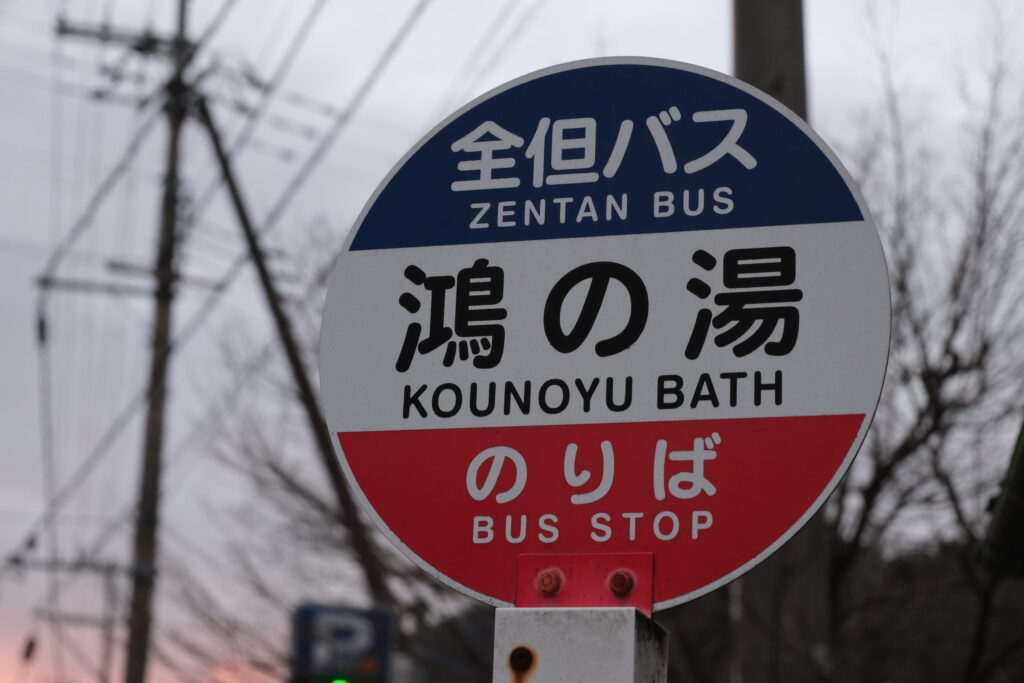
The third bath is the oldest in town and the closest to our ryokan, practically across the road, and its entrance opens onto a wide, unrestricted skyline, as a frame lifted straight out of a Ghibli film. Legend has it that this is where, more than a thousand years ago, an oriental stork was seen healing its wounded leg in the spring water, and the whole onsen story of Kinosaki Onsen began right here. Fittingly, it is the bath of a happy marriage and long life, so I soaked with intent.
It is smaller than the first two, with an indoor and an outdoor section. The indoor pool is small, deep, hot, and so packed with bodies that I had to stand around naked in the steam for a moment, not my most comfortable minute on earth, until someone shuffled over to make space. The Japanese are so kind. I breathed a little easier when two more foreigners slipped into the hot pool, and, lo and behold, one of them caught my eye and smiled, drawing out my first proper wide smile inside an onsen, instead of the usual cautious quarter-smile.
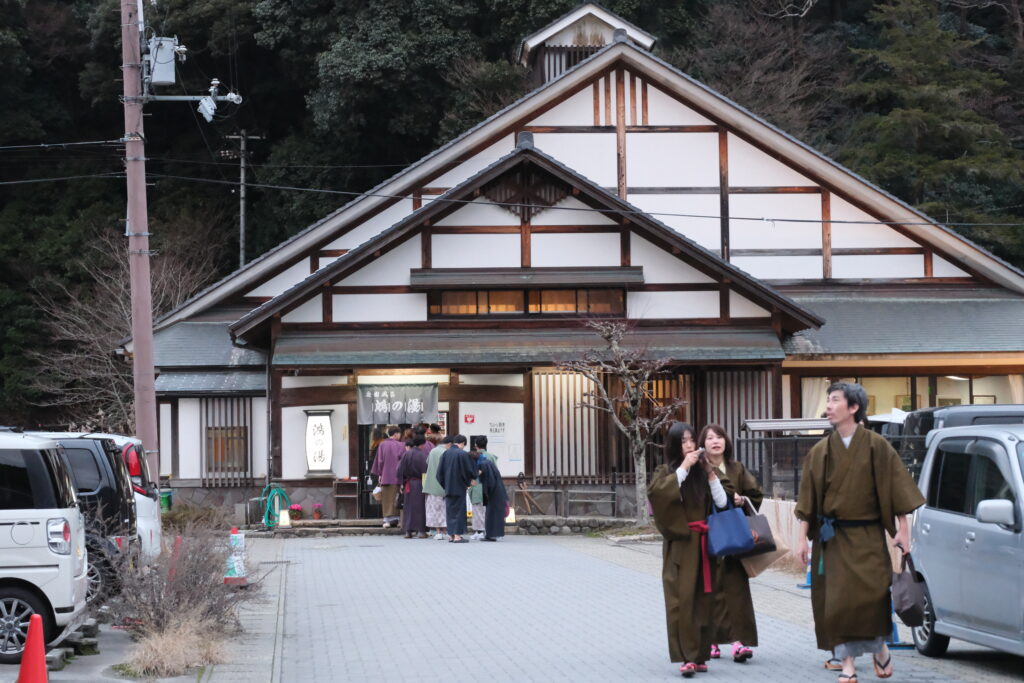
Eventually, I stepped outside. The outdoor bath is small, shallow, and covered, with autumn leaves for a backdrop, a single tree, its leaves spare and brownish yellow, and the first tiny flecks of snow drifting down. That was the moment I fell for this bath and started quietly fantasising about moving to an onsen town. The other foreigners soon joined me, and we made polite conversation about the towns we had come from and the ones we were heading to, never once exchanging names. I think this is the bath that finally made me comfortable with the whole ritual. It turns out that people smiling at you and being kind do wonders.
By the time I finished, Fafa was done too, and declared himself officially “onsen-ed out.” And with that, I parked the rest of the experience for tomorrow.
The Next Day in Kinosaki Onsen
The next day, the day we leave, I was determined to use up the rest of the pass and tick off the remaining baths. “For research purposes,” I told Fafa, though really I just wanted to soak in hot springs all day, every day, forever.
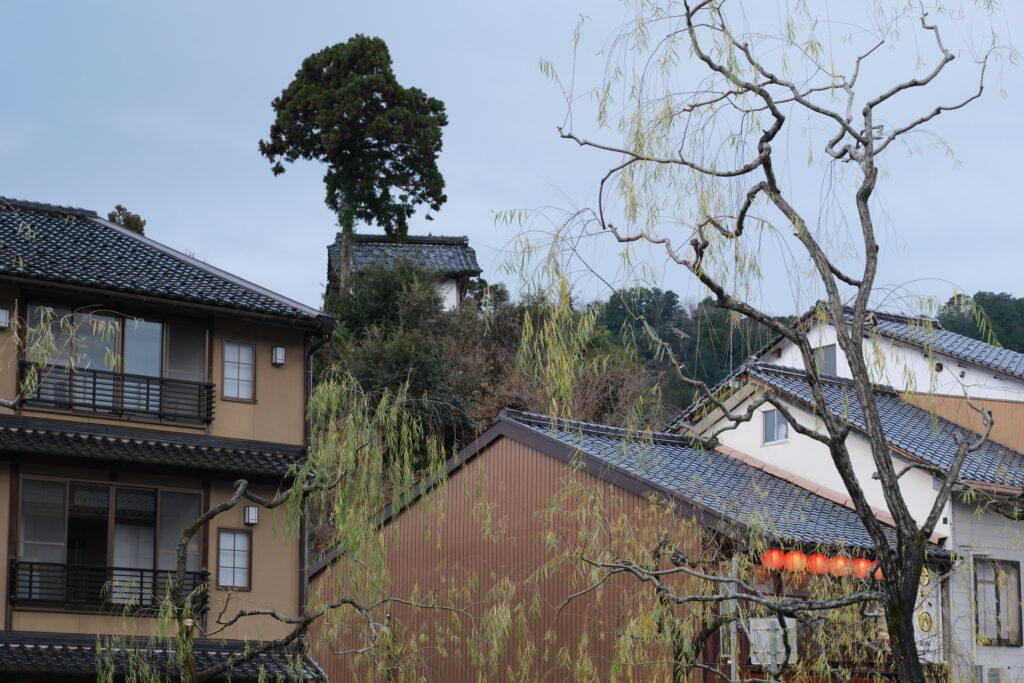
The Family Bath Jizō-Yu
The fourth bath is an unremarkable spot in front of a yellow building, its exterior shaped like a Japanese lantern, matching the ones lining the river. The inside onsen is U-shaped, with three jacuzzi jets set into a tall wall and a partial ceiling that I suspect would be lovely at the right hour, in the right season, at the right angle. It just wasn’t doing much for me that day. It was also the hottest so far, which is presumably why it was nearly empty. Look up, and you will spot the hexagonal windows, designed to echo the basalt rock columns of nearby Genbudō Cave. Fittingly, Jizō is the guardian deity of travellers and children, and this is the bath of family safety, so it is the local family favourite, with a smaller children’s pool tucked in the corner. The Jizō statue that gave the bath its name, said to have surfaced from the spring itself, is enshrined out in the courtyard.
Hottest and Smallest Yanagi-Yu
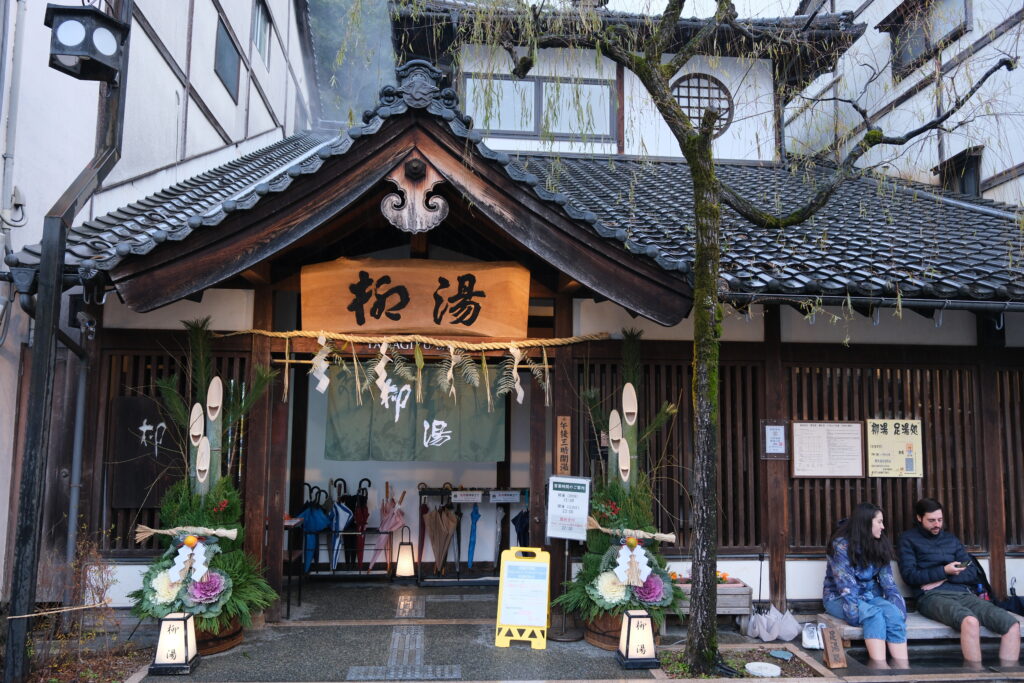
This one looks small from the street but has a surprisingly nice entrance. The woman at the counter asked me something beforehand, and if only I had understood her, I would have realised she was warning me that this bath runs very hot and isn’t your typical onsen. I nodded, confused, and went in anyway. Curiosity.
Inside, there is a wooden bucket for pouring water over yourself, and people were lowering themselves into the bluest, deepest hot spring I had seen yet. I was ready. I went in feet first and took my deepest breath, so I wouldn’t yank them back out. The lady was right. It really is that hot. So, slowly, one toe after another, I sank in, a girl in the corner offering me silent, imaginary encouragement the whole way down.
A few minutes in, I refused to accept that I couldn’t last any longer. Curiosity is going to cook the cat. The cat is me, but I am going to persevere for a few more minutes anyway.
At the same time, an elderly Japanese woman came in. Surely she wouldn’t, I thought, but she didn’t so much as flinch. A true local, the very spirit of Kinosaki Onsen. Meanwhile me, not even an aswang, stood up to discover my whole brown body had gone red, a metamorphosis I never thought I would witness in my lifetime. (Yanagi means “willow,” named for a willow tree said to have been transplanted here from West Lake in China, and the bath is traditionally tied to beauty and safe childbirth. I’ll take the beauty. I’ll leave glowing like a boiled prawn off the brochure.)
Mandara-Yu, Where Kinosaki Onsen Began
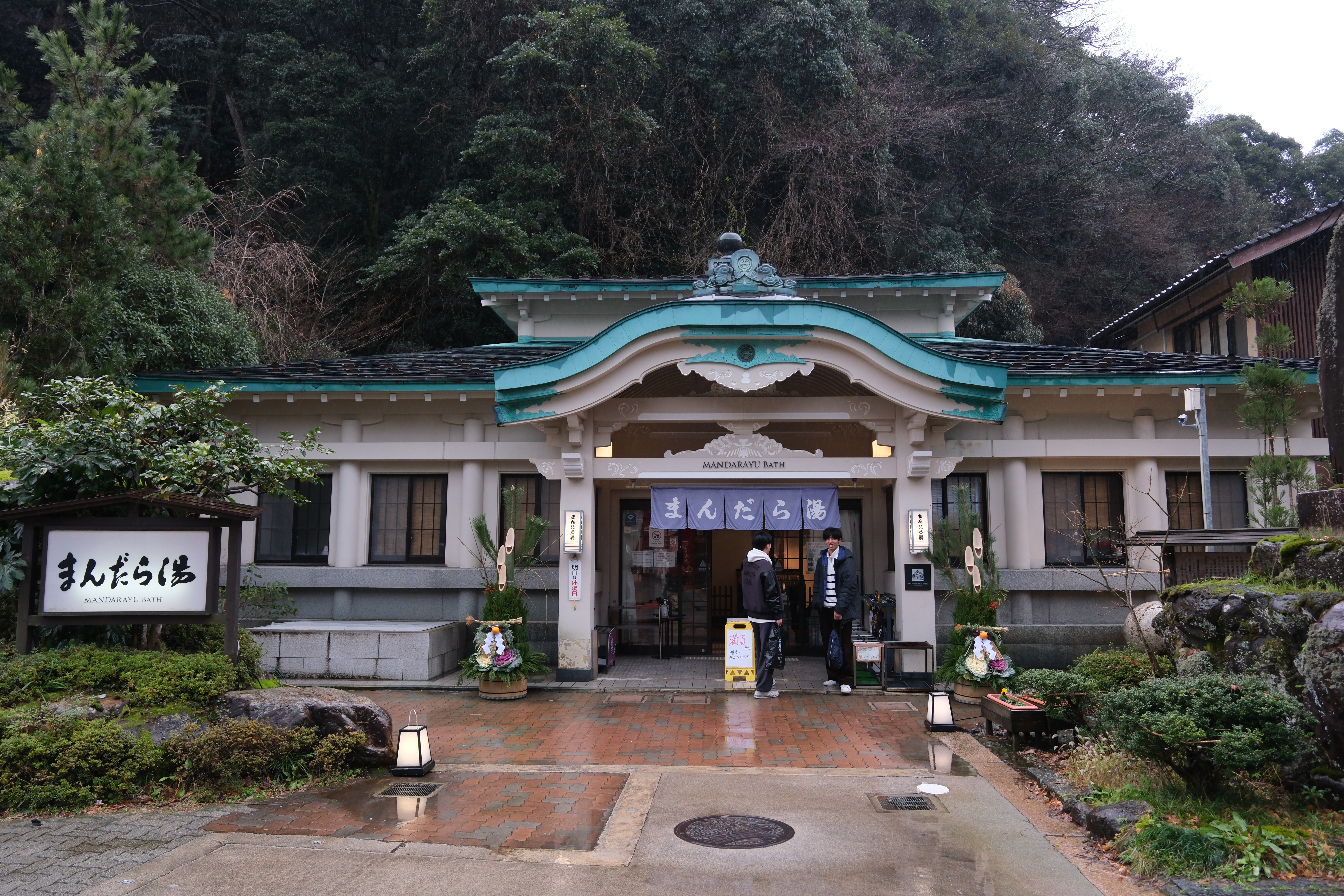
I almost skipped the last one. It had been closed the day before and only opened at midday on our departure day, and I felt thoroughly onsen-ed out after the first tour plus a morning soak at the ryokan. But it was drizzling, and from my seat in a café corner, I could clock the queue outside growing longer and longer. Fafa was willing to wait. I, aka the cooked cat, was curious enough to wander over and join the line.
Mandara-Yu is, fittingly, the founding bath, the spot where, after a thousand days of prayer by the monk Dōchi Shōnin, the spring is said to have first appeared, marking the very beginning of Kinosaki Onsen. They call it the “one wish in a lifetime” bath, blessed for prosperous business and wishes fulfilled, so this corner is where the whole town flows from.
Ten minutes before opening, the queue had reached the main street. Surely this bath couldn’t be that different from the rest? I refused to Google it. I like my first impressions untainted.
Right on the clock, the noren was flipped, and we were waved in. For the first time, the women’s changing room was swarmed, a proper “you snooze, you lose” scramble, mostly teenagers and young women, with a few grandmas and me bringing up the rear. As the lone foreigner, I knew my place and waited for a locker to free up.
Eventually, someone emerged barely ten minutes in, snatched her clothes, and vanished in a flash, a train to catch, perhaps (I had one too, though with hours to spare). I changed in the now half-empty room, which suited me fine. Changing in front of that many people would have been excruciating. Or so I thought, prematurely, it turned out, before I had even stepped onto the bath side.
It was packed. So many women. But I soon clocked that the indoor bath wasn’t the point at all. The real draw was the three wooden barrels outside, as evidenced by the small queue beside them, each barrel already crammed with a cluster of girls squeezed in skin to skin.
This, I decided, was not going to be my thing today. Firstly, there is no way I am standing naked in the cold, everything on display, queuing for a barrel roughly the size of the pail I used to bathe in at my grandma’s house. Secondly, this is plainly a group activity, and however chill and cool I like to think I am, I am not climbing into a barrel skin to skin with strangers, titties floating on Zoom for the gallery.
…I mean. With the right company? Different story. But not today, and not with strangers, and not with the queue.
So I soaked for a few more minutes in the indoor bath and made my way out to find Fafa. Not the greatest end to my Kinosaki Onsen saga, but I am chalking that up entirely to the crowd and the timing, not the bath itself.
A Few Tips for Onsen-Hopping in Kinosaki Onsen
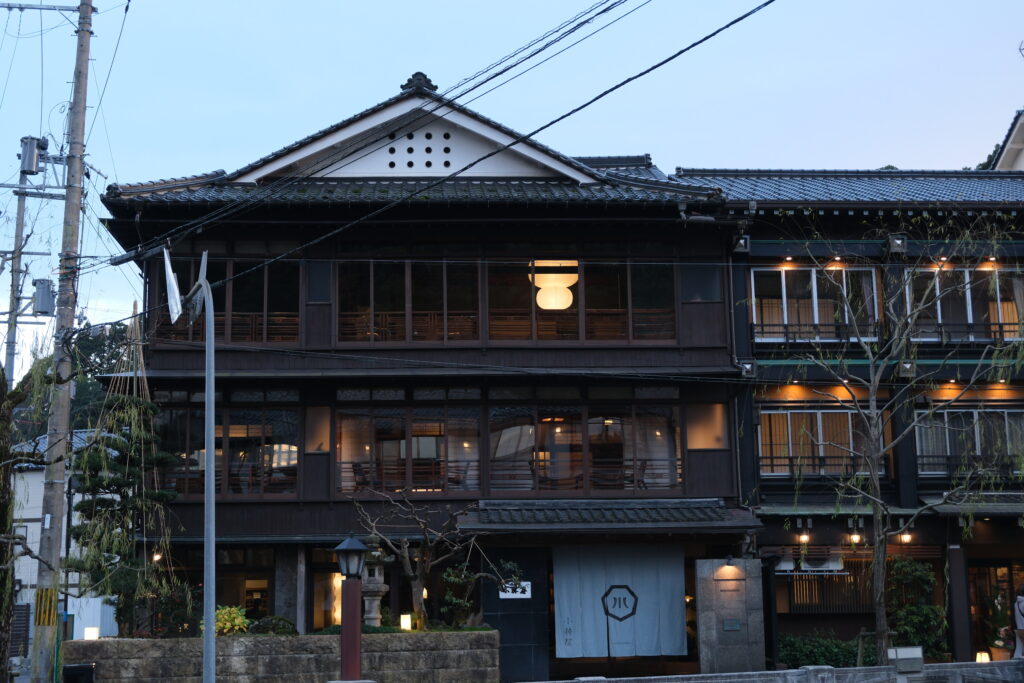
Tattoos are fine here. Kinosaki Onsen runs a town-wide tattoo-friendly policy across all seven public baths, a rare and lovely thing in Japan, so no covering up required.
Check the opening times and closing days before you plan your route. Each of the seven baths closes on a different day of the week, and some open late or shut for renovation (Satono-Yu was closed for ours). Your ryokan or the tourist centre by the station will have the current schedule, so grab it before you start clacking around town.
Sort your towels out. Most baths don’t hand them out, so either bring a small one or rent at the door (¥300, as I learned the hard way at Goshono-Yu). Better yet, buy a few of the little tenugui towels from the souvenir shops all over town. They make a lovely keepsake, and if you are hitting more than one bath in a row, you will want a dry spare anyway, because the first one never quite dries between stops.
Learn the curtain colours. Red noren for women, blue or purple for men, and crucially, the sides often swap between morning and evening, so don’t go on memory. Confirm the colour every single time.
Do the kakeyu. Ladle warm water over yourself before getting in. It rinses you off and eases your body into the heat so you don’t go light-headed, especially at the scorching baths like Yanagi-Yu and Jizō-Yu.
Pace your heat. Some of these run genuinely hot. Alternate hot soaks with the cooler outdoor pools, hydrate properly, and don’t try to out-tough the grandmas. You will lose.
If you can, do stay overnight, and give it two nights. You only get the all-baths pass if you are sleeping in Kinosaki Onsen, and one night isn’t enough to do the circuit justice. Book somewhere in the main area, close to the bridge, so every bath is a short walk away. And if you can, come in winter: snow on the willow-lined canal, autumn’s last leaves hanging on, and crab season on every menu. (Day visitors can still buy a ¥1,500 day pass or pay ¥800 per single entry, but the overnight pass wins.)
Take the onsen bag your hotel gives you, then pack it well: extra socks, easy slip-on shoes, and a waterproof pouch for your phone and a damp towel. You will be in and out of footwear all day, and everything that touches an onsen comes out a little soggy.
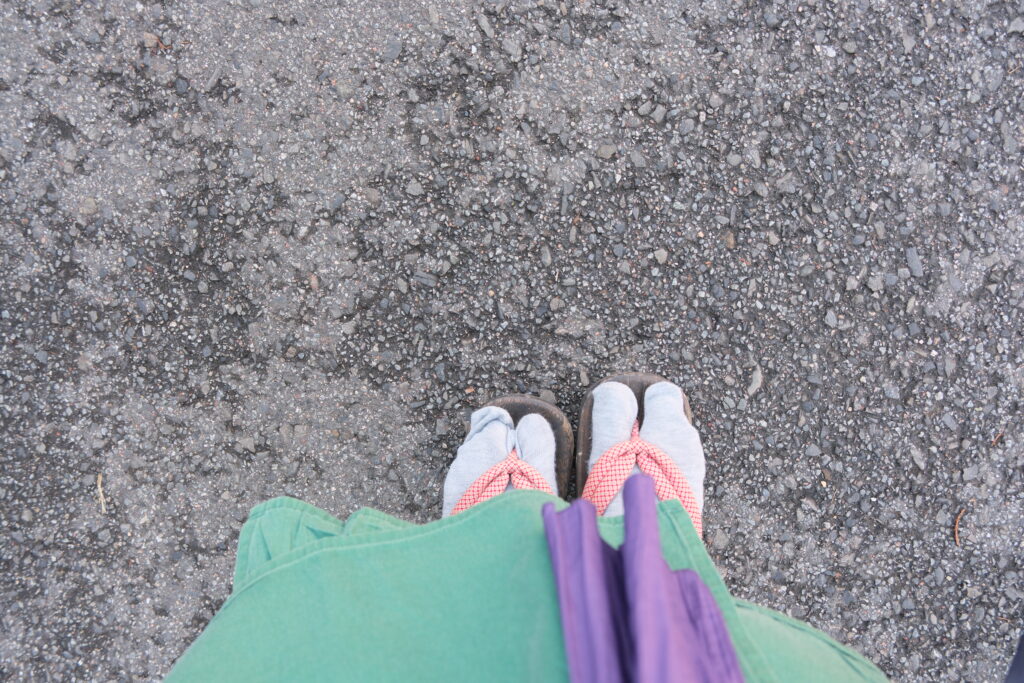
Yukata, yes; geta, maybe not. The yukata is half the fun. The geta, less so. Those wooden sandals look charming in photos, but can be genuinely awkward to walk in if you are not used to them, so don’t feel you have to. And in winter, wear something warm under the yukata, like thermals, unless it is purely a photo op, in which case, suffer beautifully for the camera.
Collect the stamps. Each bath keeps a stamp at the entrance. A little stamp book (sold at the information centre by the station) turns the bath crawl into a small treasure hunt, and a far better souvenir than a fridge magnet.
Save Goshono-Yu’s milk for last. Reward your circuit with a cold bottle from the vending machine, plain, coffee, or strawberry, paper cap popped with the little opener on the side, downed in one with a hand on your hip. It is tradition. You will get a smile or two from the locals.
Most importantly: Know the rules, honour the tradition and respect everyone. Wash before you soak, no towels in the water, keep your voice low. We are the outsiders here, sharing a sanctuary the locals have kept for generations, so follow the etiquette, read the room, and bathe with respect.
Follow me on Instagram@KultureKween for more recent updates.

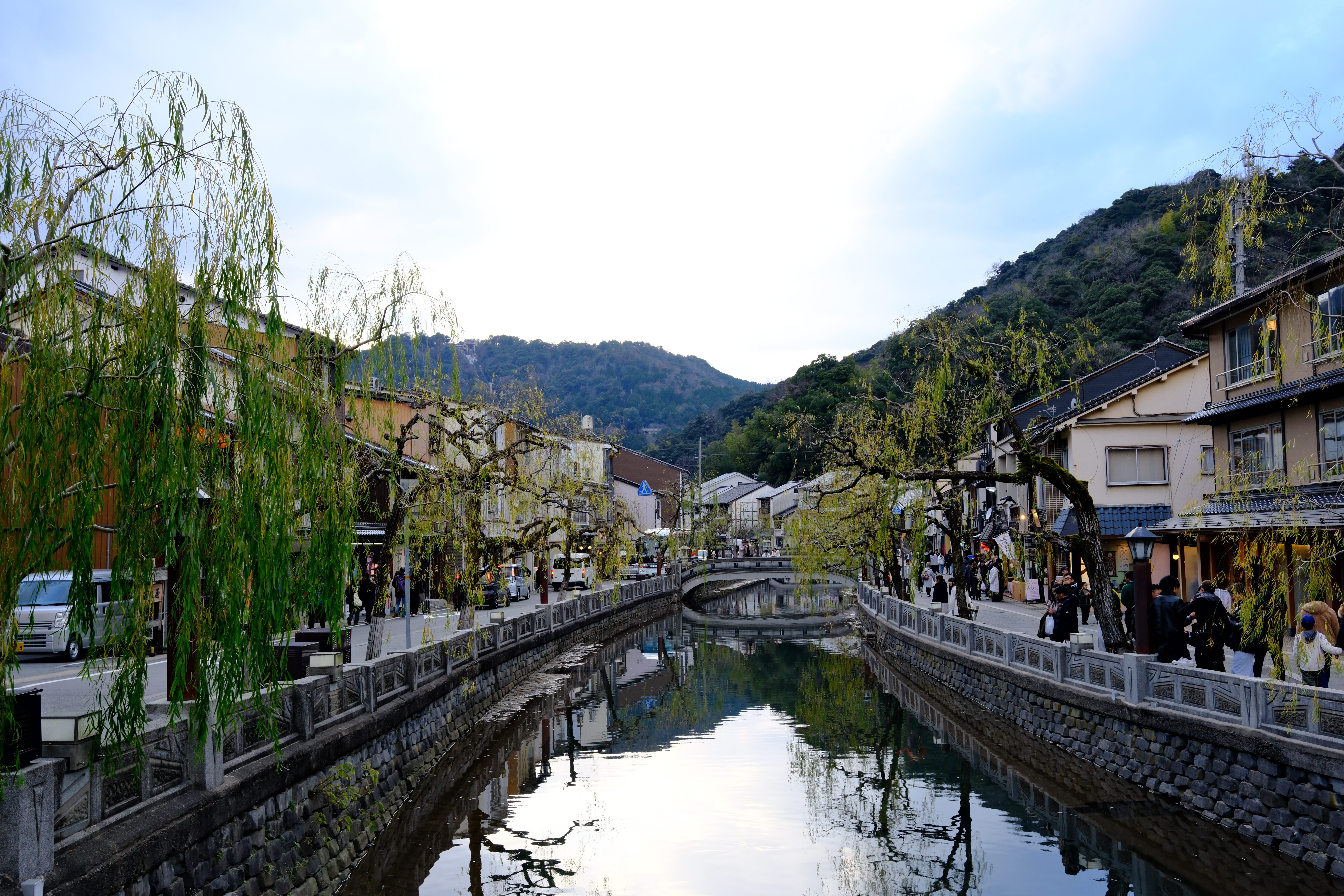
[…] If you ask me what I actually did in Kinosaki, the honest answer is this. Got in the water. Got out. Put the yukata back on. Walked four minutes down the canal. Got back in. Six bathhouses across two nights, and I would have gone back for the seventh if my skin had been willing. That is the town. That is the entire point of the town. Six Bathhouses, Two Nights, One Yukata. […]
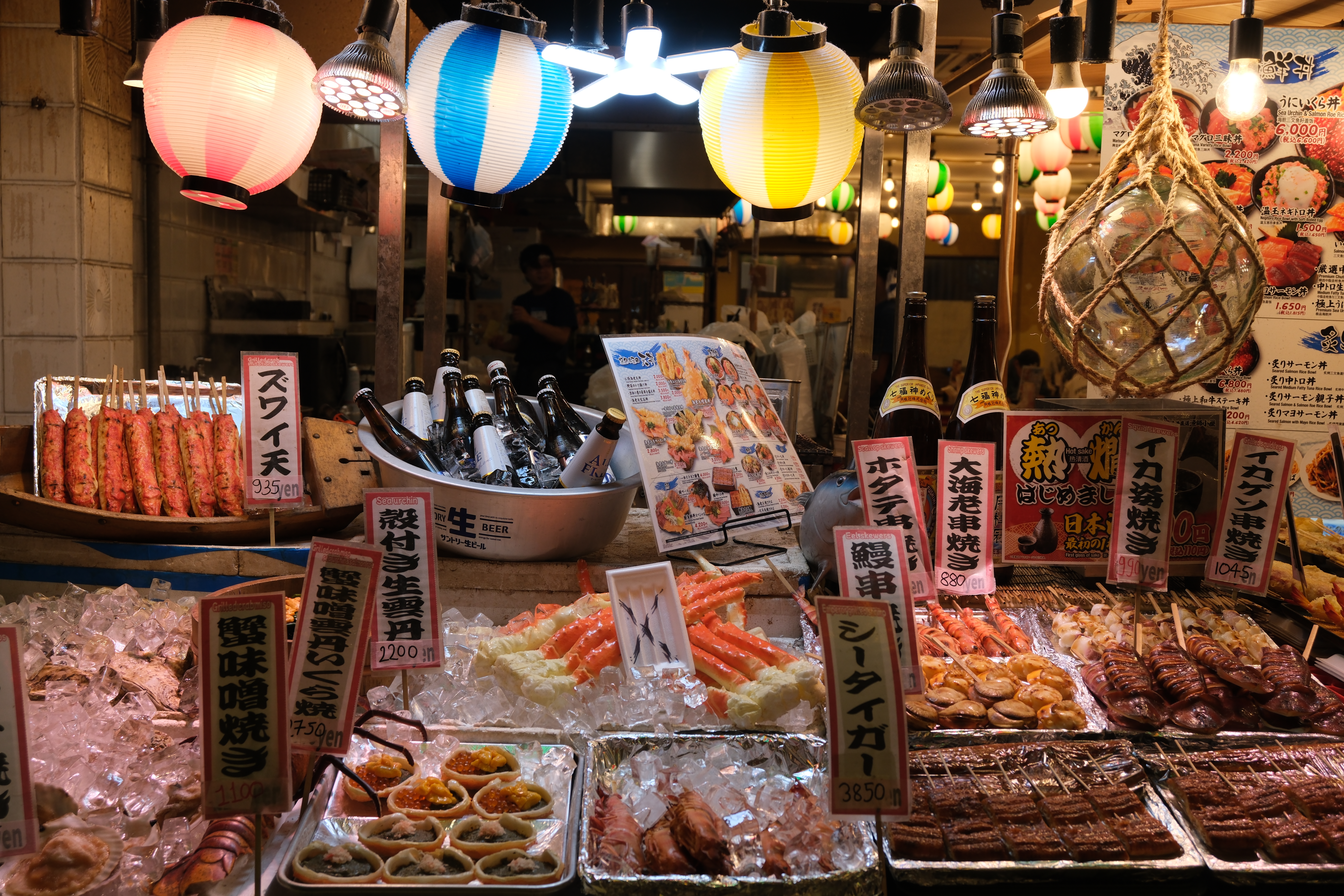
[…] longest unbroken run of absolutely delightful eating in my life, it would be those three days in Kinosaki Onsen. (Jakarta excluded, because nothing is better than my Amma’s […]
The pictures really makes me want to go again
lesssss go
Wow super elaborate and informative, feels like I joined you in the last 3 onsens 😉
U should have!!!
[…] we’re heading to Kinosaki Onsen for a two-night stay. […]