If there were a food that reminded me of Amma’s cooking, it would be Peranakan cuisine. As an Indian immigrant born and brought up in Medan, Sumatra, it was Amma’s (and her side of the family’s) interpretation of Indonesian cooking. Therefore, I grew up eating a somewhat adapted version of Peranakan cuisine, which tends to be spicy and rich, with a tangy sweetness (not from soy sauce or sugar).
The thing is, I had never eaten Peranakan Cuisine outside of home. A fact that didn’t even cross my mind when I was still living with my parents.
Then I moved to Singapore and missed Amma’s home-cooked meals so much that I started searching for Nyonya restaurants. Even then, there was only a handful of them, and aside from the small stall in the Bugis Village that used to make a mean Prawn Tauco, the rest were a bit far from my neighbourhood.
So when I saw the Bonding Kitchen Instagram account (sent by Jik, who suggested trying their Congkak high tea), I added it to my to-do list for the next time I am in Singapore.
Last month, during a brief stopover in Singapore, Fafa and I finally went there for a meal. So, naturally, since Peranakan cuisine was my forte, I handled the ordering.
A Hearty Peranakan Cuisine Lunch
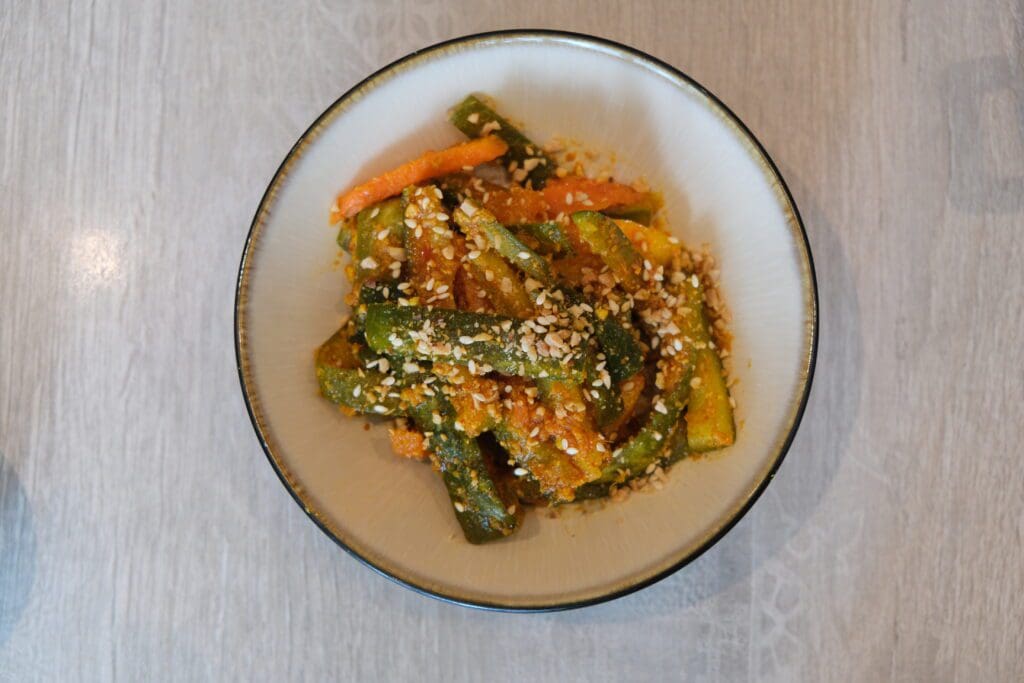
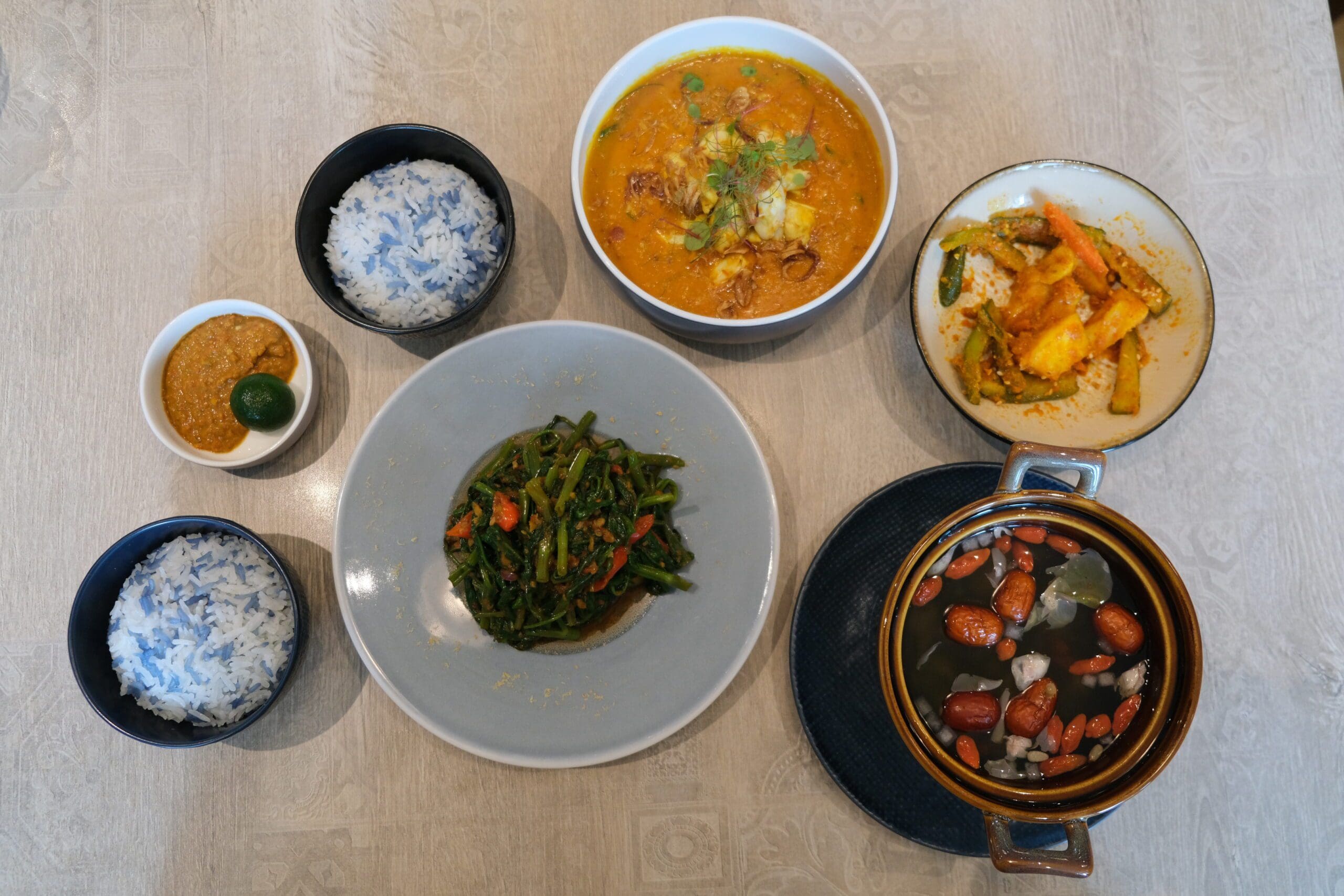
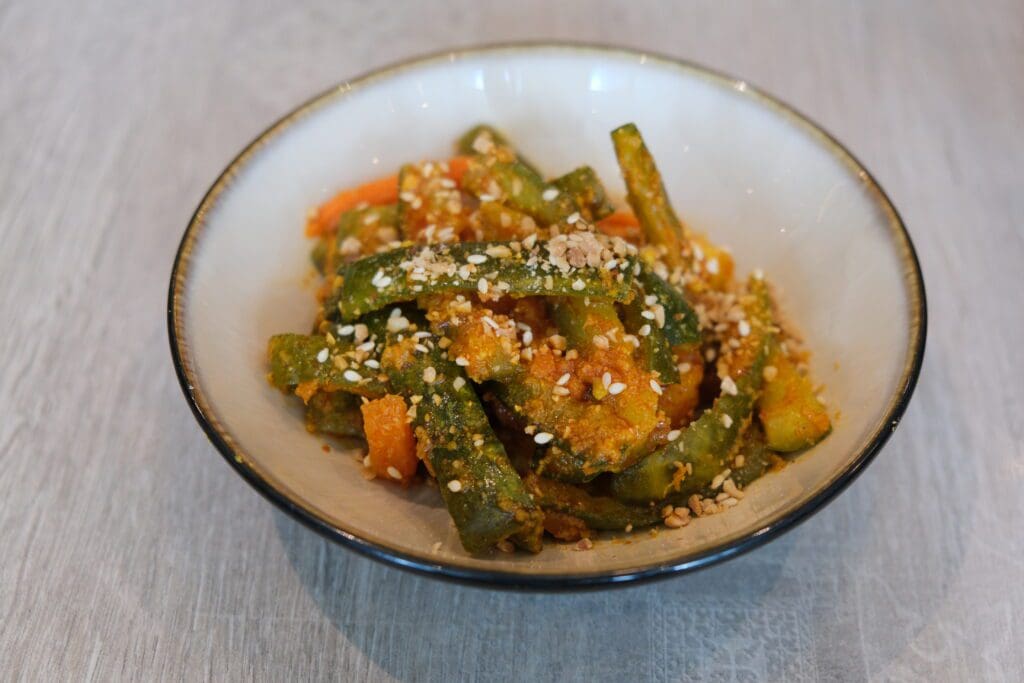
I got us a small plate of Achar (vegetable pickle with peanut coat) for an appetiser. My only complaint was I wish it was served cold instead of at room temperature. IMHNCO (in my humble, not a chef’s, opinion), serving it cold would enhance the taste and prolong the crunchiness.
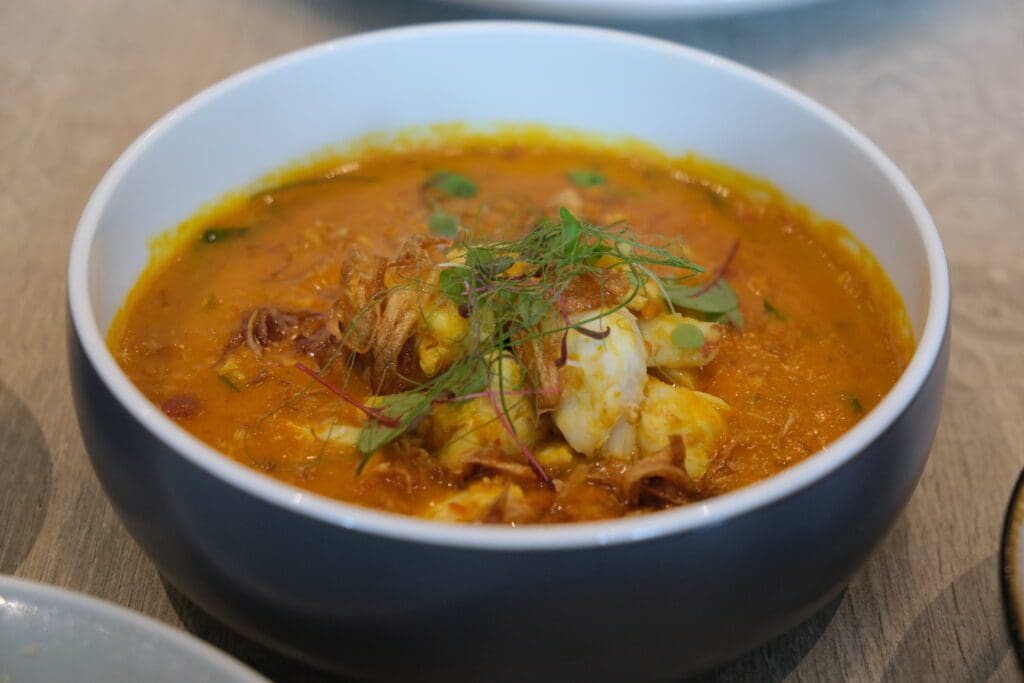
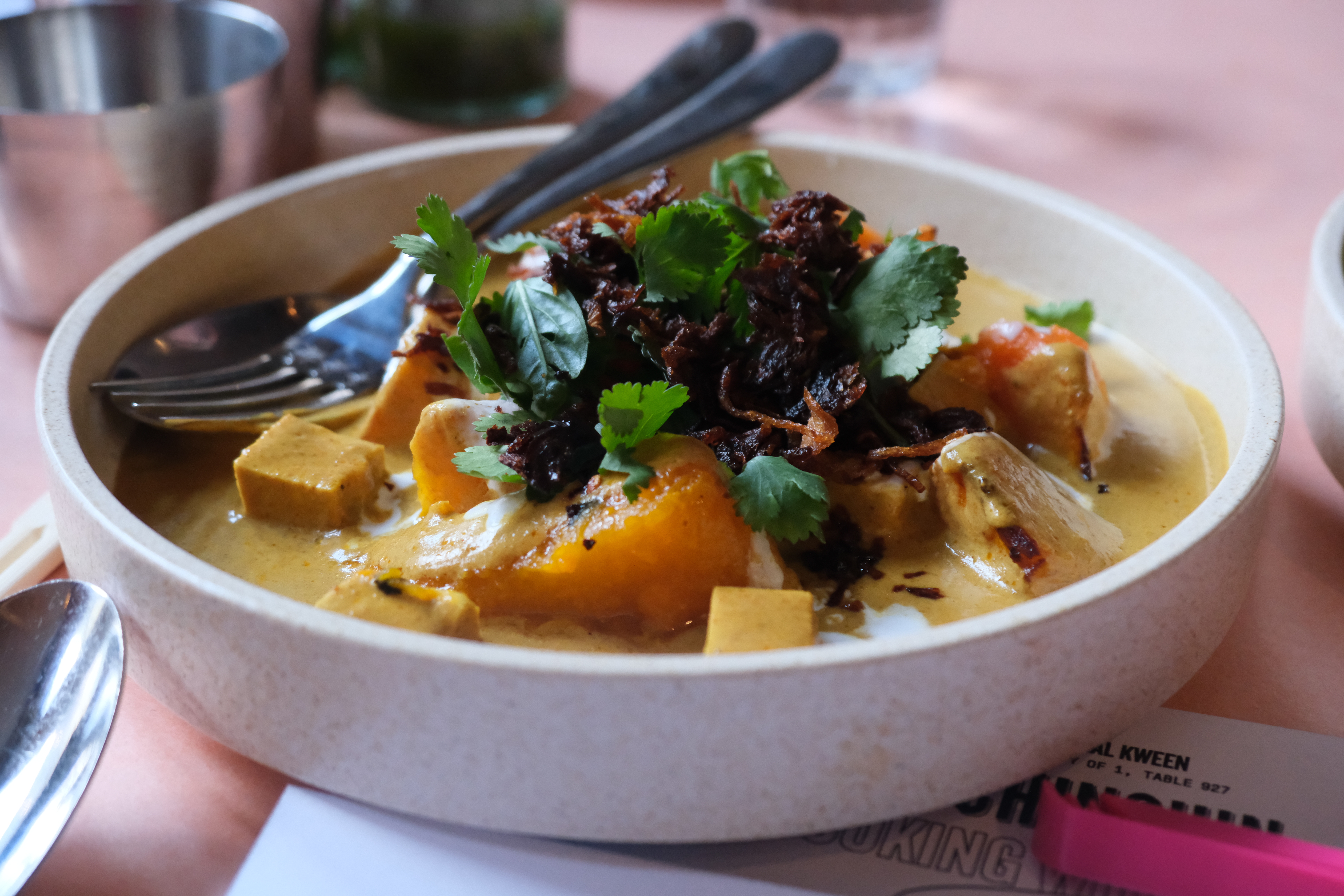
Choosing the main dish took a bit more time. At first, I wanted to get Udang Sambal Petai (stir-fried prawns & stink beans). Udang Sambal is one of my all-time faves of Amma’s cooking, but I asked for Crab Curry (crab meat cooked in coconut milk with other spices) because it was new to me and I wanted to try it.
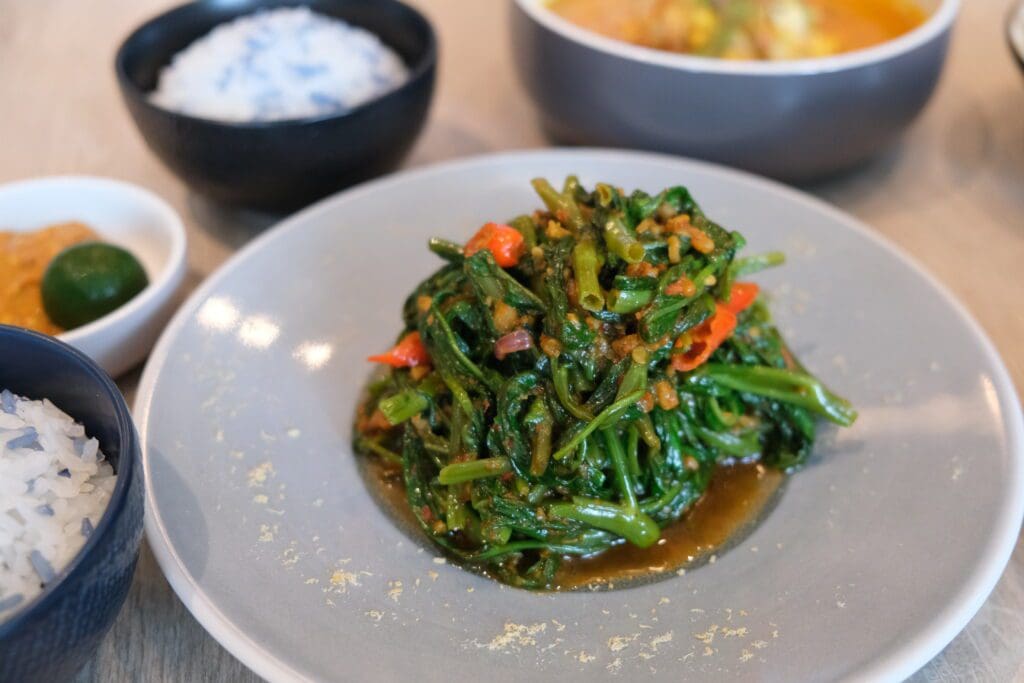
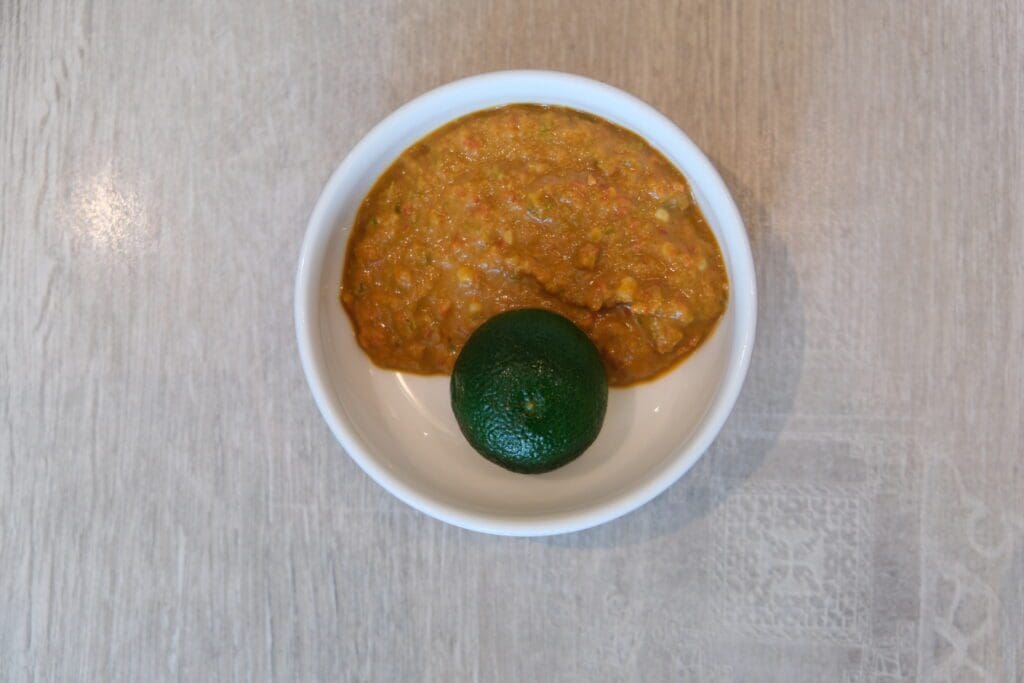
I also got Sambal Kangkung (stir-fried water spinach). It’s one of Fafa’s favourite dishes from a Singapore hawker centre. Then, I asked for blue pea rice and a plate of Sambal Belachan (a chilli condiment made with shrimp paste).
The service was efficient, as things are in Singapore. Eventually, the food came. It only took one spoon to transport me back to the jade dining table at my parents’. It tasted like home. I enjoyed it thoroughly despite not having much appetite as I wasn’t feeling well that day.
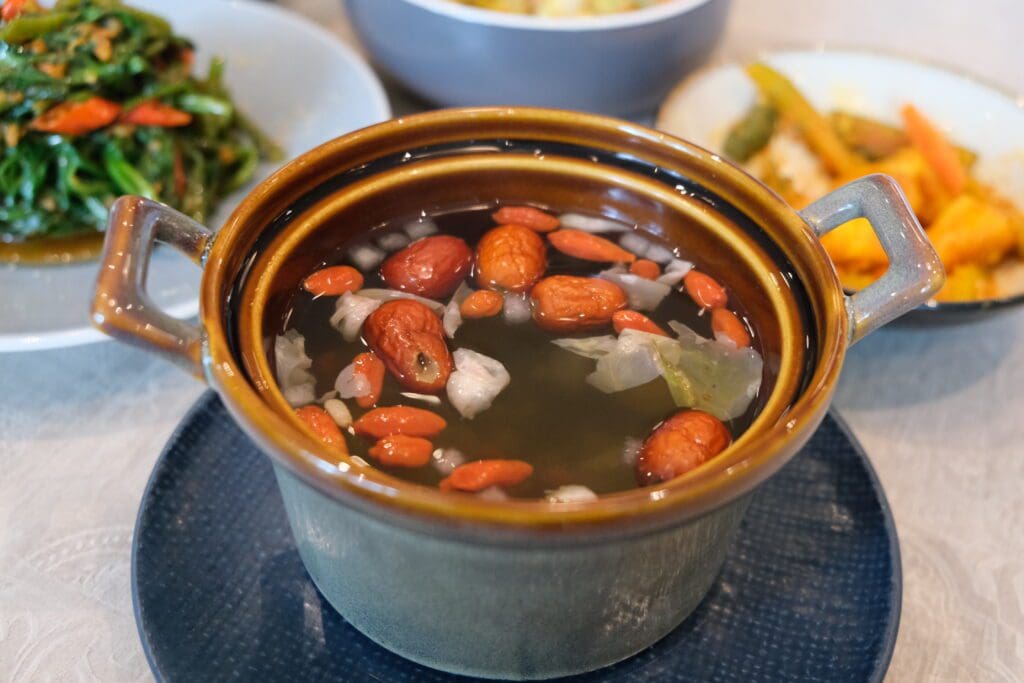
I also got a pot of Eight Treasure tea, priced at $18.
The menu described it as a unique blend of eight nourishing ingredients: red dates, Chinese wolfberries, dried longan fruit, Chrysanthemum flowers, Jasmine tea leaves, ginseng, liquorice and Rosebuds. These herbs, tea and flowers combine to produce a mildly sweet tea liquor with a refreshing taste. It is believed that regular consumption will help to lower cholesterol levels, aid blood circulation and strengthen the body’s immune system.
Was the tea worth it? No. Not at all. But I had to try it because I was curious about what Peranakan-style tea would taste like. Also, how it was described convinced me it’d make me feel better. It didn’t (unrelated, but I stayed inside the hotel room the next day with a high fever).
Bonding Kitchen is an excellent place to introduce your taste buds to the sweet-and-spicy jumble of Peranakan Cuisine when you are in Singapore. But suppose you want to learn more about the Peranakan cult. In that case, you can visit the Peranakan Museum or Intan House, get the Nyonya recipe books, or take a Peranakan cooking class.
Bonding Kitchen // #02-18 Orchard Gateway, 277 Orchard Road, Singapore 238858. Open daily except Monday.
Follow me on Instagram @KultureKween for more recent updates.