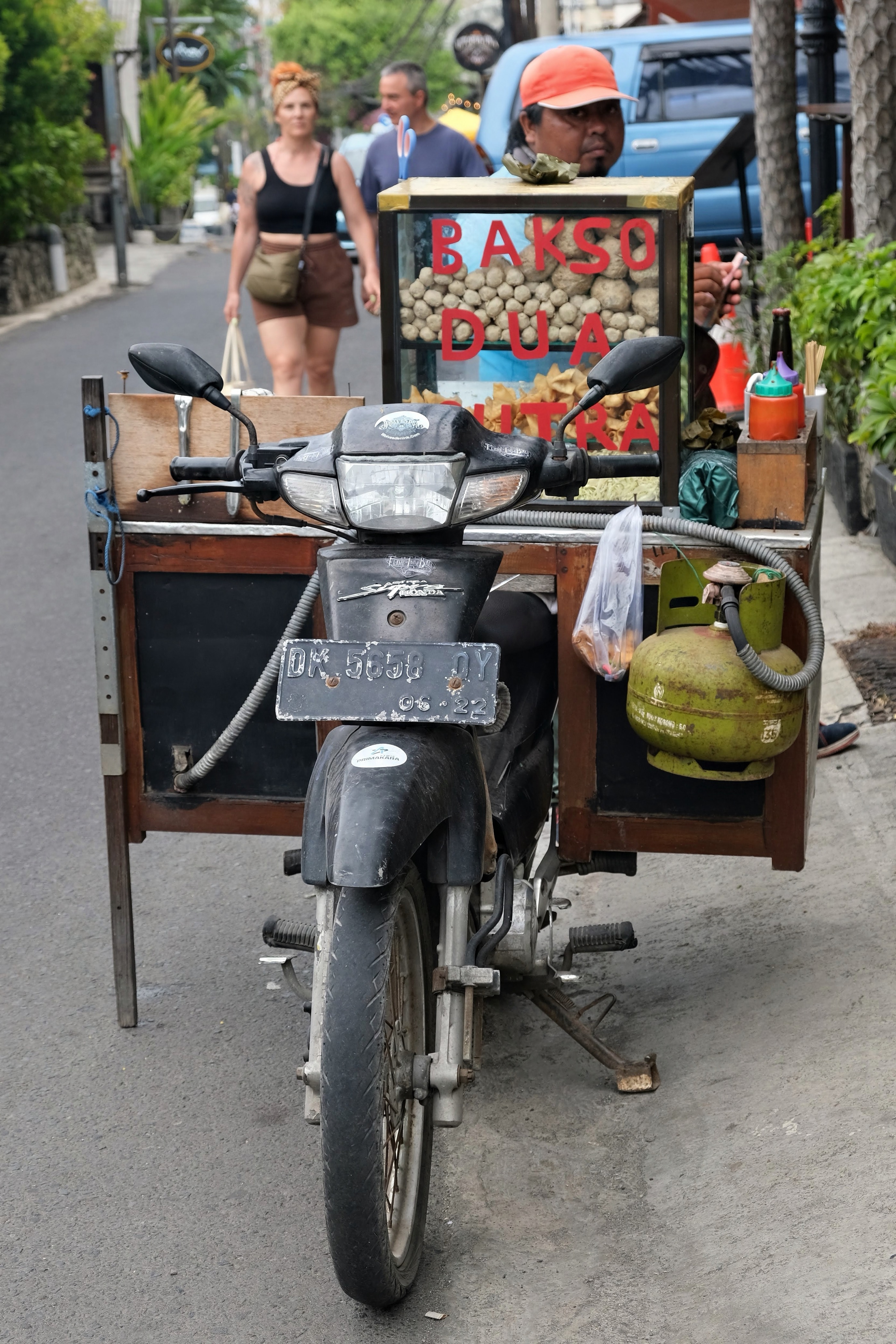
Before GoFood and GrabFood, Jakarta street vendors came to us. Before the whole city lived inside an app, dinner, breakfast, medicine and even entertainment walked (or cycled, or pushed) right up to the front gate. Most are fading now. Here are the ones I grew up with, the ones that have become a rare sight, and the ones I have the fondest memories of.
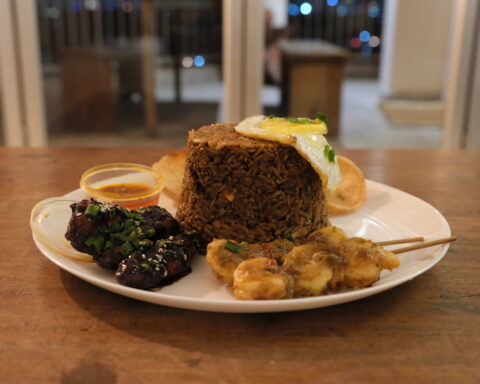
Nasi goreng tek-tek man
He came out after dark, pushing his cart down the street. The name is literally the sound: tek-tek is the clanging these sellers make by banging their spatula against the wok, both while cooking and to let the neighbourhood know they have arrived.
For a while, he stopped by our home every Saturday night, because my parents entertained their group of friends most Saturdays from my primary through secondary school years. Card games, drinks and so much laughter.
Amma usually cooked and we would have eaten already, but closer to midnight, he would park in front of our home and hit his wok a little louder than usual, drawn in by the sound of our laughter. The orders went in: mostly extra spicy, one or two with less chilli, one not spicy at all. And if nobody came out, he hit the tek-tek louder still, until someone finally did, even if only to say (very rarely, at that) that we weren’t ordering tonight.
The nasi goreng was smoky and delicious. No beef, of course, because we are a Hindu household and we don’t eat beef at home. He brought his own plates and spoons, but Amma always insisted we use ours, which, even back then, I never thought was as fun or as good. Maybe what I couldn’t put into words as a kid was that it made the experience feel less authentic. Occasionally I got to put in my own order, and no matter how much I begged, Amma ordered it mild for me, with no sausage.
Tek-tek carts haven’t disappeared, but they’re harder to reach. Jakarta is filling up with gated “cluster” housing estates that don’t let the carts in. Saturday midnight nasi goreng at the gate is turning into a privilege of older streets.
Bread man
Kind of the opposite of the nasi goreng man. He came by bicycle, with his bread sitting in a glass case in front of him, and he came less often, usually late morning on weekdays while I was at school. So we only bought from him occasionally, on the days I happened to be home. From memory, the bread was never warm. I always went for the chocolate one; Amma always went for the coconut.
I don’t think I appreciated him enough then, but I have snippets of fond memories of buying a ton of bread when my cousins and aunties were around, or when Amma was hosting a kitty party. I miss those moments dearly, and I wish I had captured them better.
Jamu lady
Similarly, the mbok jamu sold wellness elixirs door to door. “Mbok” is a respectful title for older Javanese women from humble backgrounds, and many jamu sellers in big cities like Jakarta, Bandung, Bogor and Surabaya trace their roots to Sukoharjo in Central Java, especially the sub-district of Nguter.
Her bakul was bamboo, slung with a long cloth, and held around a dozen bottles, which is where the name jamu gendong (carried jamu) comes from. Teenage me dreaded her, because I didn’t like jamu. It tasted horrid to a teenager, but Amma would force it on me because it was good for me. The jamu lady would mix and match from those bottles and make the concoction right there in front of us. A pharmacist on foot. Pretty cool to think about now.
The bakul is vanishing, but jamu isn’t. These days many sellers have swapped the sling for a motorbike, with the bottles packed into a wooden box on the back seat. And in 2023, jamu wellness culture was added to UNESCO’s Intangible Cultural Heritage list for Indonesia. The woman with the basket is getting rarer, but the drink she carried is now officially protected. (Teenage me would have rolled her eyes all the way into the future.)
Mask Monkey (Topeng Monyet)
When I was young, we had topeng monyet (Amma still refers to it as Drum Monkey until today), a travelling monkey circus that went door to door. The name means “masked monkey” because the monkeys often wore plastic baby doll heads over their faces. You could call them in as they walked down the street, and Appa always did, because I loved it (who wouldn’t, at that age?). The monkey would dance and do tricks, and the whole show happened right in our front yard.
In 2013, the governor moved to ban the shows to protect animal welfare. Looking back as an adult, I understand why it had to go. It is the one vanishing trade on this list I don’t wish back, even if the memory still makes me smile.
These days, when I’m back in Jakarta, I order through an app like everyone else. The food is good, it arrives fast, and I can track it to the minute. But nobody bangs a wok outside the gate anymore, nobody mixes my jamu in front of me, and nobody’s bread case catches the late morning sun.
Convenience won, and I wish it hadn’t taken the theatre with it.
What I really miss isn’t only the food. It’s what came with it: a house full of laughter at midnight, aunties and cousins around the bread case, Appa calling the monkey man in just to see little me happy. The vendors brought the food to our door, but we made the memories on our side of the gate.
So if you’re ever in Jakarta and you hear tek-tek outside, go out to greet the ever-vanishing Jakarta street vendors. Even if it’s only to say you’re not ordering tonight.
Follow me on Instagram @KultureKween for more recent updates.