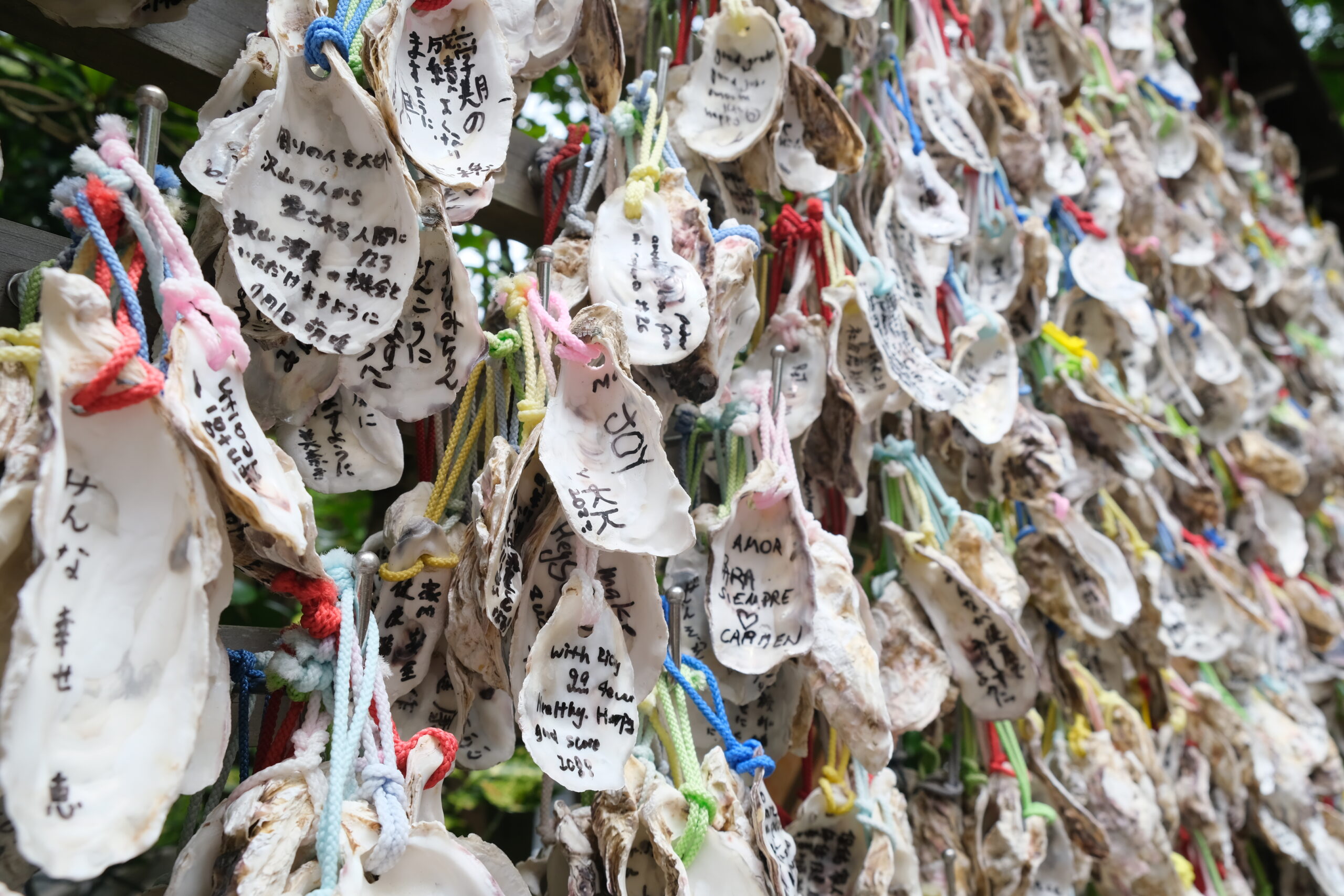
Kakigara Inari Shrine was not the first shrine where I wrote on an ema board — but it was the one that felt the most certain. The most intentional. The most called for during this trip.
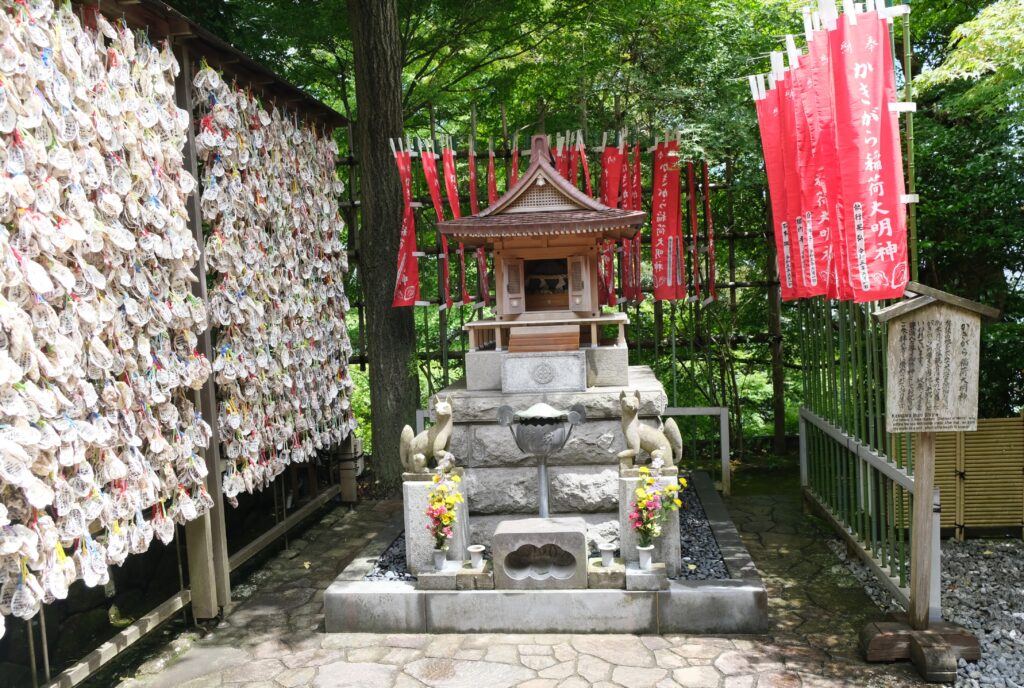
By the time I found it, I had already explored most of the temple grounds in Kamakura (including the museum — not worth it), bought omamori for Amma, and wandered off toward the quieter side paths. And then I stumbled upon this tiny Inari shrine, dedicated to a deity said to have drifted ashore with oyster shells.
Oyster Ema Board
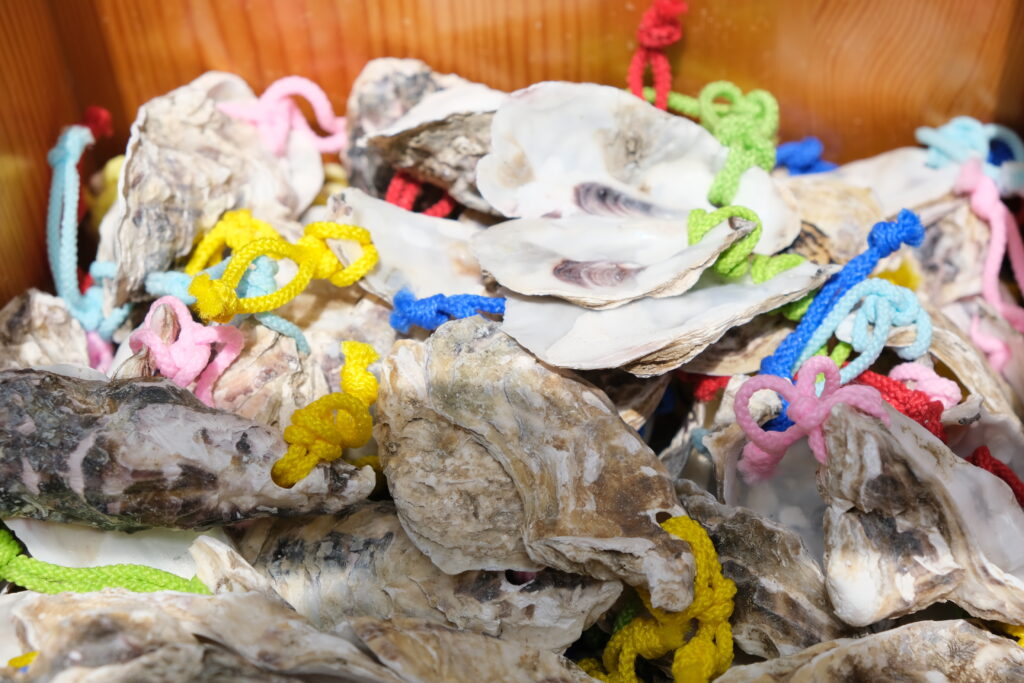
The ema boards there were shaped like oysters.
I offered 300 yen, wrote my only wish for this year — and forever — JOY — and bowed to the oyster enshrined inside. Only afterwards did I read that the shrine is associated with prayers for safety and overcoming misfortune. Oysters, apparently, are also symbols of wealth.
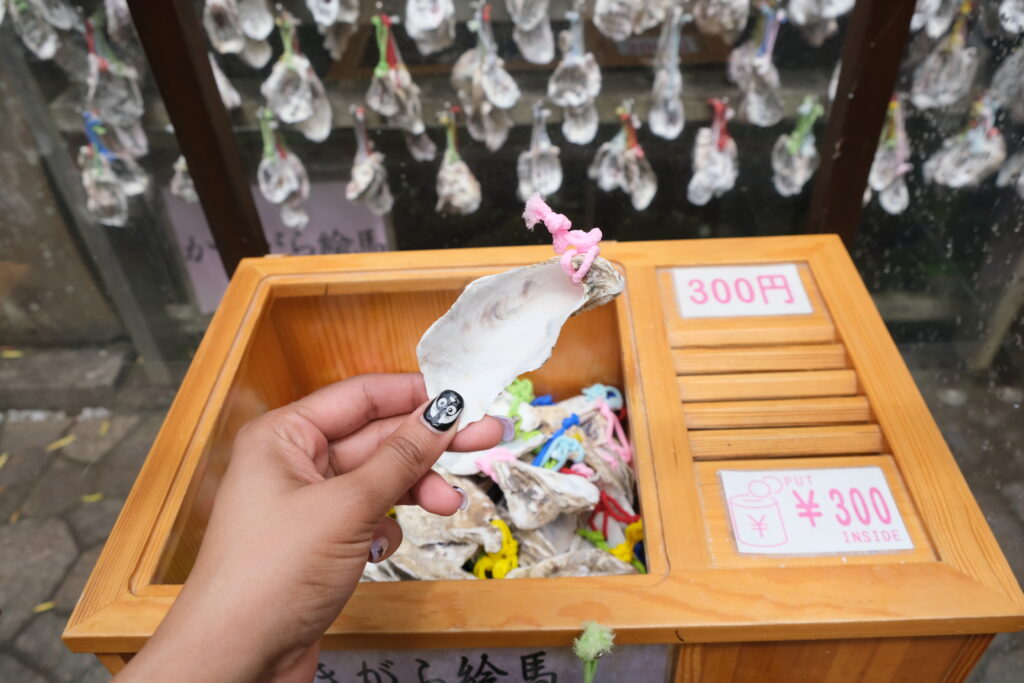
Which feels fitting, in its own way.
But my relationship with the Inari Shrine and the Ema boards began years earlier at Fushimi Inari Taisha. Technically, my first ema wasn’t even mine — it was Yin’s board that she invited me to share. We had taken the train from Kyoto Station, and I remember being completely awed by the endless tunnel of vermilion torii gates. The place felt otherworldly. That Torii later became my first tattoo. And Inari? That’s still in the list.
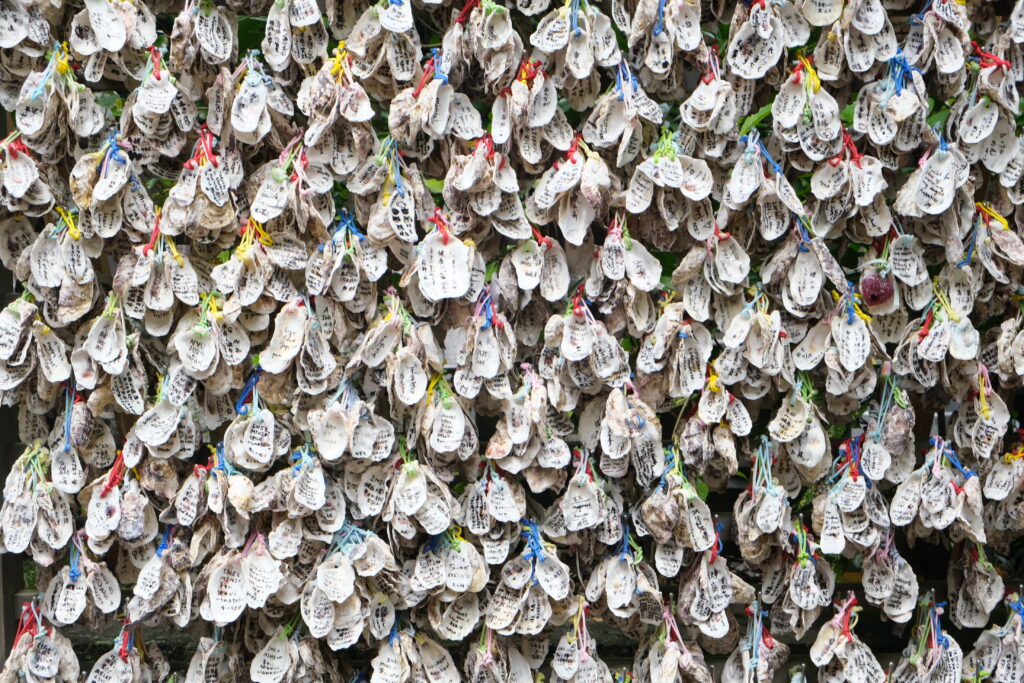
That first Ema was shared between Yin, Vi, Fla, and me — our wishes sitting side by side in careful strokes. Since then, writing on an ema board has become a quiet tradition whenever I visit Japan. I never plan it. I just wait for the feeling.
I even passed on the adorable cat-shaped ema at Gōtokuji temple, despite Amma insisting I’d love it. “Not this time,” I told her.
Because sometimes, the shrine chooses you.
And this time, it was the oysters.
Follow me on Instagram @KultureKween for more recent updates.
[…] knew I’d like Kamakura the moment we arrived. We were waiting for the local train, so I went to the souvenir shop, where […]