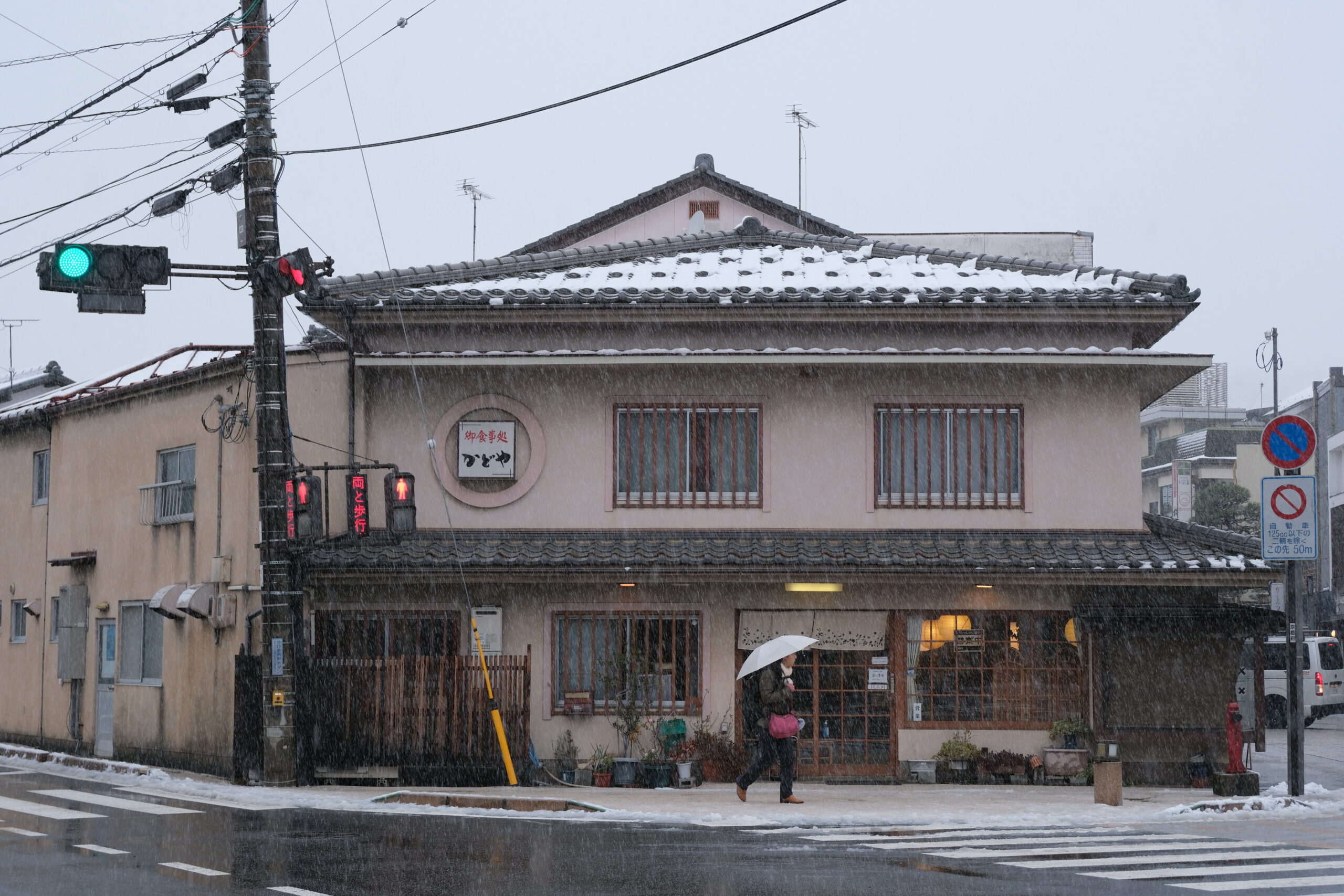
The trip to Ine started on a very cold morning. The bus slowly pulled away from Kyoto city and into the countryside, where the buildings began to thin out, and the mountains crept closer. The snow kept falling more heavily the further we went.
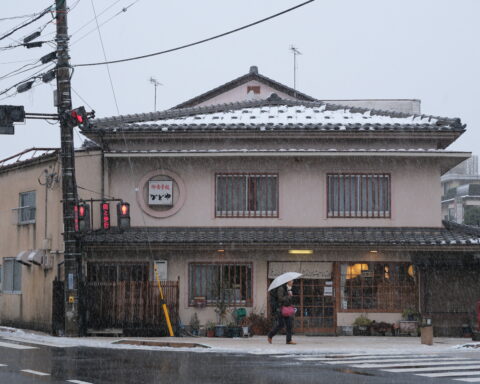
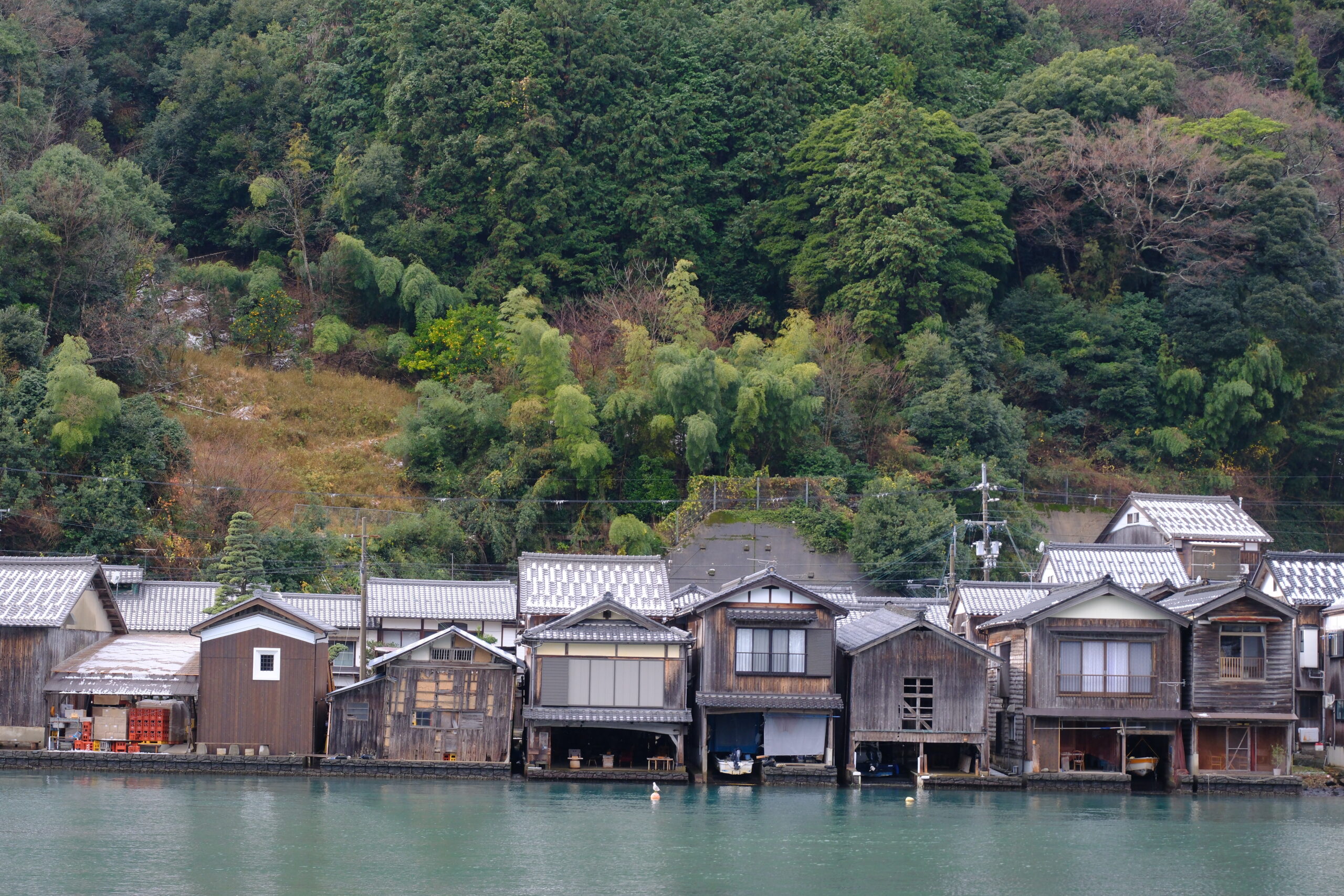
Ine is a small fishing village on the northern coast of Kyoto Prefecture, famous for its funaya — traditional wooden boathouses built directly over the water. Around 230 of these houses line Ine Bay, creating one of the most unique seaside landscapes in Japan.
Eventually, after many winding turns along the coast, we arrived.
Ine Bay Sightseeing Boat
Our first stop was the sightseeing boat ride around Ine Bay — very touristy, yes, but we were tourists after all. The weather was dramatic: cold, rainy, grey, and windy. Even before boarding, I had already stocked up at the small gift shop, including a framed artwork of the Ine funaya for Jik.
Gift shops have always been my weakness, and at this point, I don’t even pretend to resist anymore. I simply call it healing my inner child.
Soon we were loaded onto the boat. I had a bag of chips ready to theoretically feed the seagulls, but I promptly put them away when someone on the boat warned me, “Be careful. The seagulls don’t know the difference between your fingers and the chips.”
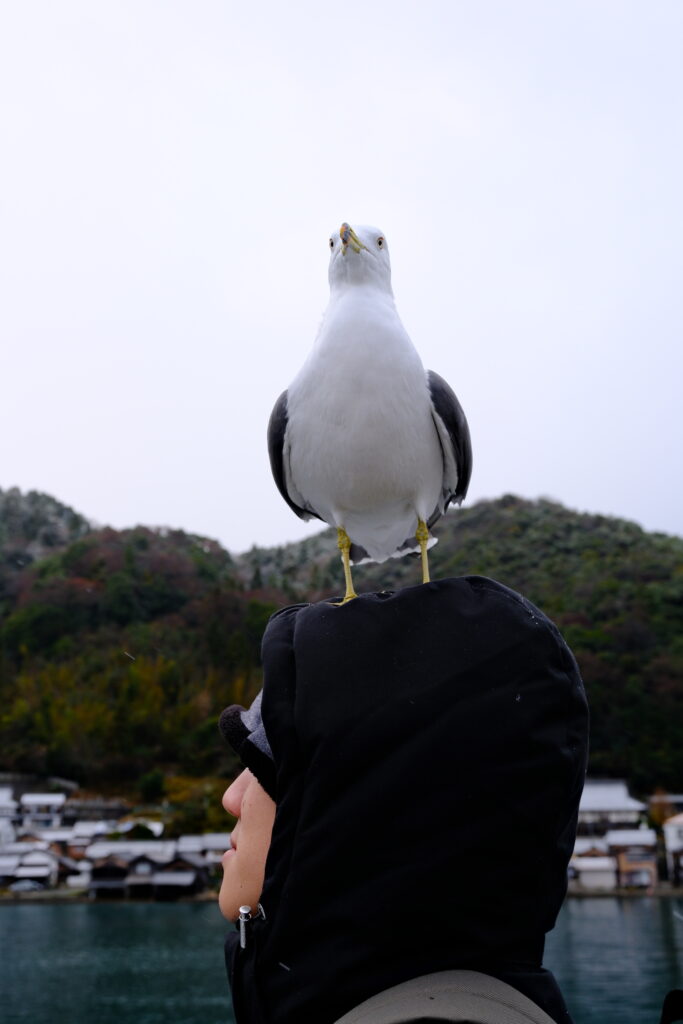
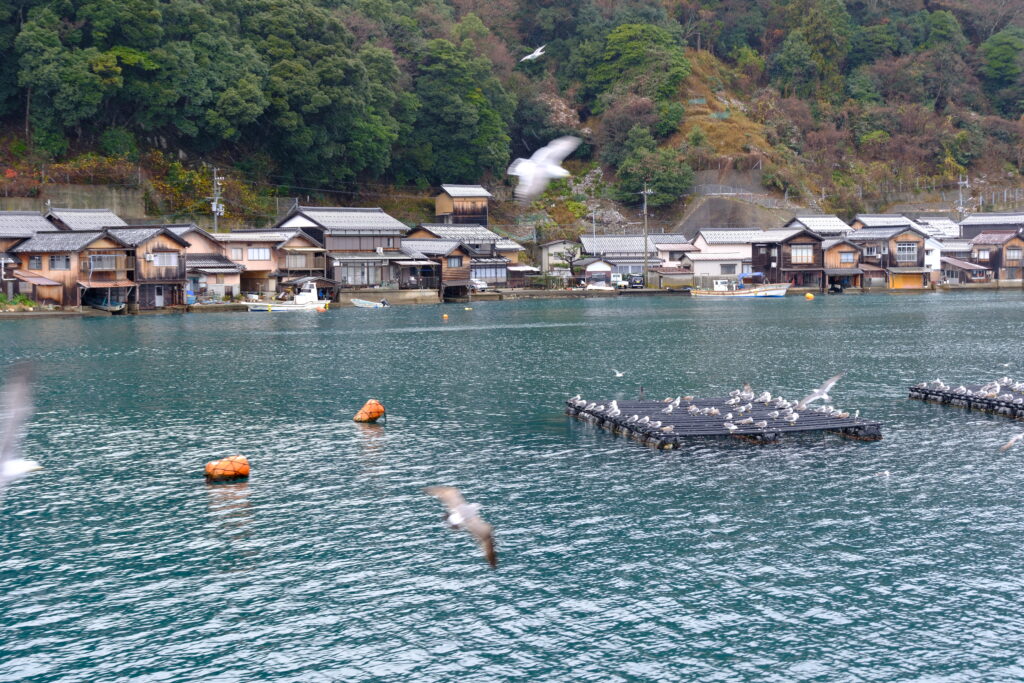
At first, we were seated downstairs, but soon after we left the dock climbed up to the upper deck. Into the rain, into the wind, and into what might have been the most unhinged flock of seagulls I have ever seen in my life. It was so cold that I was reminded of the night in Reykjavik when we were chasing the northern light — except this time, accompanied by aggressive seagulls and wild winter wind. I cannot think of a moment on this trip when I have been more thankful to have my not-at-all-stylish snow jacket with me. It protected me from the rain, the wind, and the occasional pecking birds.
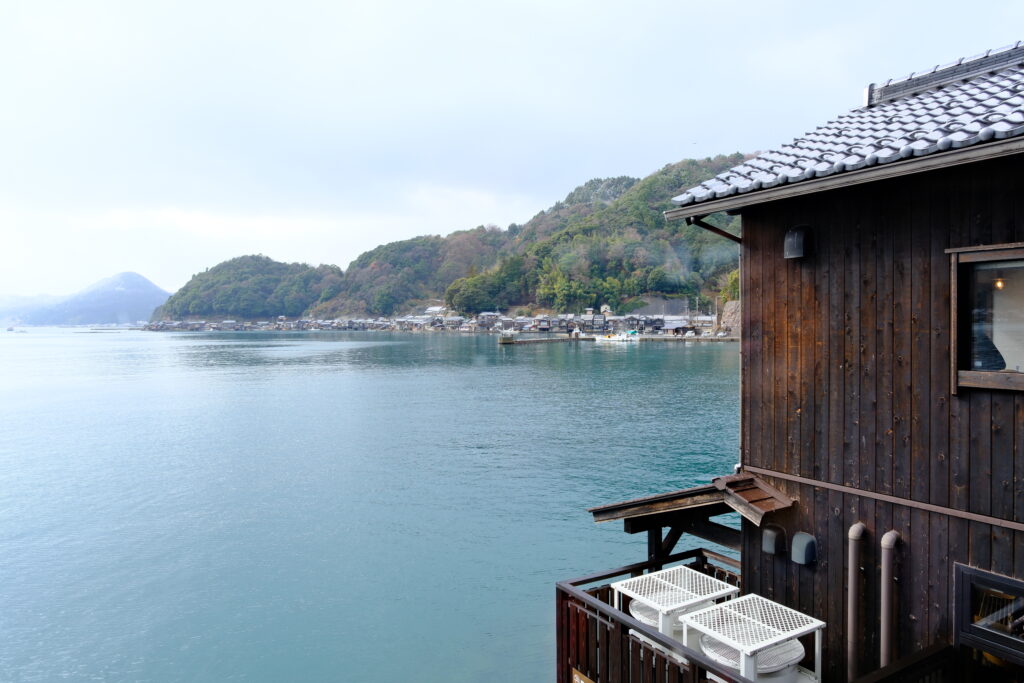
Standing there, fighting the weather and the birds, the reason for the boat ride eventually revealed itself: the lines of Ine funaya — the famous Ine boathouses. The wooden houses seemed to float quietly above the water, their reflections repeated on the bay water. They were so serene, almost magical, that I found myself wanting to see them up close — and almost instantly imagining what it might be like to live in one.
One of my biggest travel pet peeves is when people say, “Once you’ve seen one, you’ve seen them all.” In my humble opinion, that statement is a bit of a moot point, especially when it ignores the effort, timing, weather, and alignment of so many things that allow you to witness places like this. As a small act of personal rebellion, whenever I travel and find myself awed by a sight or experience, I tend to ask myself a question: What other places have I been lucky enough to see that felt like a parallel version of the current place?
In that moment, the colourful houses I once saw along a fjord in Norway — also from a boat — came to mind. The memory washed over me with a sense of gratitude.
I then took a few photos, filmed my usual buah manggis buah kedondong video for my parents, and eventually we stepped off the boat.
Wandering Ine
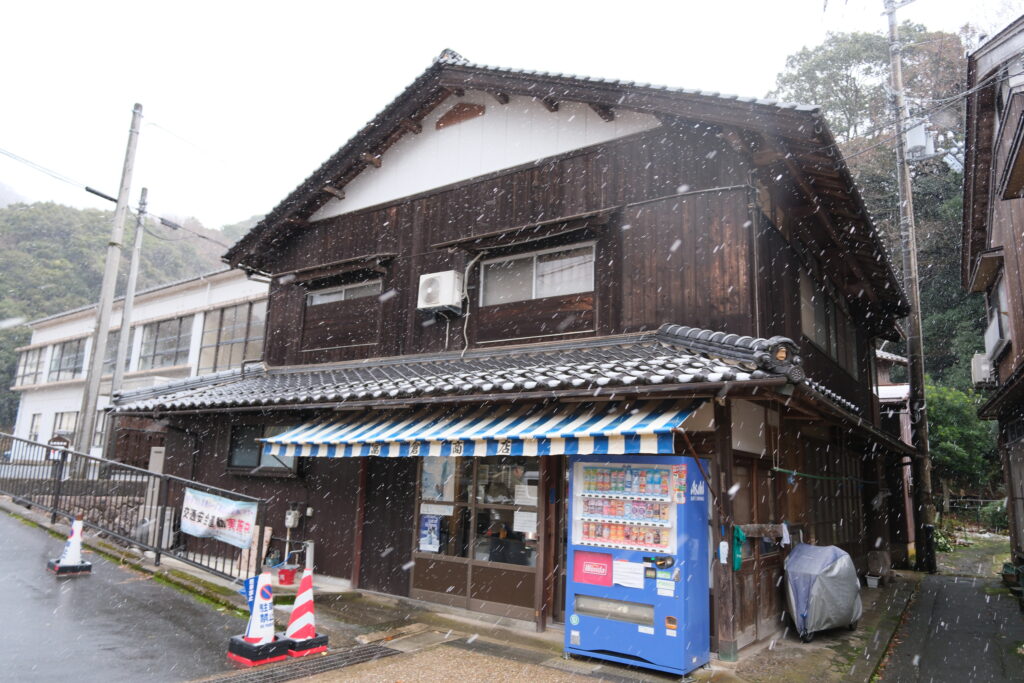
From there, we continued into the town of Ine itself. I made Fafa take thousands of photos of me. “For the blog,” I told him, which was technically true. For six years, I’ve been using the same profile aesthetic on my blog — a photo taken in Kobe during our honeymoon — and that day it was the same formula again: snow, a transparent umbrella, and Japan. Somehow, though, standing in Ine, it felt slightly different.
Eventually, we gave up and went looking for lunch, ending up at a half-hidden restaurant called Wadatsumi. We were ushered upstairs and seated by a beautiful window overlooking Ine Bay. Sitting there, looking out across the water and the rows of funaya houses, it dawned on me: I am inside the funaya village. Some dreams really do come true almost instantly.
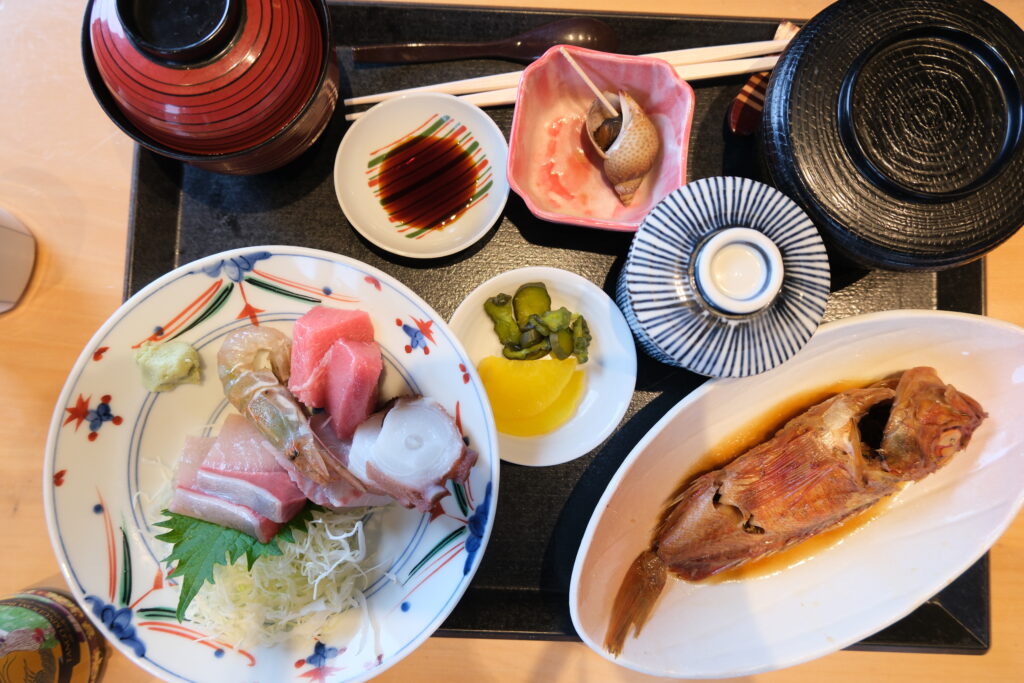
I ordered the Urashima Gozen lunch set menu, which included a zappetiser, fish hot pot, Chawanmushi, simmered fish, and rice. When Fafa asked if I wanted the fancy winter delicacy reservation only in the Ine Buri set, which was four times more expensive, I simply shook my head. “No,” I told him. “This set is already luxurious.”
The food was absolutely beautiful, but it wasn’t really about the food. It was the moment. Sitting there in Ine, looking out at the winter bay, I felt overwhelmingly happy — the kind of happiness that comes from feeling you are exactly where you are meant to be, even if only for a moment. I told Fafa that in a parallel world, I would own a small countryside home somewhere near Kyoto, occasionally take the train to work in Yokohama, and keep a holiday house here in Ine. “We’ll figure out the logistics later” I reasoned before he protested.
The Parallel Ine Café
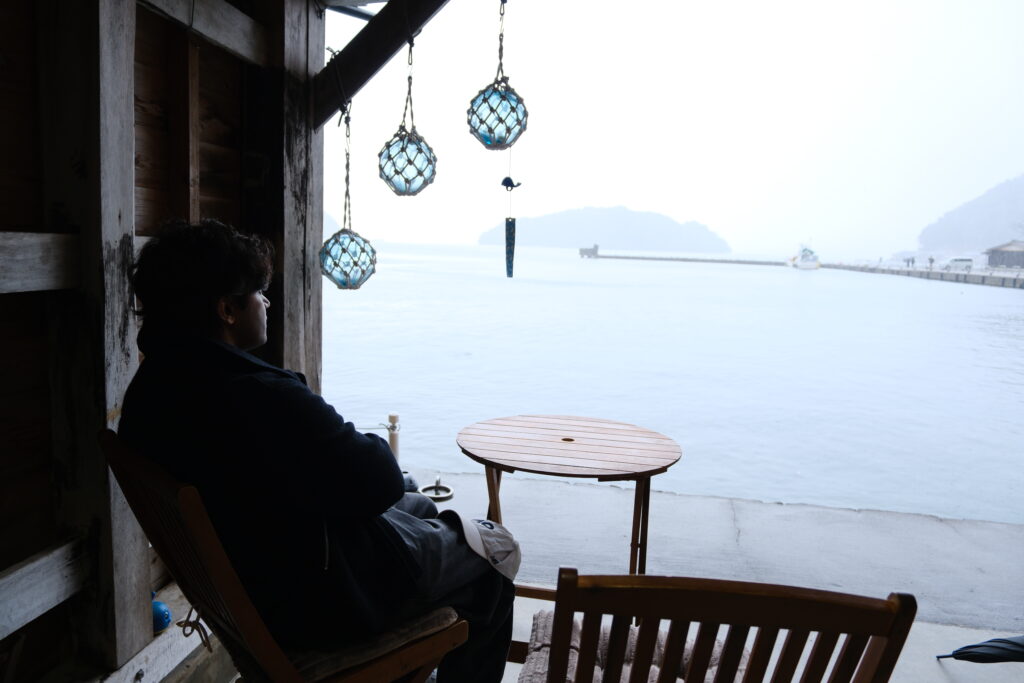
After lunch, we continued wandering through the quiet seaside town. It reminded me a little of Arashiyama or Kii Katsura — peaceful, timeless, and slow. Eventually, we passed a small café, and I insisted we stop to share a dango and matcha.
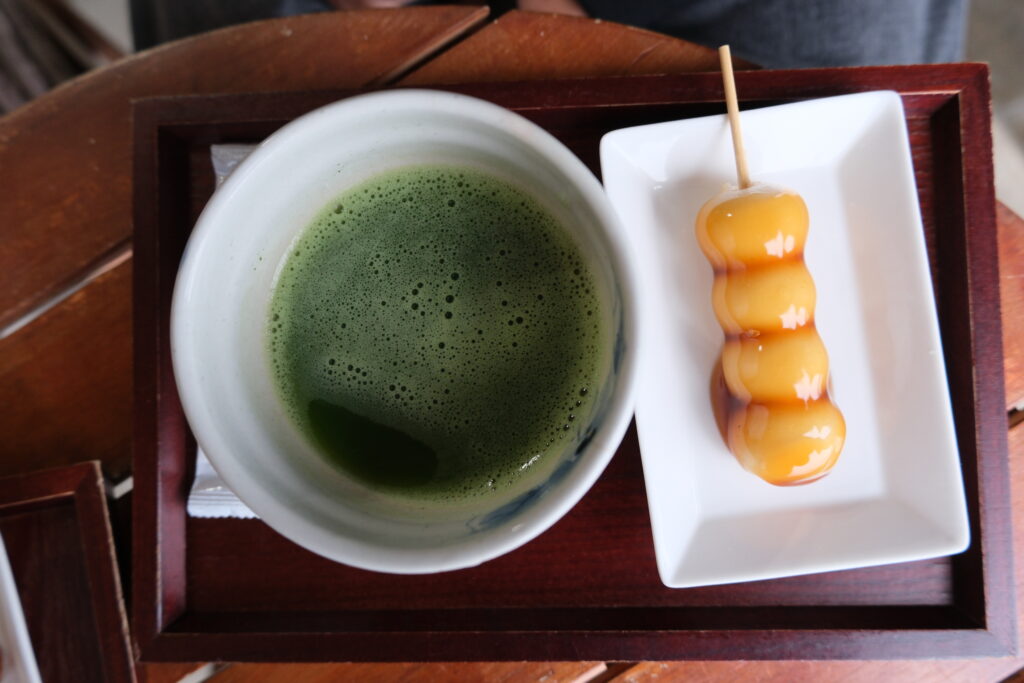
Inside, there was only one woman running the entire place. She was busy doing other things when we walked in, but eventually came to take our order. By that time, the outdoor seats had become empty, so we sat outside overlooking the bay. The water in Ine Bay was almost completely still, broken only by the dropping snow
Maybe I was drawing too many red threads between memories, but the moment reminded me of a café Vi, Rachel, and I once visited in Jeju twelve years ago. That café was also called Ine. Coincidence — or perhaps joy-cidence. My mind could not help building stories, imagining that someone from Ine once moved to Jeju and opened that café there.
I(ne) Love You
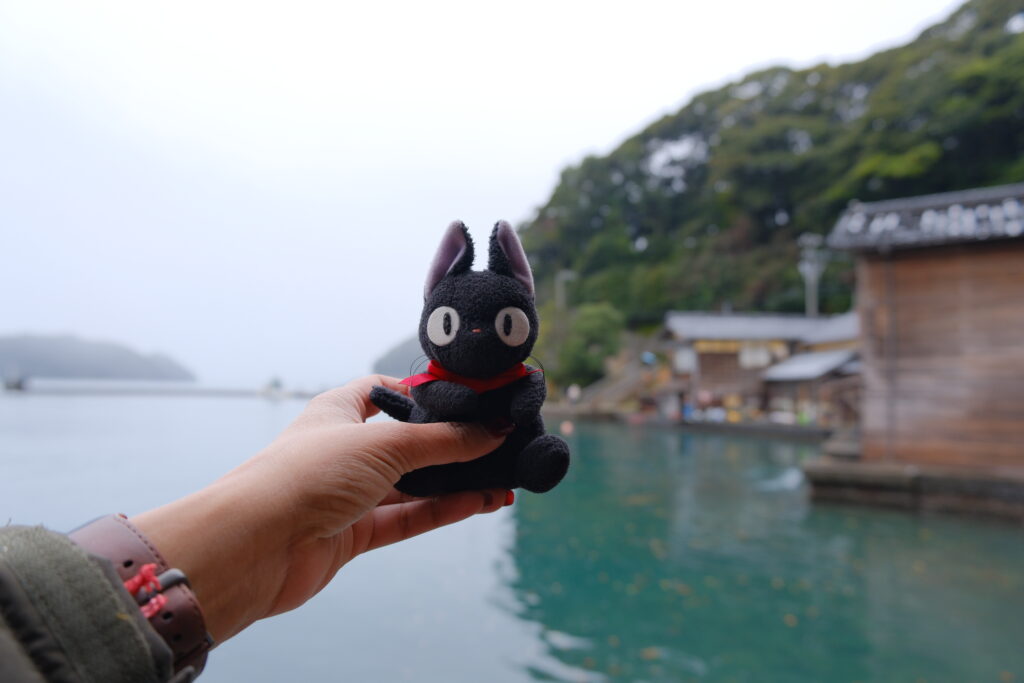
Eventually, we had to leave the town, though not before stopping at the tourist centre to collect my goshuin and buy a few Ine stickers.
Maybe in this life I only visit Ine. But somewhere, in a parallel one, I am already living here. Ine, my heart belongs to you. And I will be back.

Follow me on Instagram @KultureKween for more recent updates.