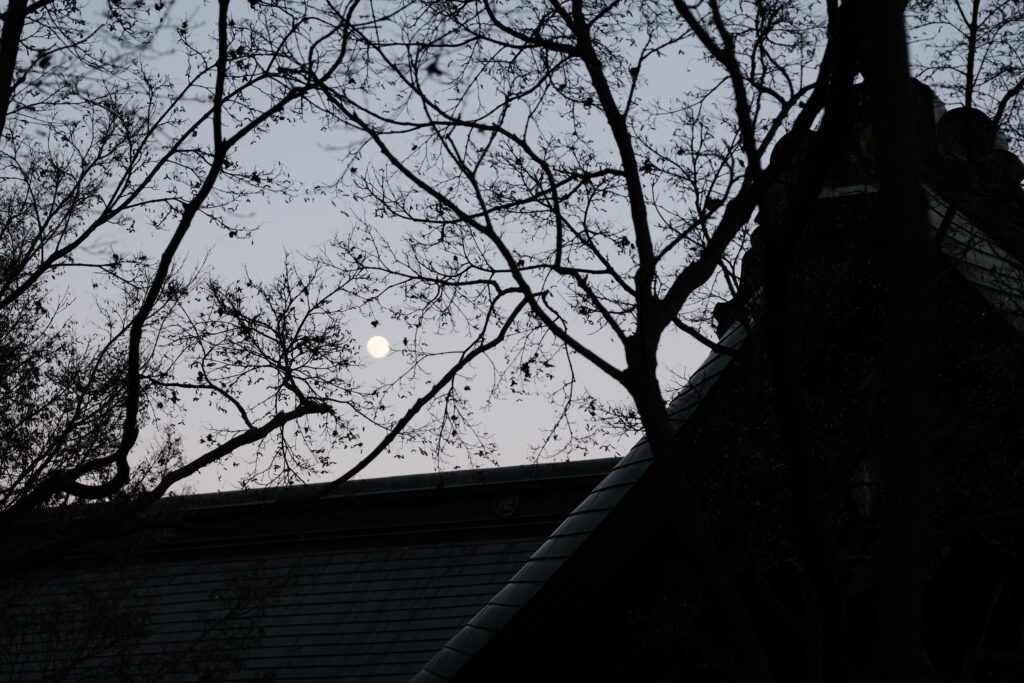
Nyoirinji Temple was not what I expected to be doing under a full moon in Gemini in Fukuoka. But there we were, walking through quiet neighbourhood streets toward a temple famous for something rather unusual — thousands of frogs.
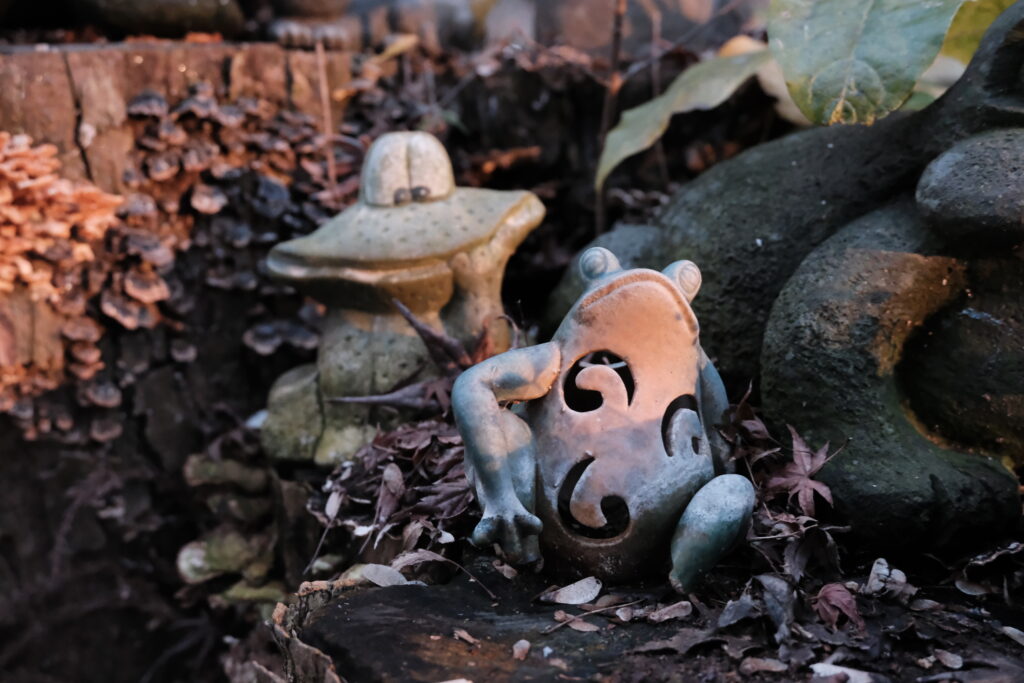
From the moment we stepped through the entrance, frogs appeared everywhere. Stone frogs, ceramic frogs, wooden frogs — even the trash cans had frogs on them. Very quickly, it became clear that trying to count them would be a completely futile task.
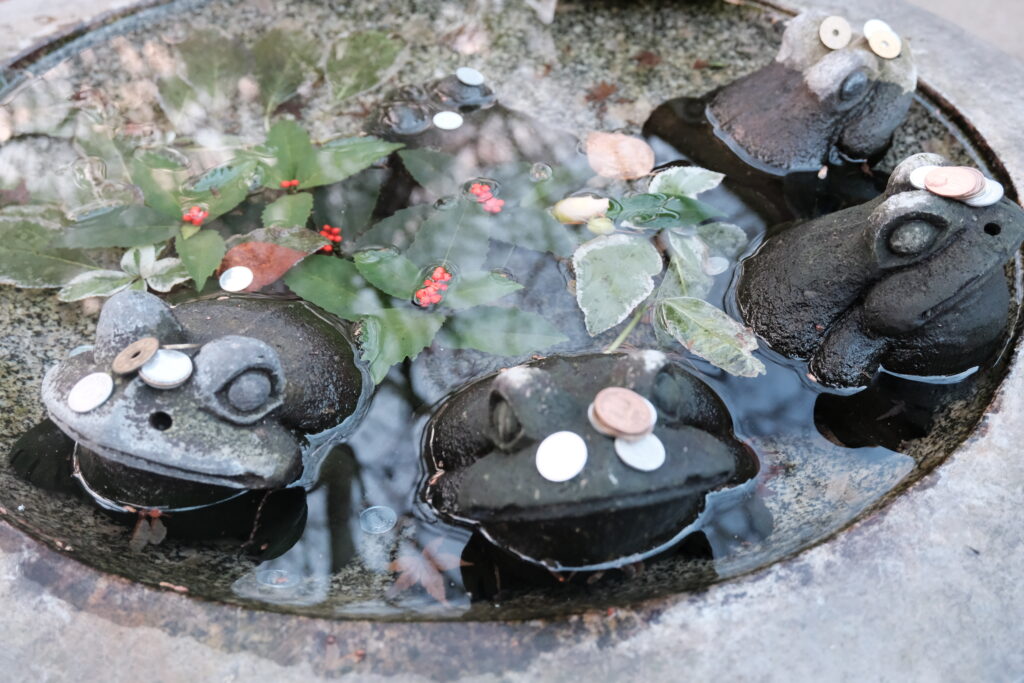
And that’s because there are more than 5,000 frog figurines scattered across the temple grounds.
Despite the overwhelming frog population, Nyoirinji Temple is not actually dedicated to a frog deity. The temple itself is much older, dating back more than 1,300 years.
The frogs came much later.
In the early 90s, the temple’s priest returned from a trip to China with a small jade frog ornament. He placed it in the temple and gradually began collecting more frogs. Visitors started donating their own frog figurines, too, and over time, the collection grew into what it is today. Eventually, locals began affectionately calling the temple “Kaeru-dera,” or Frog Temple.
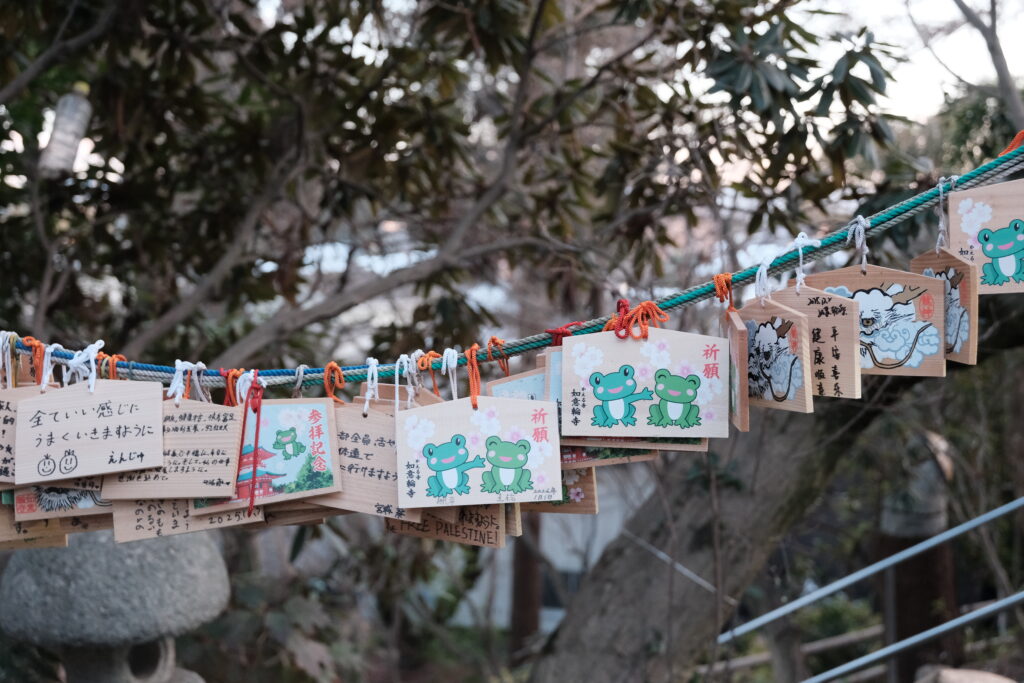
The word kaeru means frog, but it also means “to return.” Because of this, frogs in Japan are considered symbols of safe travel, good fortune, and a safe return home.
The story reminded me of the Pak Ou Caves in Laos, which currently host thousands of Buddha statues, and more than anything, it inspired me to start my own collection of Daruma dolls from around Japan. Though at the rate I’m going, I suspect I might end up with only a fraction of what this priest managed to gather — if I’m lucky.
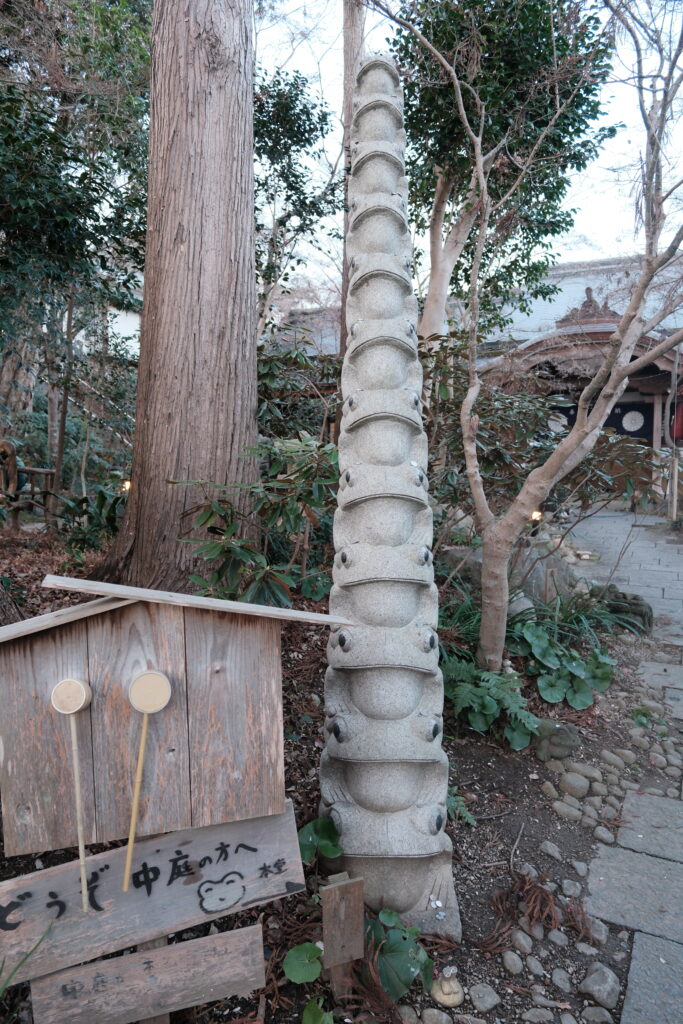
Walking around the grounds of Nyoirinji Temple, the frogs kept appearing in unexpected corners. Some were tiny and hidden among plants. Others were large statues watching over pathways. And then there was one frog you could actually crawl through.
Yes — a large hollow frog statue sits on the temple grounds, and visitors can crawl through it for luck. Passing through the frog is said to symbolise rebirth, renewal, and returning safely, again reflecting the double meaning of kaeru. Watching visitors squeeze through it was one of the more playful sights at the temple.
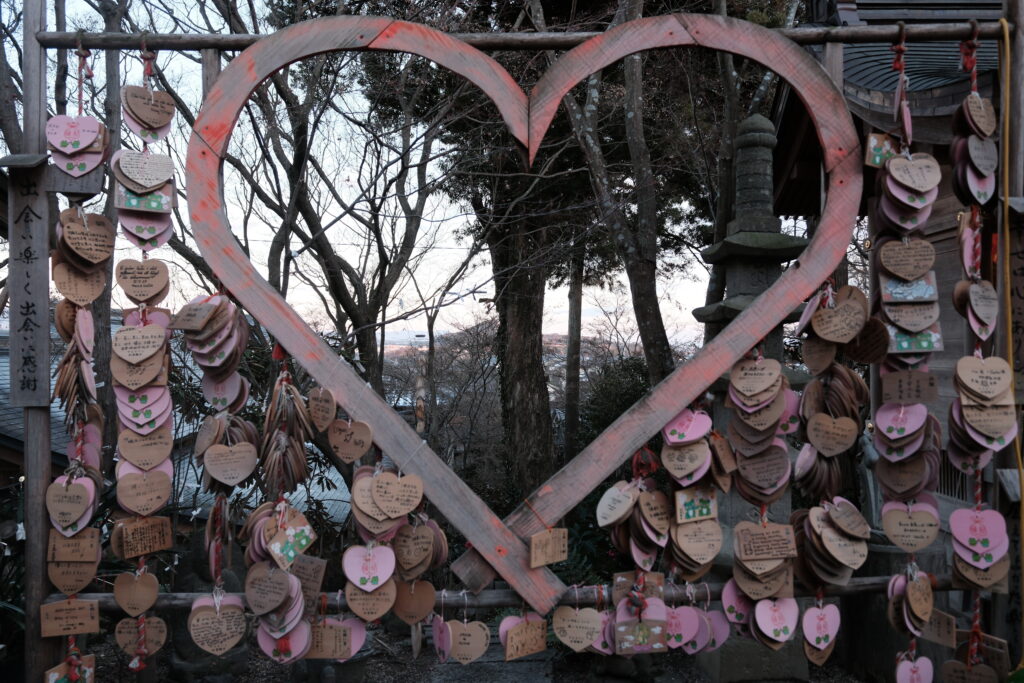
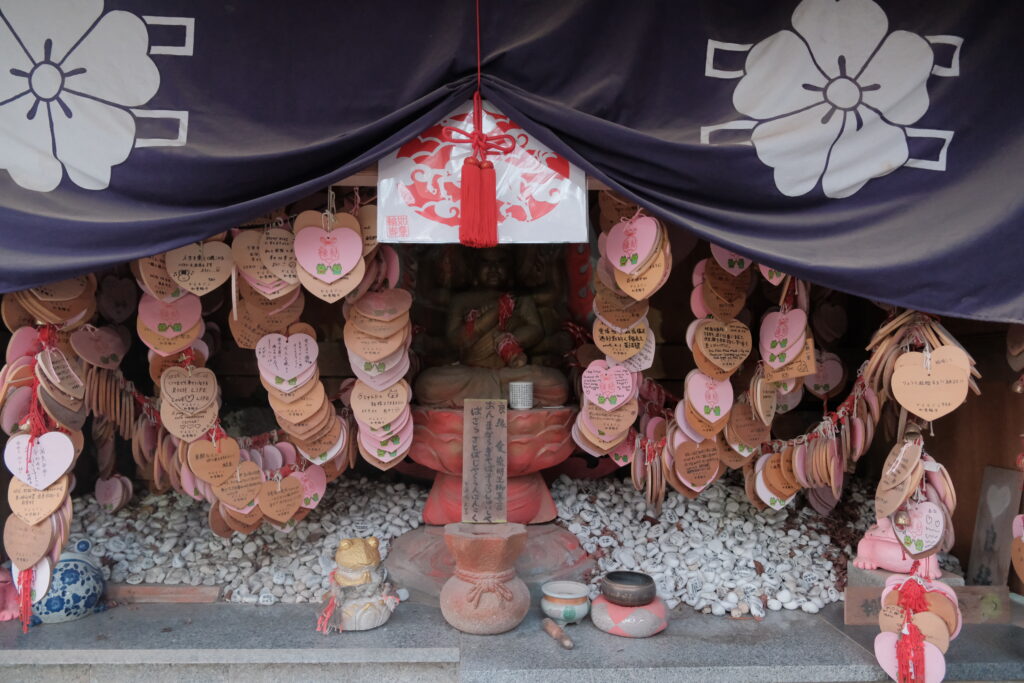
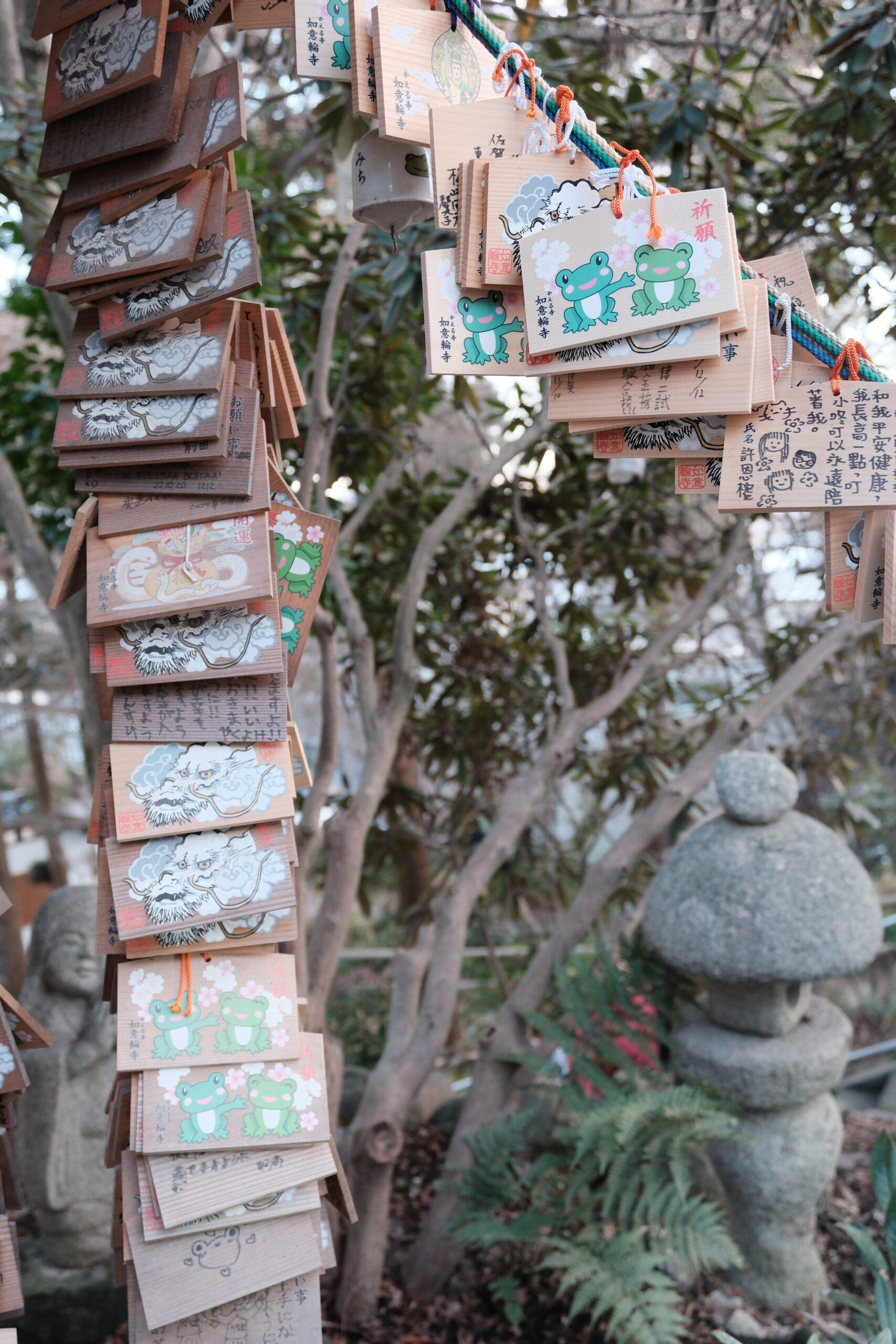
There were ema plaques featuring paired frogs, and a large love symbol displayed around the grounds. From that, I deduced that people come here to pray for relationships, happiness, and good fortune.
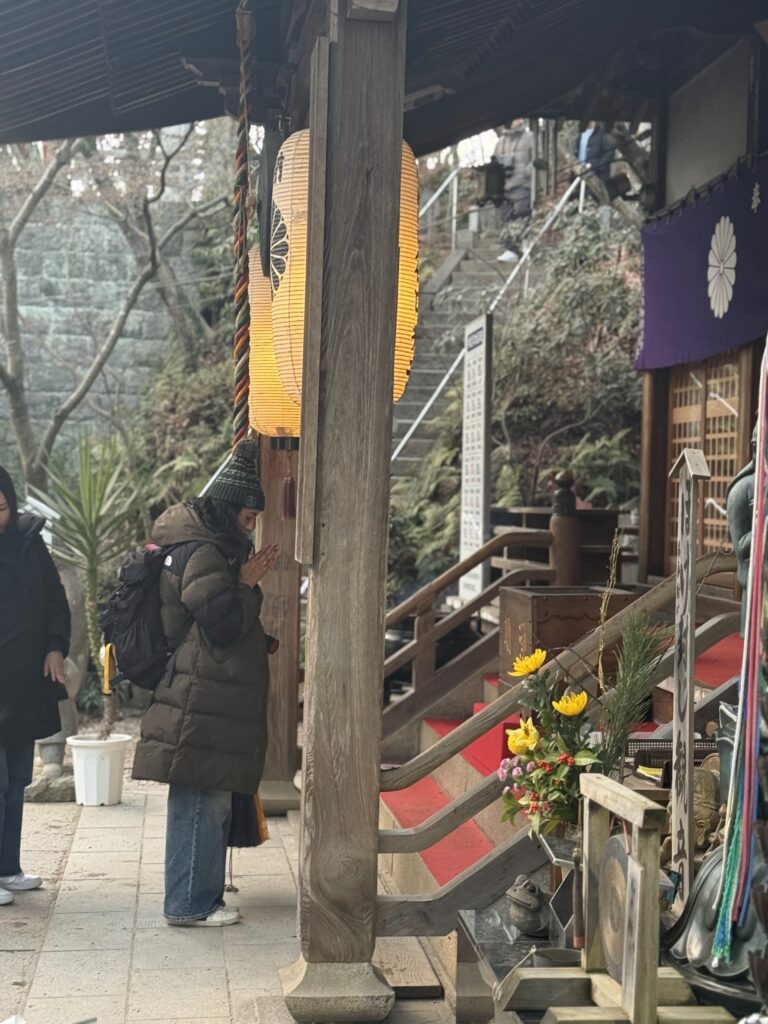
So naturally, I said a small prayer for our relationship — that it may continue to be a happy one.
The temple spreads across several levels, with small shrines tucked into corners and frogs appearing when you least expect them.
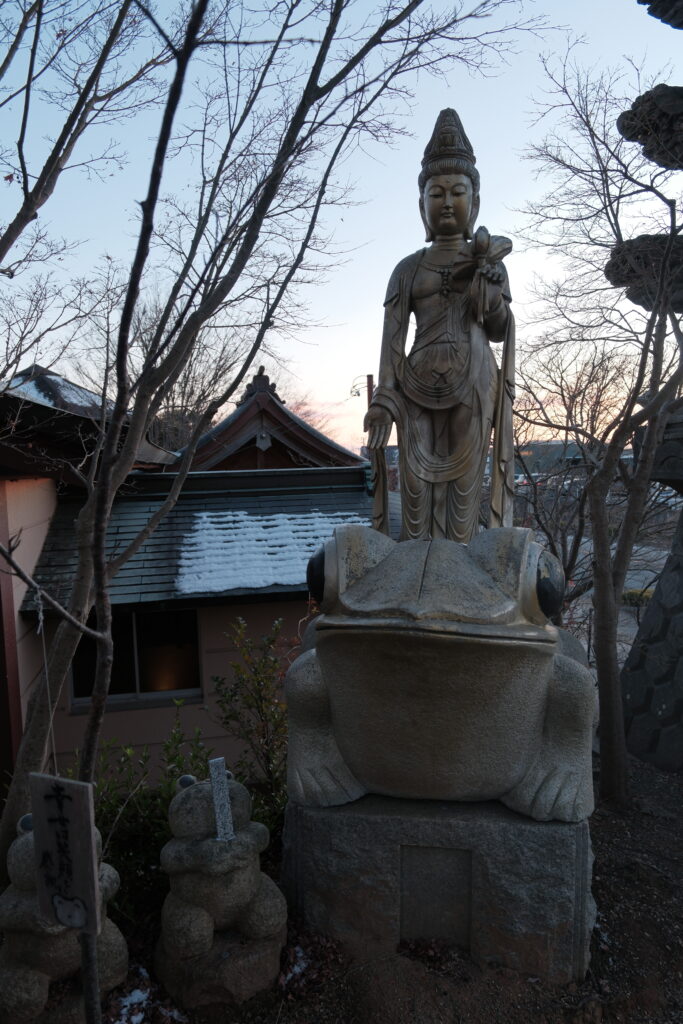
There was also a small corner selling souvenirs, and even candy floss, which felt delightfully out of place in a temple setting. I would have gotten one, but Fafa seemed a little out of it that evening, so instead I got myself a goshuin stamp and picked up an omamori for happiness.
I’m still learning how intimately local many temples in Japan are. Nyoirinji Temple sits quietly beside ordinary houses in the small town of Ogori, and if you weren’t paying attention, you could easily walk right past the entrance.
Before visiting, I wondered why locals loved this place so much. But after spending some time there, the answer lingered.
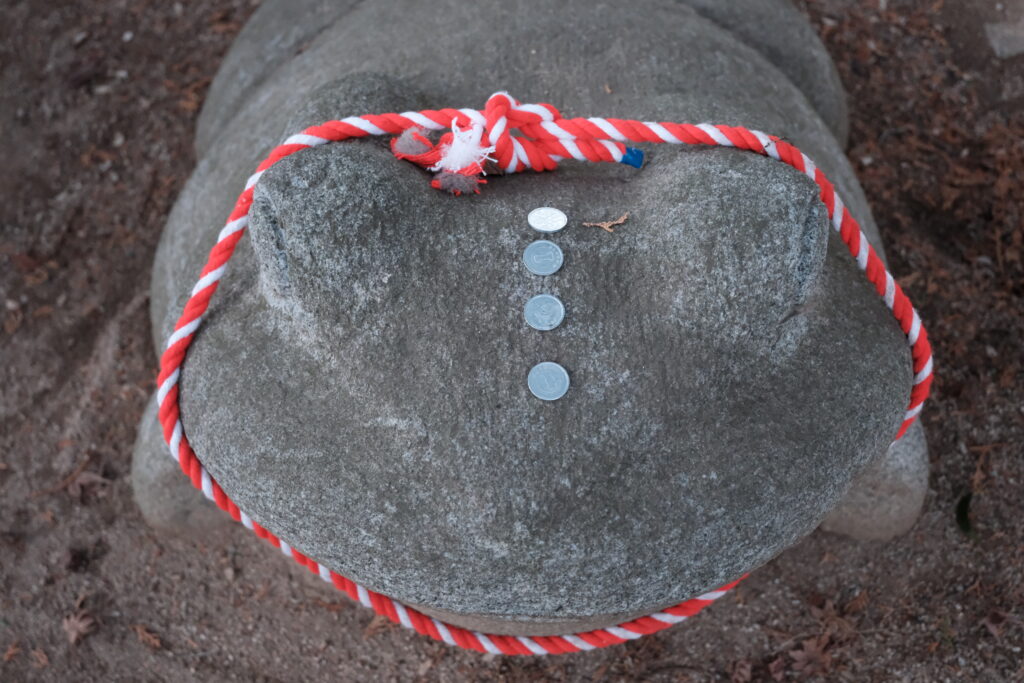
There’s something about Nyoirinji Temple — the sight of thousands of frogs, the quiet neighbourhood around it, and the gentle reminder hidden in the word kaeru: that no matter how far we travel, we will eventually return.
And perhaps that’s the kind of blessing we are all hoping for. 🐸
Follow me on Instagram @KultureKween for more recent updates.

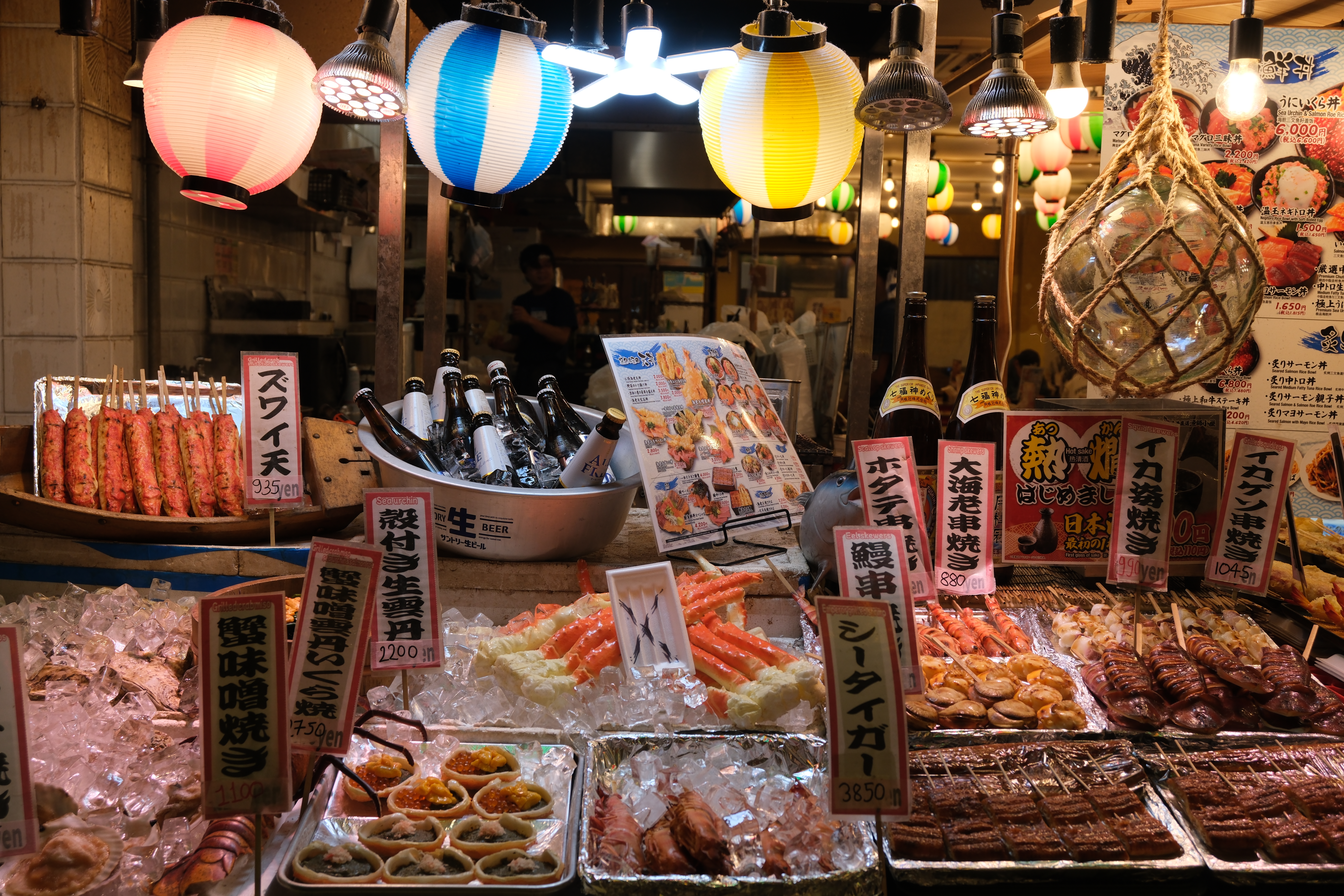
[…] And with that, we made our way back to Fukuoka. […]
[…] on New Year’s Eve 🖋️ Hanko Stamp Is A Non Boring Souvenir to Bring Back from Japan 🖋️ Nyoirinji Temple Fukuoka A Temple Where Frogs Bring Good Luck 🖋️ Caffeinated Morning Adventure at Lonich Coffee Omakase Fukuoka 🖋️ Ine Funaya Kyoto: […]
So return to Japan ya 😉
um…