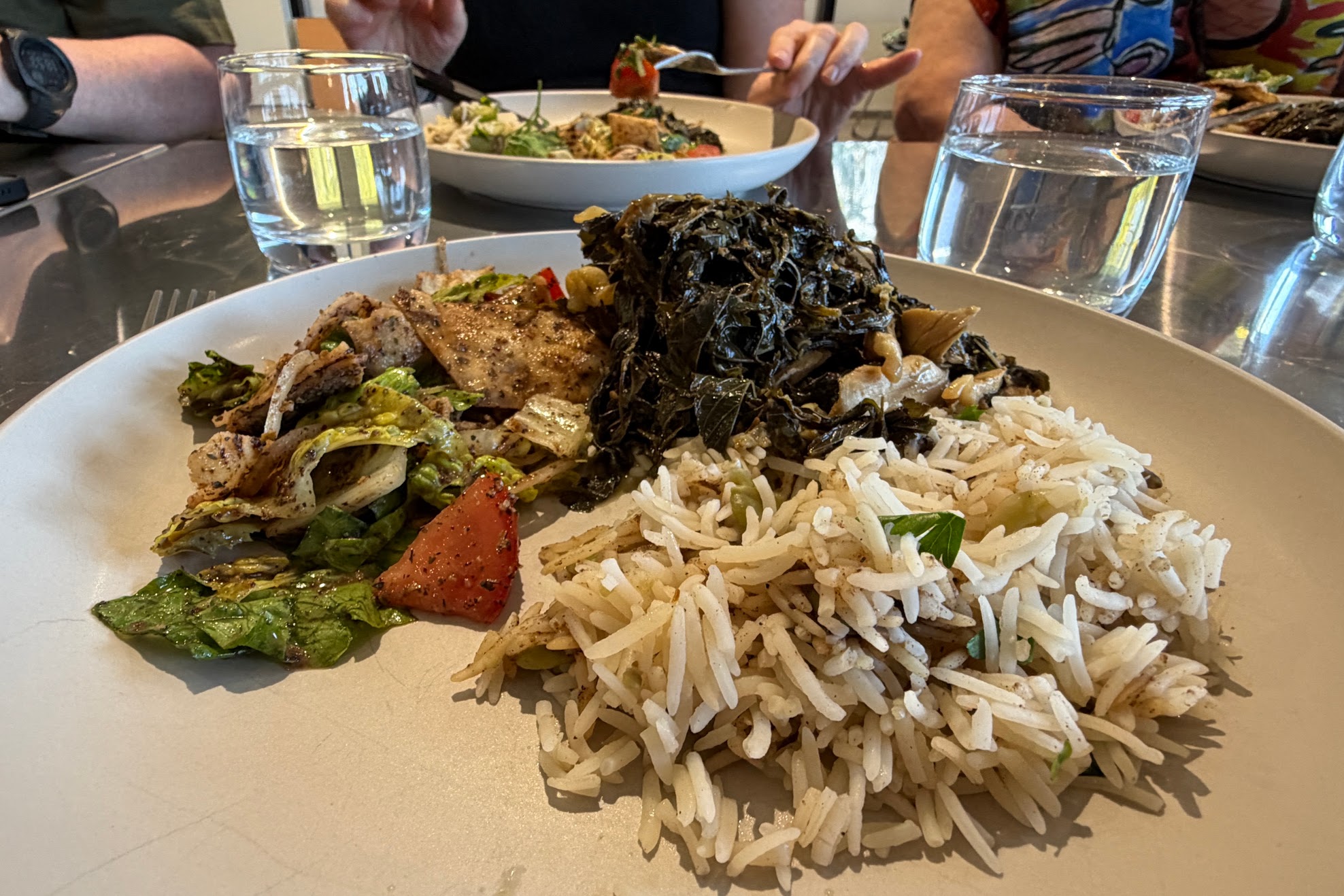
Taking a new cuisine cooking class was one of the things on my 2026 Bingo card. I added it, thinking I’d do it later—also to low-key law-of-attraction a cooking class in Sri Lanka. But then a Levantine cuisine cooking class popped up on my Instagram, hosted by a Syrian comedian, and it was happening in eight days, not eight months.
I looked into it. It was marketed as Refugee Insights with Delicious Food, which sounded like a promising mix of cuisine and culture packed into one afternoon. So, naturally, I signed up.
On the day, I was welcomed into a community centre and served Arabian coffee in a small cup. The size reminded me of Ethiopian coffee, but this one was lighter and more spiced—cardamom. I liked it enough to go back for a second—and a third—serving. Obviously, I was a little too pumped by the time the cooking started.
Levantine Cuisine 101
First task: peeling garlic. Then I moved on to stir-fry dried leafy greens, Molokhia, in hot oil, seasoned with garlic and a generous heap of coriander powder.
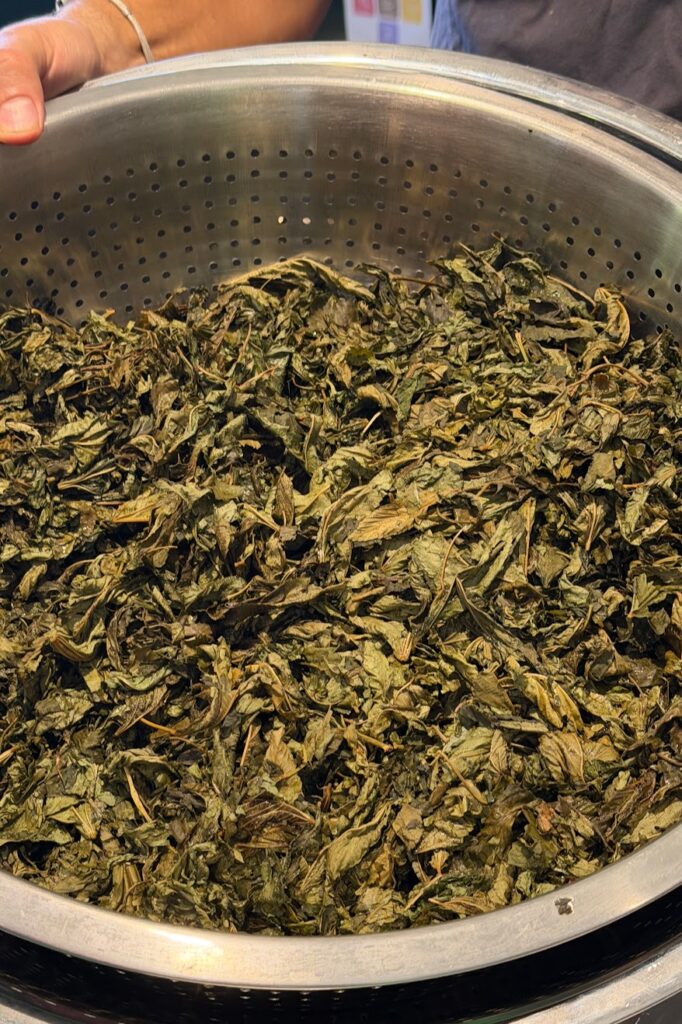
That was my first lesson in Levantine cuisine: they use a lot of coriander powder.
By then, the conversation was flowing.
They shared stories from their childhoods in Syria and later from their lives as immigrants in Turkey and Australia. They spoke fondly of the town he grew up in—Aleppo—once the end of the Silk Road, famous for its yoghurt and its hyper-local food culture. Once you hit the outskirts of the town, you won’t find the same dishes anymore. That immediately reminded me of Jakarta, where some of the foods I grew up with simply don’t exist outside the capital city either.
Somewhere along the way, I also made a new friend—someone who researches the role of music during war and post-war times (how cool is that??)—and eavesdropped on a conversation about a first-date experience with someone whose personality was too similar to their own.
Back in the kitchen, the stir-fried Molokhia were added to a chicken broth along with pieces of chicken, and the mixture was left to simmer while we moved on to the second dish: Riz bi Foul.
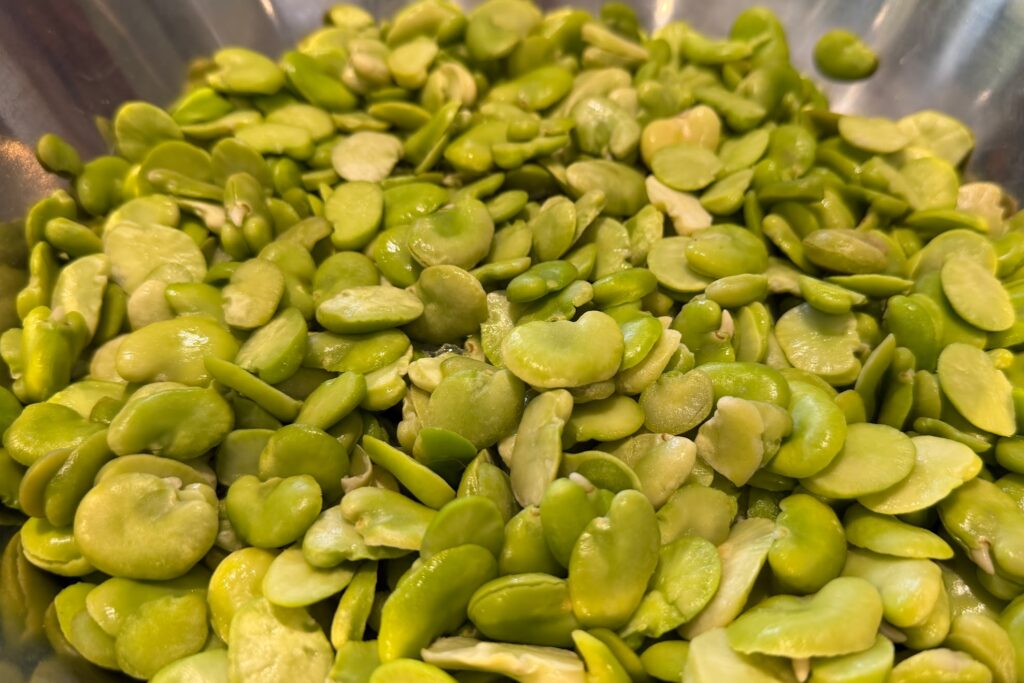
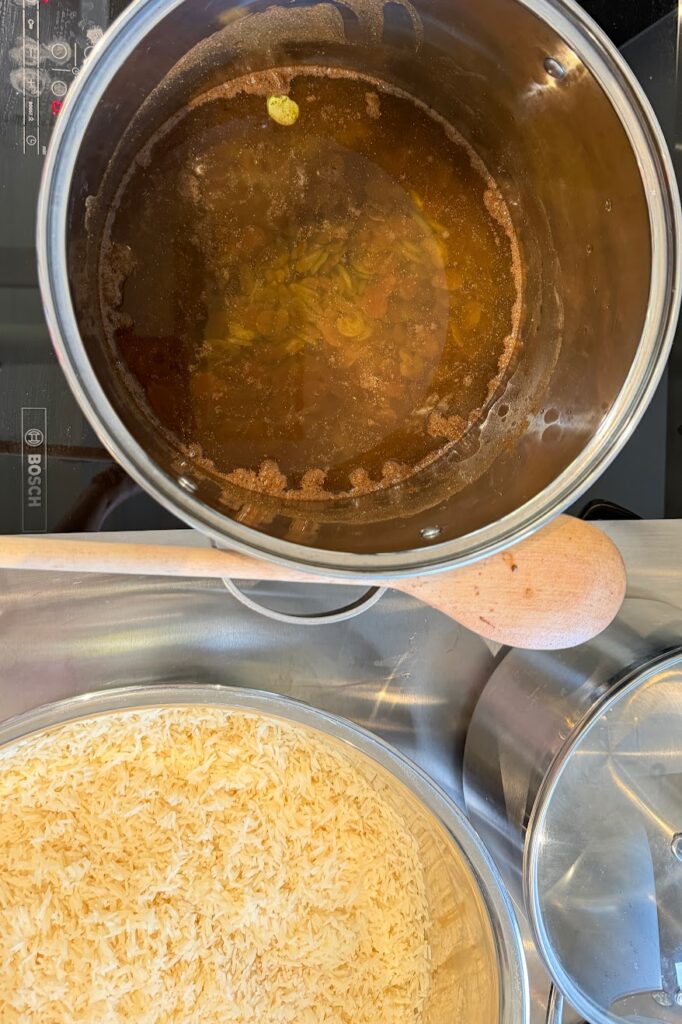
Fresh Fava Beans (which, from the look of them, reminded me of Indonesian petai). I remember I actually liked fava beans, though I couldn’t remember where I’d eaten them before. They were boiled with seven spices and rice. This was the dish I was most excited about—because rice. Though both my new friend and I felt it needed salt, we were absolutely right when we tasted it later (though this may just be the opinion of two salt-loving new buddies).
The third dish was a Fattoush salad made with air-fried bread, tomatoes, iceberg lettuce, and—to my dismay—sans the forgotten falafel. The preparation came with an interesting folktale passed down through generations. Apparently, Fattoush was named after Fatimah, a nosy neighbour who loved dropping by whenever she smelled something delicious cooking next door. Since the culture dictates that unexpected guests must be invited to eat, she got away with it for a while. Eventually, the neighbours realised she was doing it on purpose and began serving her leftovers whenever she showed up—to teach her a lesson.
Listening to this story, I immediately thought of an aunt who could easily outdo the Middle-Eastern Fatimah.
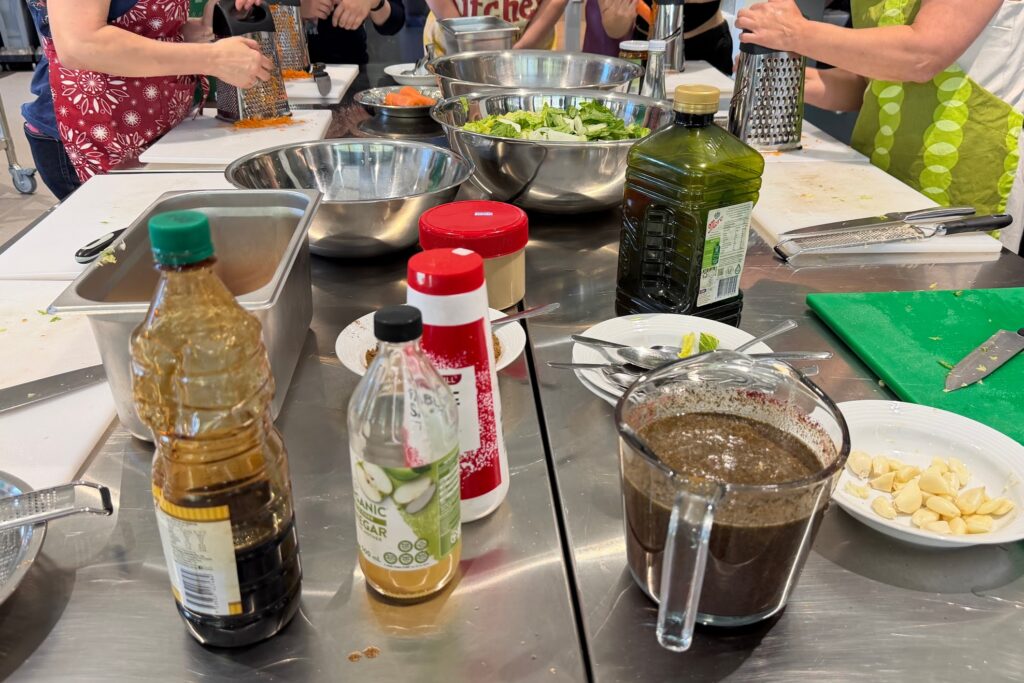
The salad was dressed with one of the most interesting combinations: heaps of grated garlic, freshly squeezed lemon juice, Sumac, coriander powder (again), pomegranate molasses, and some other things I missed because I wasn’t paying attention. The result was absolutely delicious. I have asked for the recipe so I can recreate it at home (I’ll update it here if I get it).
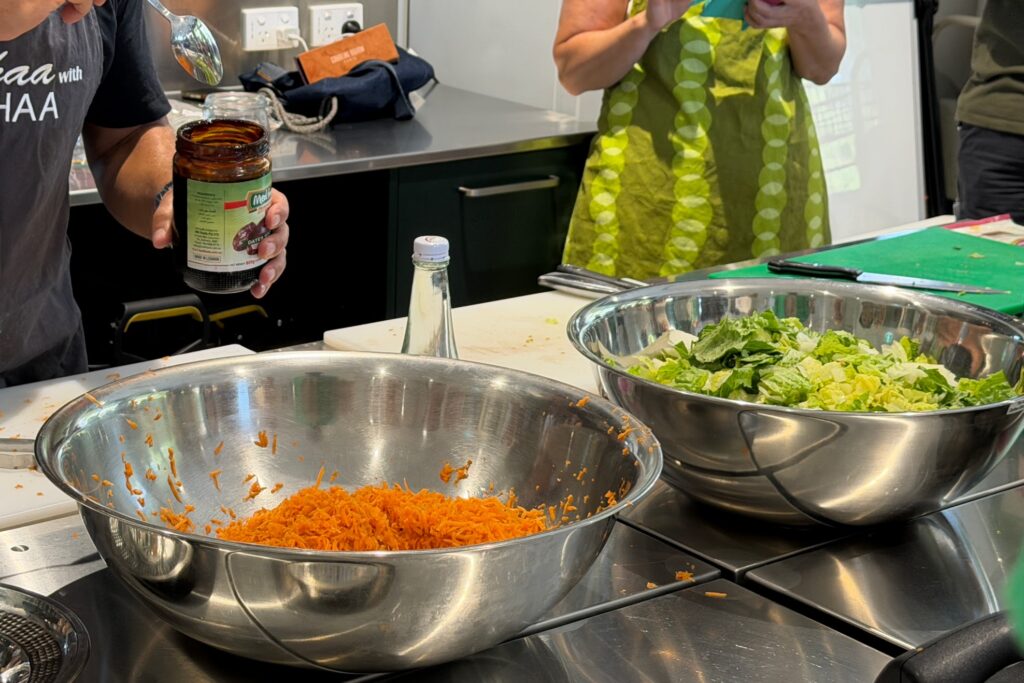
The last dish was dessert: Jazar bil Dibis, literally (grated) carrot with date molasses, with freshly ground cinnamon powder sprinkled on top.
They joked that it was what their mum made when she hated her children that day. I expected something like Indian Gajar Ka Halwa, but without any cooking involved, it tasted more like honeyed raw carrot, which unfortunately made it my least favourite dish of the evening.
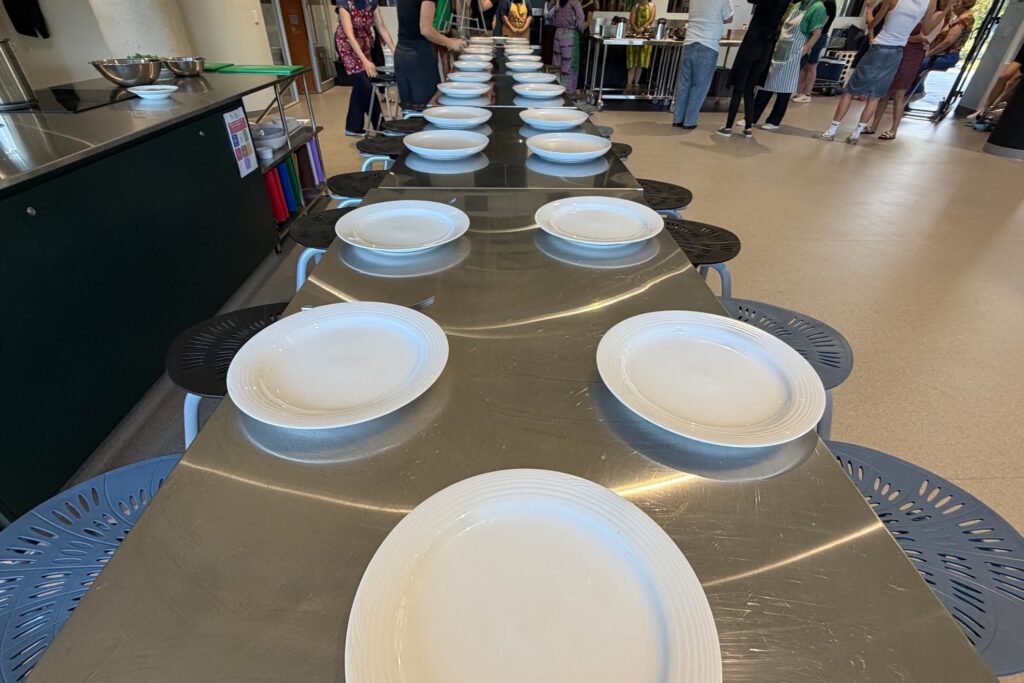
But that’s okay. Personal preference and all that. Speaking of which, after the lovely communal moment of sharing the meal and eating together at a long dining table, they shared some parting words: a request that we not box people out just because they hold different opinions. Instead, they encouraged us to keep communication lines open, so we don’t push people even further away.
That felt… personal. As someone who proudly boxes people out in the name of “saving my energy,” I felt it was directed at me. Message received. I’ll do my best not to box them out—at least, not all the time.
And thank you for the whole-hearted introduction to Levantine Cuisine.
Follow me on Instagram @KultureKween for more recent updates.




[…] Indian 🍜 Spanish 🍜 Senegalese 🍜 Scandinavian / Nordic 🍜 Sundanese 🍜 Swedish 🍜 Syrian 🍜 Taiwanese 🍜 Tamilnadu 🍜 Thai 🍜 Shanghainese 🍜 Sri lankan 🍜 Switzerland 🍜 […]
[…] — I went to a Levantine cuisine cooking class, ticking off the first box of my 2026 bingo card. 1 done, 24 to […]
Sounds like a fun evening was had. And you don’t box people la
I box…