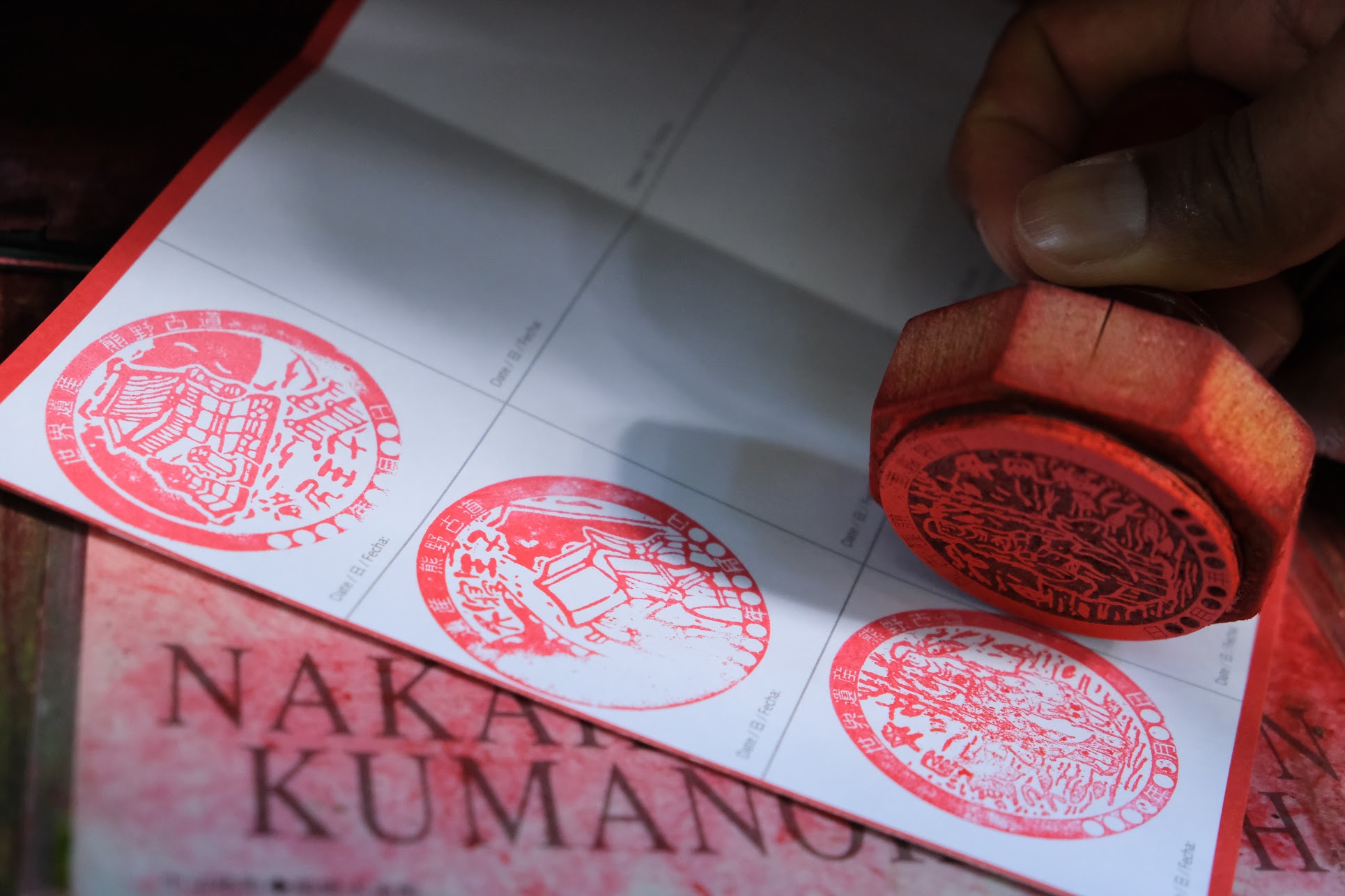
The night before our Kumano Kodo pilgrimage, I lay awake in bed with a Nokyocho, a Kumano Kodo pilgrimage stamp book given to me earlier that day by the Kii Tanabe Visitor Centre lady. Fafa was already fast asleep beside me in our “queen-sized” bed, which was more like a large single, while I anxiously flipped through the booklet under the dim light.
I should have followed him into sleep. We were starting the Kumano Kodo the next morning, and I desperately needed rest.
Instead, I found myself too anxious, too excited, and too underprepared.
I had imagined it would be like a Goshuincho—the beautiful, cloth-bound books you can get at shrines and temples across Japan, where priests carefully brush calligraphy and add red ink stamps as proof of your visit. Instead, the Kumano Kodo version was more like a folded pamphlet. Not disappointing exactly, just unexpected. And I kept flipping those empty pages, as if some ink would magically appear if I stared at it long enough.
Eventually, I drifted off, the little booklet still in my hand.
Missing the First Kumano Kodo Pilgrimage Stamp on the Nakahechi Route
The next morning, we checked out of the Kii Tanabe resort and took a bus that dropped us in front of a huge sign that read Kumano Kodo.
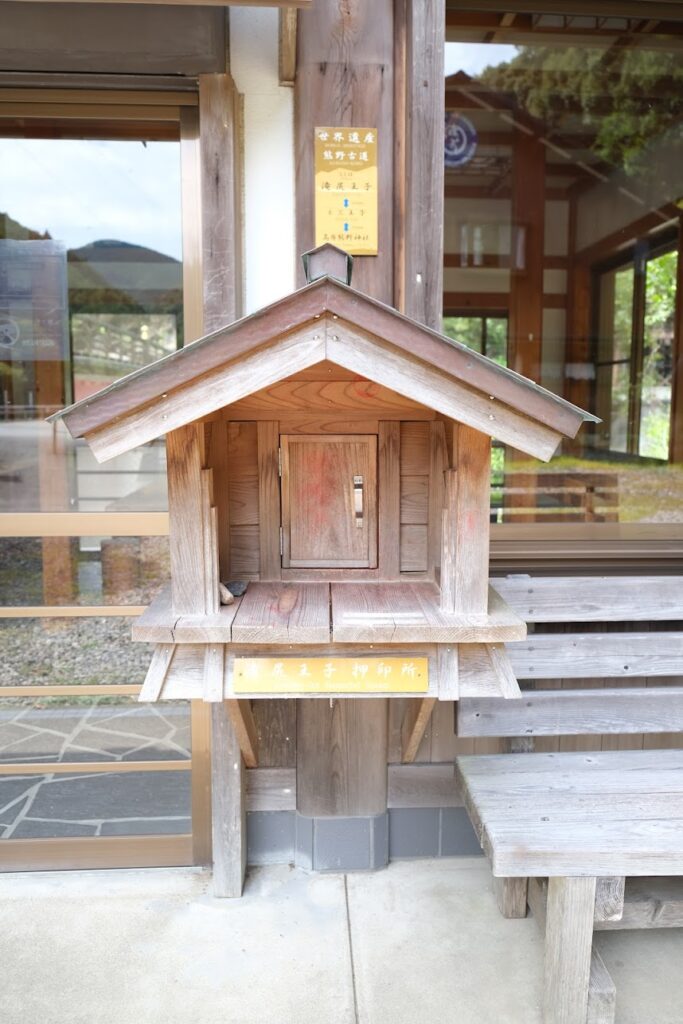
Our pilgrimage officially began at the shrine near the trailhead. We bowed, clapped, and paid our respects before I eagerly started looking for the first stamp point. I searched and searched. Nothing. My attempt at getting the first Kumano Kodo pilgrimage stamp on the Nakahechi route was a failure.
It was Fafa who spotted the next stamp spot, marking it as our first. About 700 meters into the hike, a small wooden stamp hut was tucked away by the path.
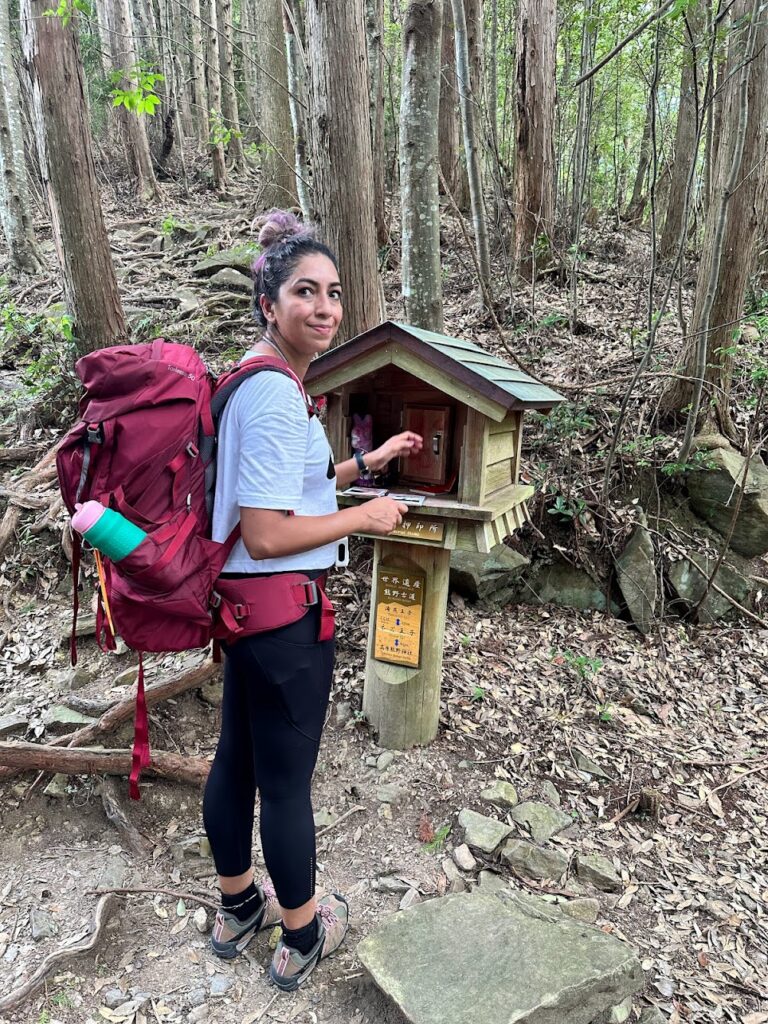
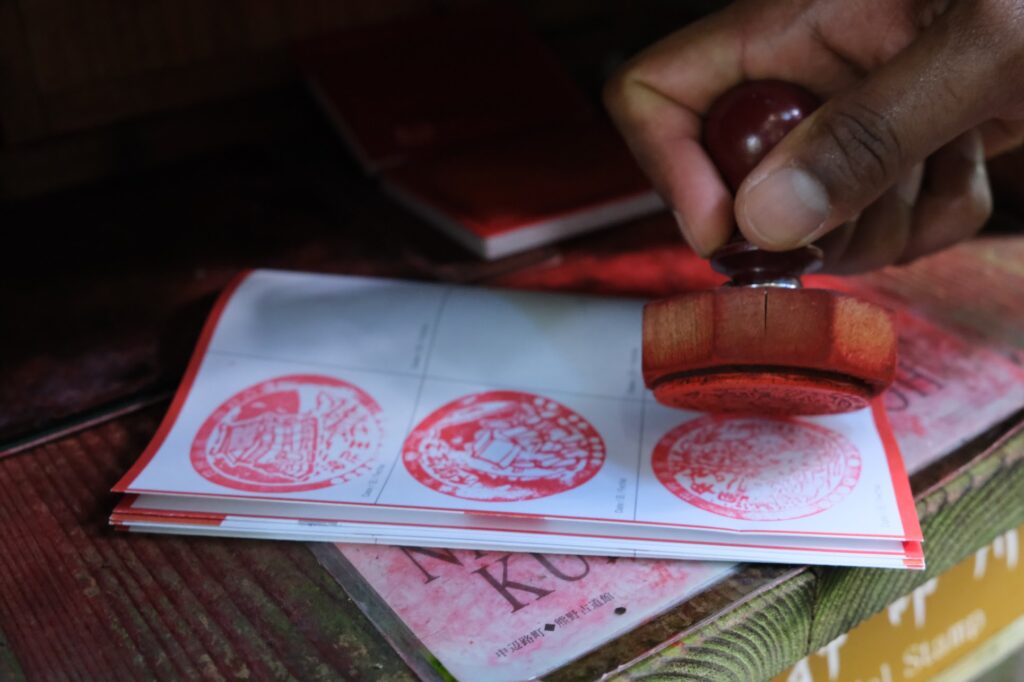
Stamp collecting is a common hobby in Japan—you’ll find unique ink stamps at train stations, castles, and even museums. However, the Kumano Kodo stamp booklet was different. The stamps weren’t priestly blessings like goshuin. Instead, they were self-service, hidden in little wooden boxes scattered along the trail. Each one was designed with motifs from the region—shrines, mountains, rivers, folklore.
The mini hut of our first stamp stop, for example, had a life of its own. People had left small tokens: a llama figurine, gold coins, and pens. I stood there thinking hard about what “cute” thing I could part with, but at that point, I was still naively believing I needed everything I was carrying—including the three lipsticks—and I was definitely not about to leave Miaw, my little travel companion, behind.
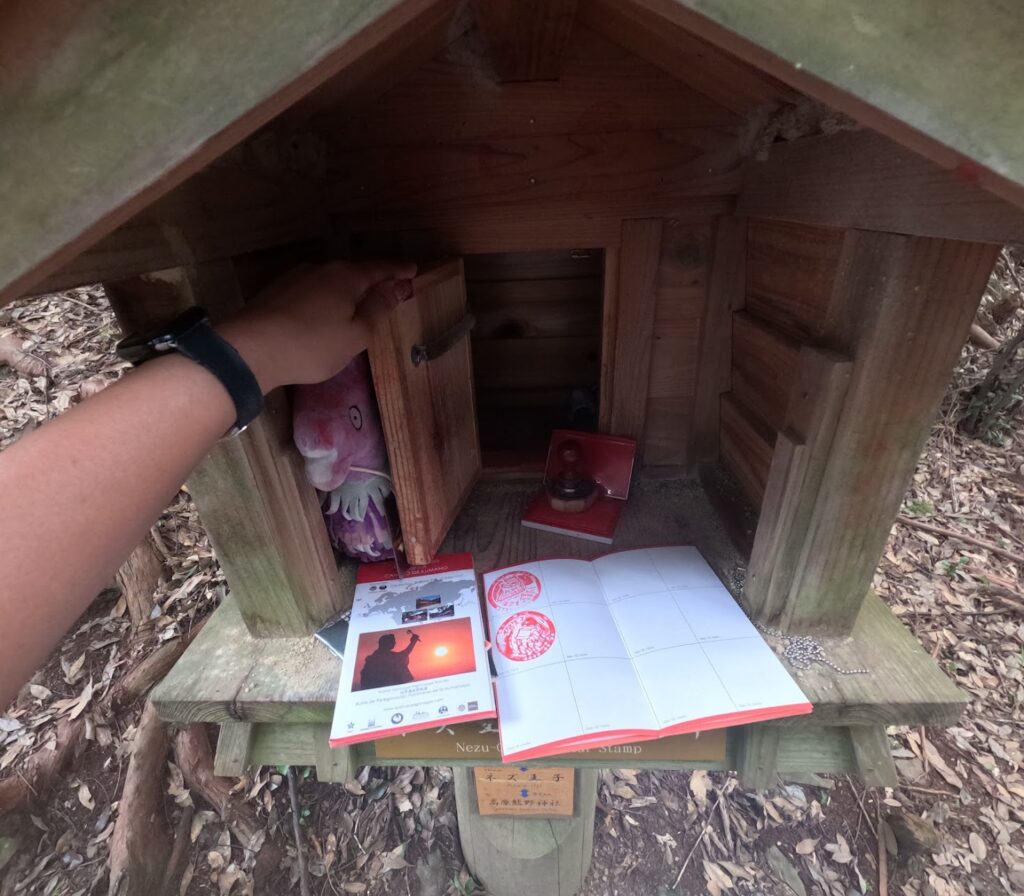
No offerings were given, yet we still wet our Kumano Kodo pilgrimage stamp booklets with red ink. Somehow, that simple act of pressing ink to paper gave me the energy to keep going for the next three or so kilometres left for the day.
Stamps and Small Milestones
The Kumano Kodo is already a UNESCO World Heritage pilgrimage route, layered with history, spirituality, and devotion. But for me, the stamp booklet added another dimension. It kept me moving when my body wanted to stop. It gave me small, tangible goals when the trail stretched endlessly ahead. It made me pause and notice the small huts, the little details, the hidden corners I might have walked straight past.
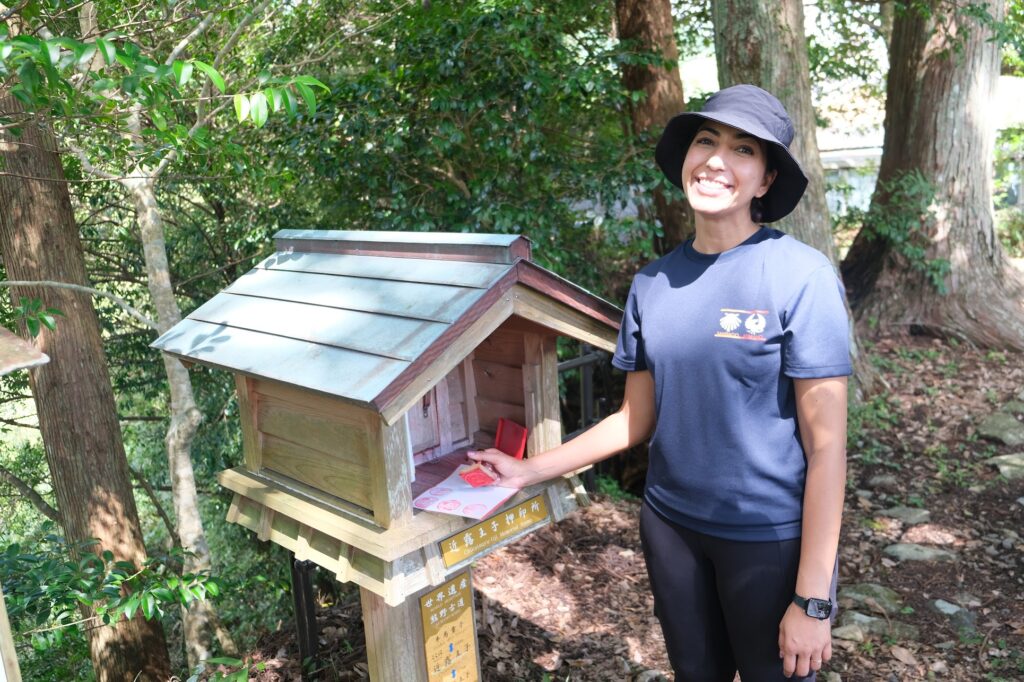
Of course, we didn’t collect all the stamps. Some stamp points we walked past unknowingly, only realising later. We didn’t turn back for those. Others, we went out of our way to find—even with my 30kg backpack dragging me down. Searching for a tiny stamp while climbing a mountain isn’t glamorous, but there’s something meditative about it. Each one felt like reaching a milestone.
Pressing the ink onto my booklet wasn’t just about collecting; it became proof that I had walked that sacred path. A tiny milestone. A memory pressed in ink.
Honestly, it felt like the ancient version of Pokémon Go. Instead of chasing digital creatures, I was chasing inked memories—each one a treasure that carried the weight of long history and my own sweat on the trail.
At one point, we also bought Japanese stamp books. But juggling two stamp books while fumbling with Google Translate was too much. The Kumano Kodo booklet was more than enough. It wasn’t just a souvenir—it became our shared quest, something playful that lightened the physical weight of the hike.
On the last day, I finally left something behind: a moonstone I had carried in my travel bag the entire trip. It felt right, like a quiet offering to the trail itself.
A Pilgrimage Worth Returning To
As a Virgo, I feel the pressure to go back and finish collecting the stamps I missed so I can complete the dual pilgrimage (Kumano Kodo in Japan + Camino de Santiago in Spain) credential I have on my bucket list.
Why do I put unnecessary pressure on myself? Probably because it makes the accomplishment sweeter.
Either way, the Kumano Kodo is calling me back—not just for the views and the spirituality, but also for that little booklet full of ink stamps and memories.
✨ KK for fellow pilgrims: Get the Kumano Kodo stamp booklet at the Kii Tanabe Visitor Centre before you start. Don’t stress if you miss a few along the way. Remember, the beauty of the pilgrimage isn’t in perfection—it’s in the journey, one stamp at a time.
Follow me on Instagram @KultureKween for more recent updates.


[…] KK tip: Pick up the Kumano Kodo stamp booklet at the Kii Tanabe Visitor Centre before you start. More on that in my stamp book post. […]
[…] in general, until a few years ago. But for once, I am glad I didn’t overpack as I did on the Kumano Kodo pilgrimage, and I wore the right […]
[…] know he is comparing it to the onsen tamago we had in Yunomine Onsen during our Kumano Kodo hike. That one sits very clearly in my […]
[…] month, I wrote about Kumano Kodo Pilgrimage Stamp Book Milestones and Memories 🖋️The Mega Bali Guide for First-Time (and Return) Travellers 🖋️ The Sacred Ritual of […]
“ it’s in the journey, one stamp at a time.” wow 👏 👏. This takes me back, I think it’s time to go back
[…] bought a hiking backpack a day before the trip and left his comfort zone to join me in this Kumano Kodo pilgrimage thingy just because I insisted on doing it. So I dragged my fat ass up the stairs, counting one […]